News Broadcasting
Converging World 2002 focuses on CAS


BANGALORE : Converging World 2002, held at the Sree Kanteevera Stadium in Bangalore from 3 to 5 December ended on a single note – Conditional Access Systems, its implications and ramifications.
Also on the agenda were the equipment necessary for the implementation of CAS as well as new technologies available to the cable operators to adopt, survive and prosper in the fast changing scenario. The three day exhibition which included free seminars for cable operators’ benefit, had a low but focussed exhibitor and cable operator and trade attendance from the southern India region.
There were 84 stalls showcasing cable ware, prominent among them the main sponsors of the event – RB Comtec, Optibase and co-sponsor Gardiner. Some of the other big names in attendance a the three day event were Reliance Cables, Maheshwari Cables, Supertronix, Triscope, Eurostar and Ratika Computronix. Besides these, there were a number of manufactures and suppliers of fibre optic equipment, Internet on LAN / Cable software dish antenna equipment, Conditional access systems, CATV / MATV equipment, coaxial cable manufacturers and dealers, as well as Internet service providers.

Convergence World 2002 had sessions covering various issues right from CAS, advantages of Internet on LAN , fibre optic solutions and advantages for Cable TV and LAN, effects of CAS to the cable operator in the future. Visitors included representatives from major cable associations from Karnataka, Kerala, Tamil Nadu, Andhra Pradesh and Pondicherry.
Vijay Mansukhani of Delhi based Zeal Broadband Solutions, convenor of the exhibition said, “This is the first exhibition of its kind on this scale to be held in Bangalore and we plan to make this an annual affair. Although the first day saw a poor response, the second and third days saw a better response with a number of cable operators right from Kolkata to Cochin visiting the exhibition cum seminar. There were approximately 2000 trade and industry people who attended the show.”
A number of South India based associations tried to disrupt the show in its planning and execution stages and it took all of Vijay’s efforts to bring the show to fruition, he claimed.
Even the disgruntled breakaway faction of 30 odd cable operators who had set up a new headend called Southern Info-tainment India, saw the venue as a platform to raise their grievances against broadcasters. They had put up caricatures and cartoons of distribution heads of broadcasters who have refused to entertain them, in a bid to invoke sympathy and support from visitors of the exhibition.
Convergence World 2002 had sessions covering various issues right from CAS, advantages of Internet on LAN , fibre optic solutions and advantages for Cable TV and LAN, effects of CAS to the cable operator in the future.
Cable TV veteran Colonel Khare, who spoke at the convention, came out in favour of conditional access and set top boxes and said addressability’s time had come. He elaborated on the rapid expansion of cable TV in India and the galloping increase in subscription charges.
He presented the issue of pay TV from two perspectives: that of the cable TV operator, and the government, highlighting that the government needed to increase revenue collections and hence was looking at CAS as a vehicle to do so.
He pointed out that cable TV operators are hemmed in and bludgeoned by broadcasters who are constantly revising rates upwards and signing one-sided agreements with them. The rate revisions are taking place under the guise of increasing collections from cable TV operators, who broadcasters allege are underdeclaring their subscriber base, he said.
The broadcasters are also, he pointed out, cartelising and bundling channels, and forcing cable TV ops to carry channels that they do not wish to carry. Since the cable TV operator fraternity is fragmented and fissioned, the monopolistic tendencies of broadcasters go unprotested, he said. There is no body or organisation to address their complaints either which should be set up, he said.
He stressed that bargaining power will always be with broadcasters as they are the creators and transmitters of content which is in demand amongst viewers. Referring to the Cable TV network amendment, he told attendees that they will have to comply with it within six months of the passing of the act. This means they will have to prepare for installation of boxes, encryption and decryption equipment, differential pricing for CATV in different states, different basic tier channels depending on the locality, registering their subscriber bases with the authorities. “Cable TV operators are a courageous lot,” he said. “And they have to do things right.”
Kolkata-based Netsanchar consultant Ashok Vaswani exhorted cable TV to consider the option of offering Internet over a LAN network to their subscribers. He spelt out the costs involved, the technology, the advantages that LAN internet offers, the precautions that cable TV operators have to take.
Sanjay Mansukhani from Kolkata based Zee electronics about Fibre optics and its advantages vis a vis coaxial .He detailed out the advantages of fiber optic cables ,the construction and different types of fibre optic cables, optical nodes, splitters ,transmitter and receivers .He also spoke about the different methods of splicing and cleaving fiber optic cables and ended with the cost comparisions favouring fiber optic cables.

News Broadcasting
CNN-News18 to host Fury in the Gulf conclave on West Asia crisis
Three-hour summit to unpack geopolitical fallout and impact on India
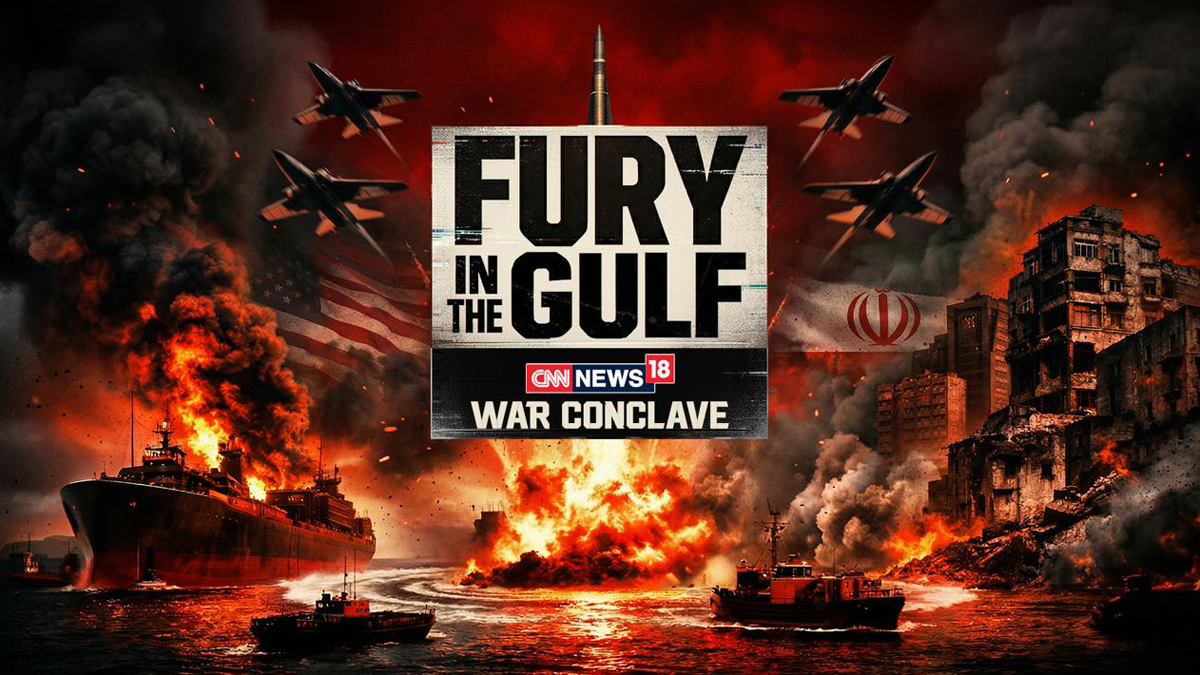
MUMBAI: CNN-News18 is set to host a special three-hour broadcast, Fury in the Gulf – War Conclave, on April 7, aiming to decode the escalating West Asia crisis and its far-reaching implications for India.
Scheduled from 4:00 PM to 7:00 PM, the conclave comes at a time when tensions between Iran and the United States are reshaping global geopolitics and triggering economic uncertainty. With India’s deep energy ties, trade links and large diaspora in the Gulf, the developments carry significant domestic relevance.
Built around the theme ‘Conflict, Consequences, and The Future,’ the programme will feature six curated sessions combining one-on-one interviews and panel discussions. The focus is to cut through the clutter and offer viewers a clearer understanding of the fast-evolving situation.
Key sessions include ‘Diplomacy in Times of War’ featuring Shashi Tharoor, and ‘World After the Iran Conflict’ with voices such as Ram Madhav, Reuven Azar, representatives from the European Union and the Iranian Deputy Envoy. Another session titled ‘Another Dunkirk?’ will bring together K. J. S. Dhillon and Jitin Prasada among others.
CNN-News18 editorial affairs director Rahul Shivshankar said, “In times of war, clarity becomes the most powerful tool. Fury in the Gulf – War Conclave brings together credible voices to address the questions and confusion that arise amid an overwhelming influx of information.”
He added that the initiative is aimed at delivering “facts, perspective, and insight” at a time when misinformation can easily cloud public understanding.
Echoing the sentiment, CNN-News18 CEO– English and business news Smriti Mehra said the conflict marks a defining global moment, with consequences that extend well beyond the region. She noted that the conclave seeks to present the crisis with “depth, nuance and responsibility” so audiences can better grasp its real-world impact.
As geopolitical tensions continue to dominate headlines, the conclave positions itself as an attempt to bring order to the noise, offering viewers a structured, insight-led look at a complex and rapidly shifting global situation.






