iWorld
Content India: Indian entertainment’s power play as streaming, AI and regulation collide

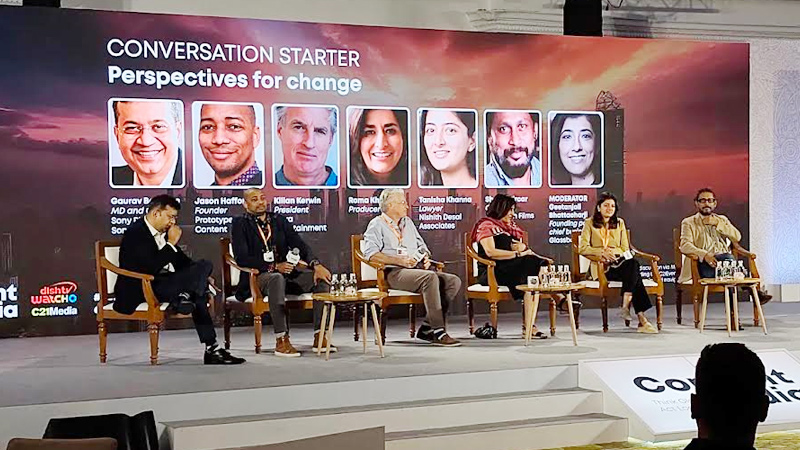
MUMBAI: Move over, primetime television, the new battleground for eyeballs is digital. With smartphones doubling as multiplexes and streaming platforms serving as global entertainment highways, Indian content is having its biggest moment yet. But along with opportunities, the industry faces significant regulatory, technological, and monetisation challenges.
At Content India 2025’s Perspectives for Change session, leading industry executives, including Gaurav Banerjee (MD & CEO, Sony Pictures/Sony Liv), Jason Hafford (founder, Prototype Content), Kilian Kerwin (president, Jaya Entertainment), Roma Khanna (producer), Tanisha Khanna (lawyer, Nishith Desai Associates), and Shoojit Sircar (CEO, Rising Sun Films), discussed what’s next for Indian entertainment. One thing was clear: the rules of the game are changing, and only the agile will thrive.
Artificial Intelligence (AI) is no longer just a futuristic concept; it’s already shaping how content is produced, consumed, and monetised. AI-powered analytics are refining ad placements and content recommendations, making streaming services more personalised than ever.

“AI is a game-changer for storytelling,” said Gaurav Banerjee. “We’re now able to understand audiences at an unprecedented level. The way we create, distribute, and monetise content is evolving, and platforms that adapt quickly will dominate.”
According to industry insights, AI has led to a 15–20 per cent boost in ad revenue and pay-per-view subscriptions, improving monetisation for platforms.
Banerjee further noted how AI is addressing long-standing biases in content creation. “For years, storytelling was dominated by certain voices. AI-driven insights are now helping us correct that imbalance, ensuring more diverse representation in entertainment.”
With AI also being used to automatically translate and dub content, regional storytelling is gaining a global reach. “We’re seeing a major shift where a Tamil or Telugu film can be released worldwide with AI-driven localisation. That’s a huge leap forward,” added Kilian Kerwin.
If AI is supercharging content, regulations are defining the playground. The Indian entertainment industry is increasingly facing scrutiny, particularly in the digital space. The IT Rules and other regulatory frameworks are being challenged in court, with concerns over censorship and content liability.
This regulatory uncertainty is causing anxiety among streaming platforms. “Creative freedom is crucial,” said Roma Khanna. “At the same time, we understand the need for responsible storytelling. But what we don’t want is ambiguous laws that leave platforms and creators second-guessing what’s acceptable.”
Banerjee was more direct: “We need clear and predictable regulations. Content creators should not feel like they’re constantly walking on eggshells. Regulation should encourage creativity, not stifle it.”
While OTT platforms remain largely self-regulated, concerns about political sensitivities and legal repercussions have led to increased caution in content curation. “We have seen instances where content was pulled due to public backlash,” added Tanisha Khanna. “It’s crucial that there’s a structured, fair process in place.”
While streaming platforms are thriving, making money remains a puzzle. Subscription models have their limits, and ad-supported streaming is still evolving. However, new-age monetisation models like microtransactions, premium ad tiers, virtual goods, and gamified content experiences are gaining traction.
Banerjee shed light on the shift in viewer spending habits. “Five years ago, people were hesitant to pay for content. Now, we have 62 per cent of Indian households paying for digital entertainment. The audience values good storytelling, and they’re willing to pay for it.”
The advertising-based video-on-demand (AVOD) model is also witnessing a surge. “We saw a 40 per cent increase in AVOD revenue last year,” Banerjee revealed. “Ad-supported content isn’t just for budget-conscious viewers anymore. Even premium audiences are engaging with it.”
Interestingly, India’s vast language diversity is proving to be a monetisation goldmine. Viewers are streaming content in multiple languages, increasing the reach of regional cinema and opening new revenue streams for platforms.
“Regional content is the future,” said Shoojit Sircar. “More than 60 per cent of future content investments are going into non-Hindi programming, and for good reason. The audience is demanding authenticity, and regional storytelling delivers that in a way no other content can.”
The biggest validation of Indian entertainment’s success? Global audiences can’t get enough of it. Indian shows and films are now regularly trending in the top 10 lists on global platforms.
Platforms like Amazon Prime and Netflix are doubling down on Indian originals, and franchises such as Mirzapur, Panchayat, and Citadel: Honey Bunny are expanding their universes. In 2024 alone, Indian content trended in the top 10 worldwide every single week.
“India has always had great stories, but now we have the technology and platforms to take them global,” said Jason Hafford. “We’re no longer just exporting films, we’re shaping global content trends.”
The rise of international collaborations is also a promising sign. “We’re working with global studios, co-producing, and experimenting with formats that have never been tried before in India,” said Kilian Kerwin. “The future is cross-border storytelling.”
The future of Indian entertainment is a mix of boundless opportunity and complex challenges. AI is set to revolutionise content, but ethical concerns and biases must be addressed. Regulations will shape how platforms operate, but clarity is needed to encourage innovation. And while monetisation strategies evolve, striking the right balance between subscriptions, ads, and new revenue streams will be crucial.
For Gaurav Banerjee, the most exciting part is yet to come. “We’re only scratching the surface. With 5G rolling out, AI making content discovery seamless, and regional content driving engagement, the OTT revolution in India is far from reaching its season finale, it’s just getting started.”
With the entertainment landscape evolving faster than ever, one thing is certain – the golden age of Indian content is here, and the best is yet to come.







iWorld
Parineeti Chopra hosts new parenting series Mom Talks on Zee5 and Bullet
Celebrity parents share honest stories in 9-episode show launching 4 April 2026.

MUMBAI: Parineeti Chopra is stepping into a brand-new role not on the big screen, but as the warm, relatable host helping parents navigate the beautiful chaos of raising children. Bullet microdrama and Zee5 have announced the launch of Mom Talks, a fresh content-led IP hosted by the popular actress. The 9-episode series brings together celebrity parents including Imran Khan, Neha Dhupia, Vikrant Massey & Sheetal, and Gauahar Khan & Zaid Darbar to share candid, real-life perspectives on everyday parenting.
Positioned as a high-engagement format, Mom Talks taps into the growing demand for authentic and credible parenting content. It also offers seamless, contextual integration opportunities for brands. The series is backed by a strong lineup of partners including Johnson’s Baby, GSK, Aveeno Baby, Mini Klub, Titan Eye+ and Cordelia Cruises.
Bullet microdrama app, co-founder & chief business officer Azim Lalani said the show exemplifies how content is evolving towards more rooted, sustained engagement. “It’s about bringing content that people come back to, while creating a natural space for brands to be part of the narrative,” he noted.
Mom Talks creator Bullet head of AVOD & partnerships Munaf Merchant explained the core idea, “We wanted to build a safe, honest, one-stop destination for parents seeking real answers to everyday questions.”
The first episodes will stream for free on ee5 AVOD starting 4 April 2026, with new episodes dropping every Friday and Saturday. The series will also be available on the Bullet microdrama app.
Speaking about their association, Peeyush Unikkat from Johnson’s Baby highlighted the brand’s focus on supporting modern parenting journeys, while Aakash Mehta from GSK emphasised the show’s role in making important health conversations more relatable for new parents.
In a digital space often filled with filtered perfection, Mom Talks promises something refreshingly real honest conversations, celebrity insights, and practical wisdom, all wrapped in Parineeti Chopra’s engaging presence. For Indian parents, this could be the parenting series they’ve been waiting to binge.






