News Headline
Consumption of television up last year: Eurodata survey

FRANCE: The uptake of the electronic medium shows no signs of slowing down. The average time spent by the television buff across the globe last year went up by three minutes each day, touching a figure of three hours and 24 minutes.
These are a few of the findings of 2002: One television year in the world conducted by Eurodata TV Worldwide. The survey scrutinised 72 territories across continents. It has presented its findings on popular programmes in different regions and how different genres fared as opposed to 2001.
Americans and neighbours Canada spent the most time in front of the idiot box. Each Yank and Candian consumed four hours and 16 minutes of telly images every day. The medium is spreading its tentacles across Eastern Europe as well. 12 out of 17 countries in the region went over the global average.
Sports gets a boost, Fiction goes down: The report notes that the sports broadcast scenario received a major boost courtesy the Football World Cup in June and The Olympic Games in Salt Lake City. 23 countries had a sports programme at the top of their list as opposed to less than half the number the year before. News programmes showed marginal improvement, appearing 14 times at the top in 2002 as opposed to 10 in 2001. Programmes commemorating the anniversary of 9/11 marked the year. Shows of this nature found their way in the top ten in countries like Hong Kong, Japan, Australia and Uruguay.
However soaps, serials, sitcoms and other fiction programming saw a climb down across the board apart from the Asia Pacific region which maintained the previous year’s figures. Only 19 times did a fiction programme reach the top. In 2001, the figure was 25. It is still the most popular genre accounting for over 45 per cent of the top ten shows in all countries.
Countries adopted different formats last year, especially in the music genre. There was Star Academy in France, Popstars in Argentina, Colombia and Ireland, Pop idol in the UK. Reality television continued finding new territories courtesy Big Brother and Survivor.
Cinema on television gets less American: American films lost their appeal for the global television audience to a sizeable extent last year. In 2001, films made in the US accounted for 90 per cent of film content. Last year, the figure was 60 per cent. In India, Malaysia, Thailand, The Philippines and Vietnam all the top ten films are local. Home Alone 3, Titanic and Stuart Little kept the US flag flying in the top ten lists in other countries.
Converse to the situation in India, Latin America is happy with what the US dishes out. Only two out of 37 films came from the region. Films accounted for 30 per cent of fiction programming, a slight increase from the 26.8 per cent figure in 2001.
Eurodata TV Worldwide distributes audience information based on partnerships with institutes operating peoplemeter systems across the globe. Eurodata TV Worldwide’s database contains over 600 channels in 72 countries.



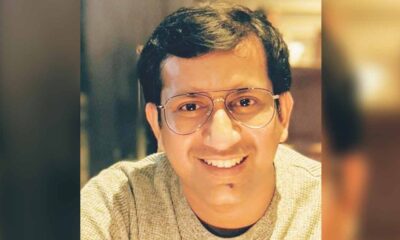



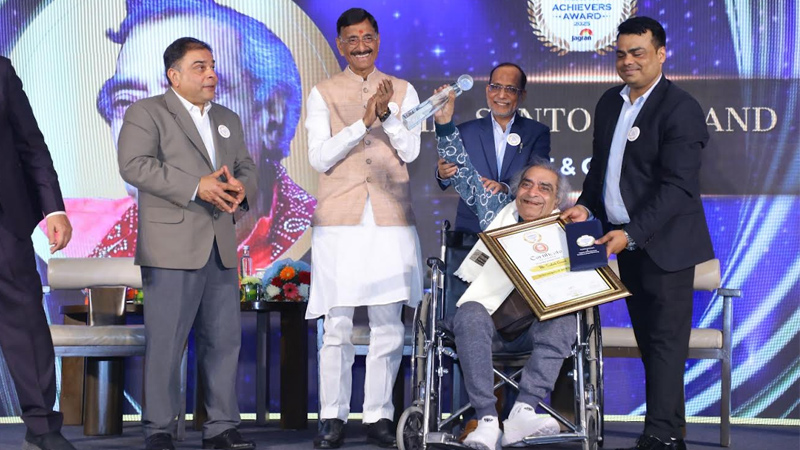
NEW DELHI: Hamdard Laboratories gathered a cross-section of India’s achievers in New Delhi on Friday, handing out the Hakeem Abdul Hameed Excellence Awards to figures who have left their mark across healthcare, education, sport, public service and the arts.
The ceremony, attended by minister of state for defence Sanjay Seth and senior officials from the ministry of Ayush, celebrated individuals whose work blends professional success with a sense of public purpose. It was as much a roll call of achievement as it was a reminder that influence is not measured only in profits or podiums, but in people reached and lives improved.
Among the headline awardees was Alakh Pandey, founder and chief executive of PhysicsWallah, recognised for turning affordable digital learning into a mass movement. On the sporting front, Arjuna Awardee and kabaddi player Sakshi Puniya was honoured for her contribution to the game and for pushing women’s participation onto bigger stages.

The cultural spotlight fell on veteran lyricist and poet Santosh Anand, whose songs have echoed across generations of Hindi cinema. At 97, Anand accepted the honour with characteristic humility, reflecting on a life shaped by perseverance and hope.
Healthcare honours spanned both modern and traditional systems. Manoj N. Nesari was recognised for strengthening Ayurveda’s place in national and global health frameworks. Padma shri Mohammed Abdul Waheed was honoured for his research-backed work in Unani medicine, while padma shri Mohsin Wali received recognition for his long-standing contribution to patient-centred care.
Education and social development also featured prominently. Padma shri Zahir Ishaq Kazi was honoured for decades of work in education, while former Meghalaya superintendent of Police T. C. Chacko was recognised for public service. Goonj founder Anshu Gupta received an award for his dignity-centred rural development initiatives, and the Hunar Shakti Foundation was honoured for empowering women and young girls through skill development.
The Lifetime Achievement Award went to former IAS officer Shailaja Chandra for her long career in public healthcare and governance, particularly in the traditional systems under Ayush.
Speaking at the event, Hamdard chairman Abdul Majeed said the awards were a tribute to those who combine excellence with empathy. “These awardees reflect Hakeem Sahib’s belief that healthcare, education and public service must ultimately serve humanity,” he said.
Minister Seth struck a forward-looking note, saying India’s young population gives the country a unique opportunity to become a global destination for learning, health and wellness by 2047.
The ceremony also featured the trailer launch of Unani Ki Kahaani, an upcoming documentary starring actor Jim Sarbh, set to premiere on Discovery on 11 February.
Instituted in memory of Unani scholar and educationist Hakeem Abdul Hameed, the awards have grown into a national platform that celebrates those building a more inclusive and resilient India. For one evening at least, the spotlight was not just on success, but on service with substance.