News Headline
Consumer body urges PILs against govt on CAS

NEW DELHI: The saga of conditional access system is far from over. A new twist in the tale has been added , now, by consumer activists who have threatened to file PILs against the government in the four metros where CAS is being sought to be implemented as it’s “anti-consumer.”
Chairman of Consumer Guidance Society of India (CGSI) Anand Patwardhan in a statement today said, “CAS is definitely not in consumer interest and consumer organisations across the four cities must unite and decided to fight this anti-consumer and anti-national legislation, which is an example of thoughtless and apathetic draftsmanship.”
The statement of CGSI states that the government has stated that it has introduced CAS to protect consumer interest. However, when the issue of under-declaration of subscriber homes is only between cable operators, broadcasters and government, why is the consumer being made a scapegoat and made to pay for the high cost of set-top-boxes or settle for only 30 free-to-air channels?
“It is the ‘babudom’ in Delhi that will now decide which channels a consumer may see, that too, if he feels those FTA channels to be of ‘consumer interest’. This concept has at the very implementation stage proved to be wrong, impossible and anti-consumer, besides infringing the fundamental right of freedom of speech and expression, and the right to information,” the CGSI statement said.
The statement has in detail gone into various aspects of CAS and we reproduce here the text in full.
CGSI STATEMENT:
The Cable Networks Act Amendment Bill proposed to address the following issues through introduction of CAS.
1. Give consumer a choice to ‘ask and pay’ for TV
channels
2. Address the issue of massive under-declaration by
cable operators
3. Address the issue of area-specific monopolistic
distribution system
4. Address the issue of frequent and arbitrary hikes
by cable operators and broadcasters.
In the present form of CAS, the consumer has absolutely no choice to choose the free-to-air channels or even the pay channels in the present ground circumstances.
The right of a consumer to choose as regards free-to-air channels:
The Government has failed to specify in the notification the FTA channels that can be shown in the four Metros and has notified only three DD channels as “must carry channels” and the choice of any 27 other channels is left to the cable operators. In fact, the government can
never decide which FTA channels to be shown, as it would be opposed to the right of a consumer to choose the channel of his choice, thereby defeating the very purpose of bringing the CAS regime.
Such policies as opposed to the basic reason for calling in this amendment actually are restrictive in nature thus infringing the fundamental right of freedom of speech and expression guaranteed under article 19(1)(a) of the Constitution of India, besides being obstructive to the free flow of information, thus infringing the right
to information and knowledge. Thus reducing the purpose of bring about this amendment into a futile exercise and waste of public money by the legislators.
The right of a consumer to choose as regards the pay channels:
Even after investing anywhere between Rs 3,000 to Rs 10,000, in the set-top-box, the consumer will still have no choice to ‘ask and pay’ for the pay channels he wishes to view but only the channels from among those ‘provided’ by the monopoly cable operator and the MSO in his area. The broadcaster, will be offering bouquets which means a consumer will pay more for viewing the channels of his choice out of a bouquet of channels. Again such a policy, is opposed to the basic reason for
calling in this amendment.
The other key consumer questions which the government has failed to address in this amendment
Why do consumers have to pay for the set-top-box?
Though the government has failed to specify who ultimately pays of the massive cost of the set-top-boxes. Since the area specific monopolistic distribution system will continue well into the CAS regime, the consumers will be forced to pay of the set-top-boxes if they wish to view the ‘pay channels’. The cost of the set-top-box may vary from Rs 3,000 to Rs 10,000. Thus this experiment in four metro cities, at the cost of about Rs 3,500 crores (Rs 35 billion) to the consumer, will exist side by side with the area specific monopolistic distribution system in rest of the country.
The 6.4 million cable and satellite consumers in four cities pay approximately Rs 100 crores (Rs 1 billion) in monthly subscription fees to cable operators. The consumers are now expected to cough-up to about Rs
3,500 crore (Rs 35 billion) by 14 July 2003 on set top boxes and thereafter upto Rs 400.00, per month if they wish to receive the same set of channels they are receiving today.
Why has government failed to address the issue of cable monopolies?
The key issue faced by the consumers today is the issue of choice of cable operator. The consumer has absolutely no choice to choose the cable operator and is forced to take the service from a single cable operator operating in their respective areas.
The government has stated that one of the objectives of the Amendment 2002 is the address the issue of ‘area-specific monopolistic distribution system’. However the government has failed completely to address this key issue facing the consumers! Instead of making available more than one cable operator in each area, by cracking down on the cable operators’ monopolies, the government by such policy will kill all the cable operators and create huge MSO monopoly.
Why has the Government not protected the consumer interests by specifying the service quality parameters?
Most consumer complaint against the cable operators today are relating to the poor quality of service provided. The government has failed to provide any service quality parameters to assure a certain standard quality of service to the consumer.
Who will address the consumer complaints?
There is no regulatory provision to offer a redressal mechanism for consumer complaints. The consumer will have no protection if he has complaints against the service offered by the monopoly cable operator
in the area.
In short, consumer is the worst hit!
The consumer is the worst hit in the current form of CAS regulation. The consumers will have to invest a lot of money, pay a lot more in the monthly fees, and receive a lot less number of channels with absolutely no choice in his hands for either FTA or even the pay channels; no
choice of cable operator; no service quality assurance and no redressal system in place in case of consumer complaints.



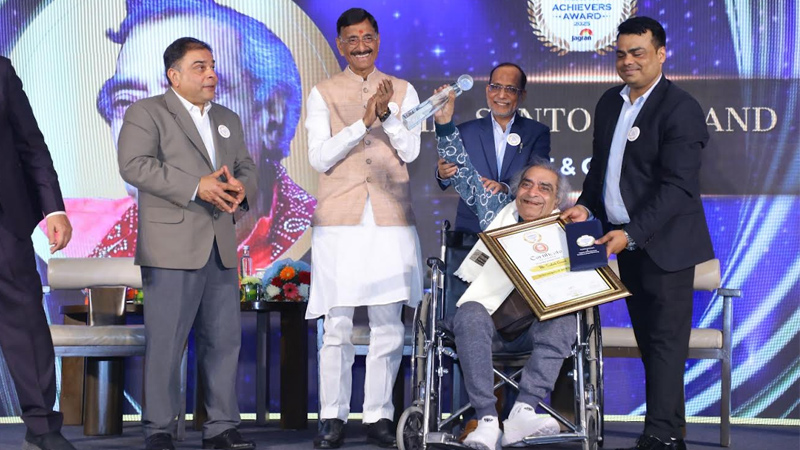
NEW DELHI: Hamdard Laboratories gathered a cross-section of India’s achievers in New Delhi on Friday, handing out the Hakeem Abdul Hameed Excellence Awards to figures who have left their mark across healthcare, education, sport, public service and the arts.
The ceremony, attended by minister of state for defence Sanjay Seth and senior officials from the ministry of Ayush, celebrated individuals whose work blends professional success with a sense of public purpose. It was as much a roll call of achievement as it was a reminder that influence is not measured only in profits or podiums, but in people reached and lives improved.
Among the headline awardees was Alakh Pandey, founder and chief executive of PhysicsWallah, recognised for turning affordable digital learning into a mass movement. On the sporting front, Arjuna Awardee and kabaddi player Sakshi Puniya was honoured for her contribution to the game and for pushing women’s participation onto bigger stages.

The cultural spotlight fell on veteran lyricist and poet Santosh Anand, whose songs have echoed across generations of Hindi cinema. At 97, Anand accepted the honour with characteristic humility, reflecting on a life shaped by perseverance and hope.
Healthcare honours spanned both modern and traditional systems. Manoj N. Nesari was recognised for strengthening Ayurveda’s place in national and global health frameworks. Padma shri Mohammed Abdul Waheed was honoured for his research-backed work in Unani medicine, while padma shri Mohsin Wali received recognition for his long-standing contribution to patient-centred care.
Education and social development also featured prominently. Padma shri Zahir Ishaq Kazi was honoured for decades of work in education, while former Meghalaya superintendent of Police T. C. Chacko was recognised for public service. Goonj founder Anshu Gupta received an award for his dignity-centred rural development initiatives, and the Hunar Shakti Foundation was honoured for empowering women and young girls through skill development.
The Lifetime Achievement Award went to former IAS officer Shailaja Chandra for her long career in public healthcare and governance, particularly in the traditional systems under Ayush.
Speaking at the event, Hamdard chairman Abdul Majeed said the awards were a tribute to those who combine excellence with empathy. “These awardees reflect Hakeem Sahib’s belief that healthcare, education and public service must ultimately serve humanity,” he said.
Minister Seth struck a forward-looking note, saying India’s young population gives the country a unique opportunity to become a global destination for learning, health and wellness by 2047.
The ceremony also featured the trailer launch of Unani Ki Kahaani, an upcoming documentary starring actor Jim Sarbh, set to premiere on Discovery on 11 February.
Instituted in memory of Unani scholar and educationist Hakeem Abdul Hameed, the awards have grown into a national platform that celebrates those building a more inclusive and resilient India. For one evening at least, the spotlight was not just on success, but on service with substance.







