News Broadcasting
Conditional Access: A basic guide

MUMBAI: What is conditional access? How does it work? Is it prevalent globally? What should India do? Is the CAS Amendment a good enough framework?
These are among many more questions that are plaguing industry, planners and the viewer. To make CAS simpler and understandable for both the technophile and the technophobe, Indiantelevision.com scoured the net and came up with a list of resources on the WWW. We hope these will help clear out some of the cobwebs and haze around CAS. Happy Reading!!
Conditional access (CA) is a technology used to control access to digital television (DTV) services to authorized users by encrypting the transmitted programming. CA has been used for years for pay-TV services. There are numerous ATSC and DVB-compliant CA systems available for a broadcaster to choose from. The CA system provider provides the equipment and software to the broadcaster who then integrates the CA system into his equipment.

The following describes the conditional access process:
*The receiver receives the digital data stream.
*The data flows into the conditional access module, which contains the content provider’s unscrambling algorithms.
*The conditional access module verifies the existence of a smart card that contains the subscriber’s authorization code.
*If the authorization code is accepted, the conditional access module unscrambles the data and returns the data to the receiver. If the code is not accepted, the data remains scrambled restricting access.
*The receiver then decodes the data and outputs it for viewing.
A CA system consists of several basic components:
Subscriber Management System (SMS): The SMS is a subsystem of the CA system that manages the subscriber’s information and requests entitlement management messages (EMM) from the Subscriber Authorization System (SAS). An EMM provides general information about the subscriber and the status of the subscription. The EMM is sent with the ECM. The ECM is a data unit that contains the key for decrypting the transmitted programs.
Subscriber Authorization System (SAS): The SAS is a subsystem of the CA system that translates the information about the subscriber into an EMM at the request of the SMS. The SAS also ensures that the subscriber’s security module receives the authorization needed to view the programs, and the SAS acts as a backup system in case of failure.
Security module: The security module, usually in the form of a smart card, extracts the EMM and ECM necessary for decrypting the transmitted programs. The security module is either embedded within the set-top box or in a PC Card that plugs into the set-top box.
Set-top box: The set-top box houses the security module that gives authorization for decrypting the transmitted programs. The set-top box also converts the digital signal to an analogue signal so an older television can display the programs. .
Smart Cards: For years, smart cards have been used for pay TV programming. Smart cards are inexpensive, allowing the content provider to issue updated smart cards periodically to prevent piracy. Detachable PC cards allow subscribers to use DVB services anywhere DVB technology is supported.
There are two DVB protocols used by CA systems: SimulCrypt and MultiCrypt. SimulCrypt uses multiple set-top boxes, each using a different CA system, to authorize the programs for display. The different ECMs and EMMs required by each CA system are transmitted simultaneously. Each set-top box recognizes and uses the appropriate ECM and EMM needed for authorization. The ATSC standard uses SimulCrypt. MultiCrypt allows multiple CA systems to be used with one set-top box by using a PC card with an embedded smart card for each CA system used. Each card is then plugged into a slot in the set-top box. Each card recognizes the ECM and EMM needed for authorization.
A typical CA process involves three basic elements: the broadcast equipment, the set-top box, and the security module. The broadcast equipment generates the encrypted programs that are transmitted to the subscriber. When these are transmitted, the set-top box filters out the signals and passes them to the security module. The security module then authorizes these programs for decryption. The programs are then descrypted in real time and sent back to the set-top box for display

News Broadcasting
CNN-News18 to host Fury in the Gulf conclave on West Asia crisis
Three-hour summit to unpack geopolitical fallout and impact on India
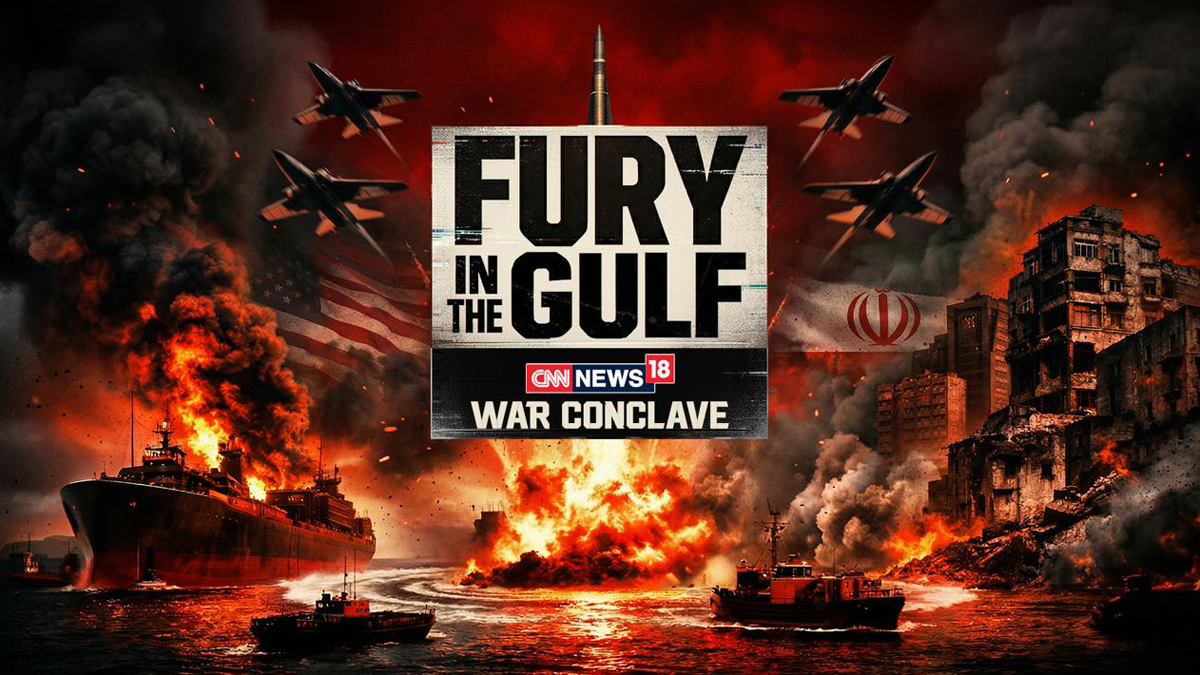
MUMBAI: CNN-News18 is set to host a special three-hour broadcast, Fury in the Gulf – War Conclave, on April 7, aiming to decode the escalating West Asia crisis and its far-reaching implications for India.
Scheduled from 4:00 PM to 7:00 PM, the conclave comes at a time when tensions between Iran and the United States are reshaping global geopolitics and triggering economic uncertainty. With India’s deep energy ties, trade links and large diaspora in the Gulf, the developments carry significant domestic relevance.
Built around the theme ‘Conflict, Consequences, and The Future,’ the programme will feature six curated sessions combining one-on-one interviews and panel discussions. The focus is to cut through the clutter and offer viewers a clearer understanding of the fast-evolving situation.
Key sessions include ‘Diplomacy in Times of War’ featuring Shashi Tharoor, and ‘World After the Iran Conflict’ with voices such as Ram Madhav, Reuven Azar, representatives from the European Union and the Iranian Deputy Envoy. Another session titled ‘Another Dunkirk?’ will bring together K. J. S. Dhillon and Jitin Prasada among others.
CNN-News18 editorial affairs director Rahul Shivshankar said, “In times of war, clarity becomes the most powerful tool. Fury in the Gulf – War Conclave brings together credible voices to address the questions and confusion that arise amid an overwhelming influx of information.”
He added that the initiative is aimed at delivering “facts, perspective, and insight” at a time when misinformation can easily cloud public understanding.
Echoing the sentiment, CNN-News18 CEO– English and business news Smriti Mehra said the conflict marks a defining global moment, with consequences that extend well beyond the region. She noted that the conclave seeks to present the crisis with “depth, nuance and responsibility” so audiences can better grasp its real-world impact.
As geopolitical tensions continue to dominate headlines, the conclave positions itself as an attempt to bring order to the noise, offering viewers a structured, insight-led look at a complex and rapidly shifting global situation.






