News Broadcasting
Computer graphics, animation a focus area at BroadcastAsia 2007

MUMBAI: Organisers for BroadcastAsia2007 have revealed that the show will increase its presence for Comgraphics&Animation2007. Over 80 per cent of exhibition space has already been booked, testament to the event’s relevance and growing importance of the Broadcasting and Animation industries in Asia.
“This is in keeping with market trends and especially across Asia, where the animation industry is set to grow to epic proportions,” said Stephen Tan, chief executive with organiser Singapore Exhibition Services.
For the first time in its 12-year history, BroadcastAsia2007, will dedicate extra floor space to accommodate this new focus area. In 2006, the event was housed in halls 7 & 8 at the Singapore Expo. In 2007, organisers will be utilising half of hall 9 which will incorporate the Comgraphics & Animation 2007 exhibition show floor.

In addition, the show floor at ComGraphics&Aimation2007 will be divided into 4 distinct physical areas.
At the Recruitment Zone, aspiring digital artists can speak to the recruiters looking to hire talented individuals for their company, and those wishing to embark on an education in this area can obtain information from various leading educational institutions. .
At the Interactive Zone, visitors can dive into hands-on demos and get up close with the latest technologies on offer, while at the Exhibitors’ Tech Talk Zone, visitors can listen in to exhibitors who will be sharing insights and knowledge on CGI and Interactive Digital Media techniques and trends in a 45 minute presentation.
As with previous years, the show will also include an Animation Screening & Digital Art Gallery, where visitors can sit back and be treated to a screening of selected animation entries and top-line award winning productions by other professional artists. A tour of the Digital Art Gallery is also offers a kaleidoscope of creative works set around various themes.
Conference & Artist Workshops will also be held alongside the exhibition. The event will also be the venue to host the annual Comgraph Competition, organised by ACM Siggraph Singapore.
Other improvements at BroadcastAsia2007 include gentler hall lighting and an enhanced registration process where visitors only need to register once to access both CommunicAsia 2007 and BroadcastAsia2007 halls.
“We’ve listened to feedback from exhibitors and visitors and have taken steps to improve their overall experience at BroadcastAsia. With less light coming into the halls, products that are receptive to glare can be demonstrated with improved clarity, this would be closer to the environment found in production studios or editing rooms, where lighting tends to be a lot milder. A one-time registration also allows faster and easier movement of people between halls”, added Tan.
BroadcastAsia2007 will be held from the 19 to 22 June and incorporates ProfessionalAudioTechnology2007. The event is held in conjunction with Com Graphics & Animation 2007, Interactive DME, CommunicAsia2007 and Enterprise IT 2007.





News Broadcasting
CNN-News18 to host Fury in the Gulf conclave on West Asia crisis
Three-hour summit to unpack geopolitical fallout and impact on India
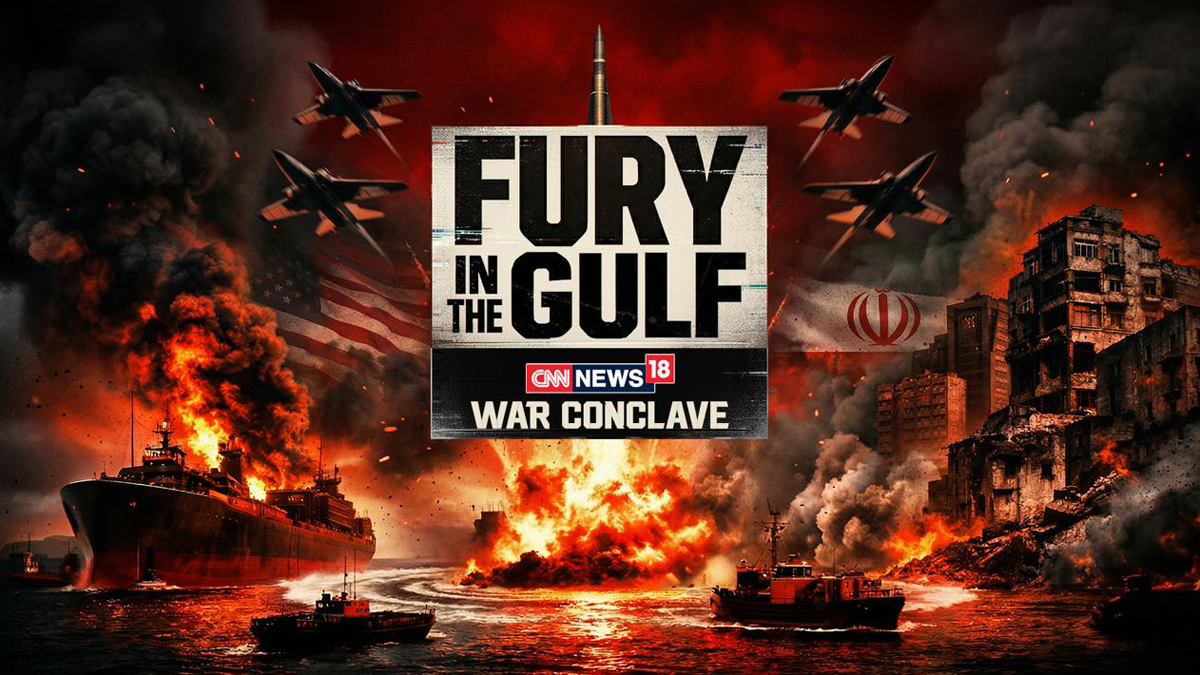
MUMBAI: CNN-News18 is set to host a special three-hour broadcast, Fury in the Gulf – War Conclave, on April 7, aiming to decode the escalating West Asia crisis and its far-reaching implications for India.
Scheduled from 4:00 PM to 7:00 PM, the conclave comes at a time when tensions between Iran and the United States are reshaping global geopolitics and triggering economic uncertainty. With India’s deep energy ties, trade links and large diaspora in the Gulf, the developments carry significant domestic relevance.
Built around the theme ‘Conflict, Consequences, and The Future,’ the programme will feature six curated sessions combining one-on-one interviews and panel discussions. The focus is to cut through the clutter and offer viewers a clearer understanding of the fast-evolving situation.
Key sessions include ‘Diplomacy in Times of War’ featuring Shashi Tharoor, and ‘World After the Iran Conflict’ with voices such as Ram Madhav, Reuven Azar, representatives from the European Union and the Iranian Deputy Envoy. Another session titled ‘Another Dunkirk?’ will bring together K. J. S. Dhillon and Jitin Prasada among others.
CNN-News18 editorial affairs director Rahul Shivshankar said, “In times of war, clarity becomes the most powerful tool. Fury in the Gulf – War Conclave brings together credible voices to address the questions and confusion that arise amid an overwhelming influx of information.”
He added that the initiative is aimed at delivering “facts, perspective, and insight” at a time when misinformation can easily cloud public understanding.
Echoing the sentiment, CNN-News18 CEO– English and business news Smriti Mehra said the conflict marks a defining global moment, with consequences that extend well beyond the region. She noted that the conclave seeks to present the crisis with “depth, nuance and responsibility” so audiences can better grasp its real-world impact.
As geopolitical tensions continue to dominate headlines, the conclave positions itself as an attempt to bring order to the noise, offering viewers a structured, insight-led look at a complex and rapidly shifting global situation.






