News Headline
Community Radio – waiting to take off

Community radio is the latest addition the FM radio bandwagon in the country. With the great radio story just beginning to happen this year, it’s not surprising to find these avenues opening up. But community radio is a non profit, non commercial version of the FM radio sector.
With government policies becoming open and procedures getting simplified, Community Radio (CR) is getting pretty popular; not in terms of the number of radio stations opened, but in terms of the interest it has generated among people. The more interested parties of course, are the universities and educational institutes as they have been getting licenses at short notice. Anna University’s FM venture, Anna FM in chennai was the first of its kind of CRS to start, but not many have been able to replicate its success story.
2007, however, was a very eventful year in terms of the licenses granted. The likes of Mumbai univeristy, Delhi univeristy and others have been the leading institutions to procure these CRS licenses. Delhi university CRS has already gone on air in 2007 and Mumbai university’s own radio station should go live in early 2008.

But the basic objective of CRS should be understood. With the advent of private FM radio channels, entertainment and radio have become synonymous with films and youth. But CRS can be a very interesting change or option in terms of FM broadcasting. If private radio is all about fun and entertainment, CRs can offer some infotainment via fun programmes tackling various acadmeic and social topics.
Sounds vague, but if the CRS can be a professional radio run by amateurs, then the basic target is achieved. That’s precisely what the CRS holders need to do in 2008.
Technology too is becoming cheaper and easily available. So, someone can easily start a CRS for as low as Rs 10 lakh. This can include some very good equipment which will help the operators to package the CRS programming in a very FM and private radio-like fashion. This is the need of the hour and can be surely achieved.
Also, it becomes a very healthy and attractive sector for service providers as you need many players, if the number of CRS in country has to reach 500 in the coming years. A very good volume business oppurtunity indeed.
Even the UN has made plans to assist the building of various CRs across the country as a part of its Millenium Development goals.
As for CR, like every coin, it has two sides to the story.
On the flip side, people have not yet understood the basic idea of starting a CRS. It does not imply just running a station for the sake of it, neither does it mean being revolutionary with your own radio. It’s also not about being a drag, serious type of radio.
A CRS can be a very important link for youngsters and amateurs alike. If the hobbyist can provide good topics, amateurs can train themselves for a good radio career while working at a CRS. You need to have infotainment programmes to attract people. With the government allowing a 100W transmitter, you can easily cover an area of about 40 odd km, a pretty big area to operate in. Also, with the government allowing five minutes per hour as commercial time, the main headache of sustaining a CRS disappears. If your CRS can be innovative and intelligent, a private radio player in your area might also be interested in helping you generate revenue on a sharing basis. I see no harm in this.
Another problem is, some people think of CRS as a completely non profit idea which should not earn money. But, I guess you need money to at least survive and there is nothing as a free dinner in life any more.
If we are reading this article, it’s to get something in return, right !
We should all look at the CRS as a great oppurtunity to learn new tricks in radio, train yourself to be a future radio broadcaster and make FM radio a useful medium for all in all ways.
2007 was really a mind opener for the CRS sector, and I sincerely hope that 2008 will soon set up decent examples of innovative and infotainment led CRS in the country.






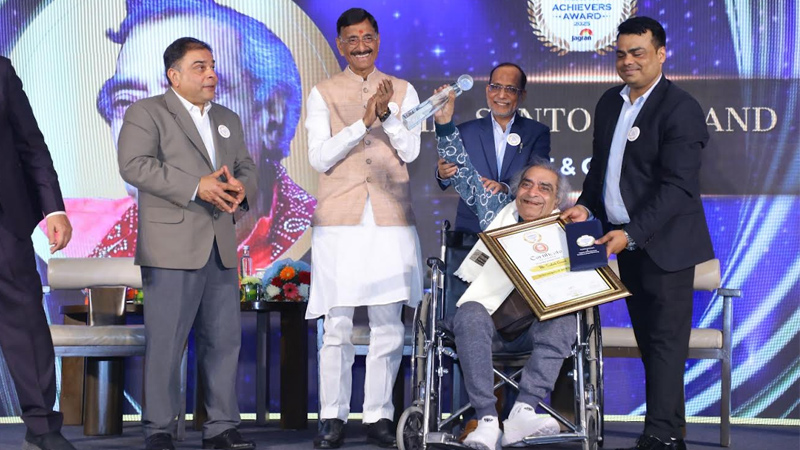
NEW DELHI: Hamdard Laboratories gathered a cross-section of India’s achievers in New Delhi on Friday, handing out the Hakeem Abdul Hameed Excellence Awards to figures who have left their mark across healthcare, education, sport, public service and the arts.
The ceremony, attended by minister of state for defence Sanjay Seth and senior officials from the ministry of Ayush, celebrated individuals whose work blends professional success with a sense of public purpose. It was as much a roll call of achievement as it was a reminder that influence is not measured only in profits or podiums, but in people reached and lives improved.
Among the headline awardees was Alakh Pandey, founder and chief executive of PhysicsWallah, recognised for turning affordable digital learning into a mass movement. On the sporting front, Arjuna Awardee and kabaddi player Sakshi Puniya was honoured for her contribution to the game and for pushing women’s participation onto bigger stages.
The cultural spotlight fell on veteran lyricist and poet Santosh Anand, whose songs have echoed across generations of Hindi cinema. At 97, Anand accepted the honour with characteristic humility, reflecting on a life shaped by perseverance and hope.
Healthcare honours spanned both modern and traditional systems. Manoj N. Nesari was recognised for strengthening Ayurveda’s place in national and global health frameworks. Padma shri Mohammed Abdul Waheed was honoured for his research-backed work in Unani medicine, while padma shri Mohsin Wali received recognition for his long-standing contribution to patient-centred care.
Education and social development also featured prominently. Padma shri Zahir Ishaq Kazi was honoured for decades of work in education, while former Meghalaya superintendent of Police T. C. Chacko was recognised for public service. Goonj founder Anshu Gupta received an award for his dignity-centred rural development initiatives, and the Hunar Shakti Foundation was honoured for empowering women and young girls through skill development.
The Lifetime Achievement Award went to former IAS officer Shailaja Chandra for her long career in public healthcare and governance, particularly in the traditional systems under Ayush.
Speaking at the event, Hamdard chairman Abdul Majeed said the awards were a tribute to those who combine excellence with empathy. “These awardees reflect Hakeem Sahib’s belief that healthcare, education and public service must ultimately serve humanity,” he said.
Minister Seth struck a forward-looking note, saying India’s young population gives the country a unique opportunity to become a global destination for learning, health and wellness by 2047.
The ceremony also featured the trailer launch of Unani Ki Kahaani, an upcoming documentary starring actor Jim Sarbh, set to premiere on Discovery on 11 February.
Instituted in memory of Unani scholar and educationist Hakeem Abdul Hameed, the awards have grown into a national platform that celebrates those building a more inclusive and resilient India. For one evening at least, the spotlight was not just on success, but on service with substance.






