iWorld
Comment: Reliance Industries’ telecom-media play fascinating, but complex & challenging too

“This breakthrough and revolutionary device named JioPhone, along with Jio’s disruptive tariff, will unleash the power of Digital Life in the hands of 1.3 billion citizens of the largest democracy in the world,” Mukesh Ambani told a gathering of about 2,000 at Reliance Industries’ 40th AGM in Mumbai last week even as thousands round the world followed his announcements online, “Jio will be the greatest accelerator of the Bharat-India connectivity. Indians even in the remotest villages will now have the same access to digital entertainment, digital learning, e- healthcare, e-banking, e-governance and real-time information that are enjoyed by those in cities like Mumbai or Delhi.”
India and the domestic stock markets gasped as Ambani, head of one of world’s largest petrochem companies in the world unveiled sops like practically cost-free handsets (Jio Phone), free voice calls and limited-yet-very-attractive data plan for Jio phone subscribers. Setting the cat amongst the pigeons, he also announced that the 4G LTE Jio Phone handsets could be hooked to a TV set to watch streaming videos on a larger screen — an Apple TV-like or Chromecast-like devise, as the experts described it.
The announcements — disruptive, as Ambani admitted himself — had an immediate effect on 21 July 2017: share prices of other telcos and some market-listed DTH and MSO companies tumbled on the stock market. If people at some traditional media houses are to be believed, strategists started scouring excel sheets to examine where and how their bottomlines could get affected and what could be a flanking strategy, if at all that was needed.

The $30 billion fourth-generation mobile network Jio, launched in September 2016, already has 100 million paying customers. The target is 500 million of those Indians who use low-end feature phones. The Jio Phone is to be available to the masses from September (beta testing starts August 2017) for free on a three-year refundable deposit of Rs. 1,500. Under the `Dhana Dhan’ plan of Rs. 153 per month, subscribers can get unlimited data with conditions. As there will be a “fair usage policy of half a GB per day to ensure that bandwidth is fairly apportioned for every user”, as Ambani said, the `unlimited’ data may not be as free flowing as being envisaged.
But if Jio is targeting the 500 million feature phone users in India, mostly in non-urban areas, even Rs. 153 per month could be a bit daunting. So, there would be sachet packs of Rs. 54/week and a two-day plan for Rs. 24 that provide similar value. Jio is targeting 5 million handsets to be available every week and from last quarter of 2017 they’d be manufactured in India under Make In India programme of the present government. Talk about killing birds with a stone!
If Ambani called the Jio project a disruptive one, he was actually telling the truth. The question is: how disruptive and what’s the trigger?
“The answer in one word: data. The refining and petrochemicals group is changing its stripes with an audacious and expensive bet on data, which Mukesh Ambani says is `the new oil’,” a Bloomberg analyst wrote in a newspaper, adding, “Assuming half of the country’s 500 million feature-phone users switch (to Jio phones), Jio collects $6 billion interest-free for three years.”
One would say a brilliant strategy to lock in the refundable amount for the phone and gain additional cash for expansion; not that Reliance is falling short immediately on funds.
Now, the questions arise. Will Jio Cable TV devise impact the business of DTH and satellite TV operators’ bottomlines? Should companies like Tata Sky, Dish TV/Videocon D2h, Airtel Digital and Sun Direct be worried? Can Jio Cable TV replace the low-cost cable services provided by the likes of Siti Network, Hathway-GTPL, DEN Network, SCV, Fastway, Ortel, InCable, Nxt Digital, etc? If it’s looking to replace the present TV services — delivered via satellite, cable and telecom infrastructure (OTT) — from where will it get varied programming? Will it tie up for content with non-Reliance Industries controlled broadcasters like Star, Zee, Sony Pictures, Discovery, HBO, etc? Will the broadcasters ultimately end up paying the Jio platform for carriage of their content or Jio pay for outside content? Or, is Jio another experiment at triple play from a company that’s sitting on piles of cash because its petrochem business is booming?
There are no clear answers at the moment to such posers.
A Bank of America Merrill Lynch advisory on 21 July 2017 while analyzing and lauding some aspects of the Jio announcements (smaller telco names losing their “value proposition” of lower priced voice offering, is one such observation) pointed out, “We do not see today’s announcement as being negative for Dish (one of India’s largest DTH operator from the Zee group now in the process of merging another operator Videocon D2h with itself), as the announced plan caps the TV viewing to 3-4 hours per day, which will prevent users to switch to Jio Phone TV. However, we do see long term DTH ARPU growth coming under pressure from the offer and related developments.”
This brings us to the question of content on various Jio networks. Remember, the company has been testing its MSO services and has dropped hints about a DTH service too whose nature of delivery is not yet clear.
At the moment, RIL controls 53 television channels and several digital media properties, all of them housed across Network18 and joint venture Viacom18. Apart from these, RIL’s media arms are also the “partner of choice in India” (Ambani’s words) for leading global brands such as CNBC, CNN and Forbes magazine.
The combined Network18 channels on an average reach over 500 million viewers every week, Ambani claimed, adding with digitization of the media business and expansion of mobile broadband and fixed broadband connectivity, driven by Jio, the media and entertainment part of RIL’s business empire has “exponential growth potential in the future”.
While RIL was preparing to announce its revolutionary Jio phone and bundled services at mind-numbing price points, it had already stitched up a deal with one of India’s biggest and best content producers, Balaji Telefilms Ltd.(BTL), for a stake that was a shade under 25 per cent at a cost of Rs. 4133 million. BTL said that the proceeds from the transaction would be used to up content development, especially for ALT Balaji (the OTT platform).
Balaji had already integrated the ALT app with JioMoney, the mobile wallet from Reliance Payment Solutions, earlier this year to provide digital transaction experience to its subscribers. RIL’s stake in Balaji may force the content producer to change its content strategy to tailor it more to Reliance’s needs. Similar strategic stakes in some other content producing companies cannot be ruled out in future as also taking control of a financially-beleaguered broadcasting company having a few on-air TV channels.
So, 53 up and running TV channels of various hues and in several Indian languages, combined with Balaji’s content generating prowess, does give RIL access to quite a big content library to push on its Jio Phone platform. Even if for limited viewing on cheap data packs.
Pointing out that Reliance Jio capex will reduce drastically going forward, a former asset manager at a Mumbai brokerage firm opined that RIL already has 100 million+ paying Jio subs, it has access to the technology, content and capital and, more importantly, got management bandwidth, which all combine to become a heady cocktail for any successful telecoms-media company — a la Comcast or Netflix or a media behemoth that has the potential of ruling the waves.
But a behemoth is also more prone to questions from regulatory regimes; especially in a country like India where prevalence of multiple languages make the job of a regulator to define monopoly that much more difficult.
And, that brings us to our last important issue that Reliance Jio phone and allied services raise: monopoly and potential discrimination. Since Jio is bundling several apps and services, critics observe, it’s already started to build a `paid-for walled garden’. Will such a `garden’ be against Net Neutrality — an issue that’s being presently studied by Indian telecoms and broadcast regulator TRAI? An arrangement between Facebook and Anil Ambani-controlled Reliance Telecommunications forinternet.org or free Internet was struck down by TRAI in 2015 giving a major setback to the social media giant.
Questions, questions and more questions. So, we’d leave it here presently with straws in the wind. But the head of an MSO company, on condition of anonymity, aptly summed up the Reliance’s telecom-media play: “The threat has arrived, though these are early days to say as to who will get hurt.”
ALSO READ:
Jio to raise Rs 200 bn for next phase of expansion
Mukesh Ambani offers JioPhone from 15 Aug
Reliance Jio to launch Android powered 4K STBs





iWorld
Tech firms tweak office operations amid LPG shortage concerns
Infosys, HCLTech and Cognizant adjust cafeteria services and work policies.
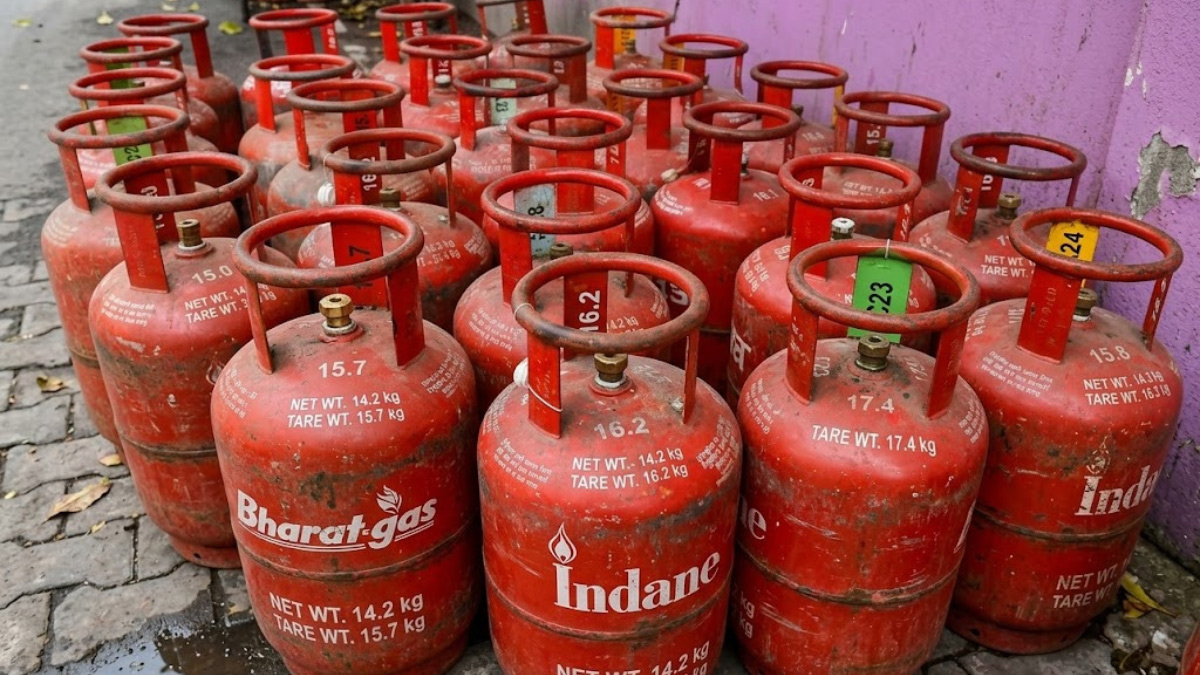
MUMBAI: When geopolitics turns up the heat, even office cafeterias start feeling the burn. Several technology companies in India are adjusting workplace operations and food services as concerns over a nationwide shortage of liquefied petroleum gas (LPG) grow following escalating tensions in West Asia. Major IT firms including Cognizant, Infosys and HCLTech have begun rolling out contingency measures to reduce dependence on office cafeterias that rely heavily on commercial LPG.
The disruption stems from rising geopolitical tensions involving Iran after military action by the United States and Israel reportedly led to the closure of the Strait of Hormuz, a critical global shipping route for oil and gas supplies. The closure has disrupted the movement of LPG and liquefied natural gas across international markets, triggering concerns about supply constraints and price volatility.
According to a report by The Times of India, Cognizant has advised employees to bring their own meals to office where possible to reduce reliance on office cafeterias dependent on LPG based cooking.
The company has reportedly told staff that it is preparing for potential disruptions driven by supply prioritisation, price fluctuations and pressure on vendor networks.
As part of contingency planning, Cognizant is identifying alternative food vendors that do not rely on LPG. These include kitchens using induction based or solar powered cooking systems.
The company is also exploring partnerships with cloud kitchens that operate on electric or solar power to ensure uninterrupted food supply in case conventional cooking gas availability worsens.
Additionally, Cognizant is evaluating the possibility of expanding work from home or hybrid arrangements for non critical roles, partly to reduce commuting exposure if fuel prices rise sharply due to global energy disruptions.
Meanwhile, HCLTech allowed employees at its Chennai office to work from home on March 12 and March 13 after cafeteria vendors were unable to operate because of the LPG shortage.
Several food service vendors at the campus reportedly suspended operations as they struggled to secure cooking gas supplies, prompting the company to permit staff to work remotely for the two days.
Infosys has also issued internal advisories across multiple locations, including its campuses in Bengaluru and Chennai.
The company informed employees in Bengaluru that cafeteria services would continue but with reduced menu options due to concerns around commercial LPG availability.
As part of the temporary adjustments, live food counters have been suspended, and employees have been encouraged to bring home cooked food while the situation evolves.
While LPG shortages in India remain a developing situation, the measures taken by these technology firms highlight how global geopolitical disruptions can ripple through unexpected corners of the economy, even the humble office lunch.
For companies with large campuses and thousands of employees relying on daily cafeteria services, cooking fuel shortages can quickly turn into an operational challenge. Until global supply chains stabilise, many workplaces may find themselves rethinking everything from food sourcing to flexible work policies.