News Headline
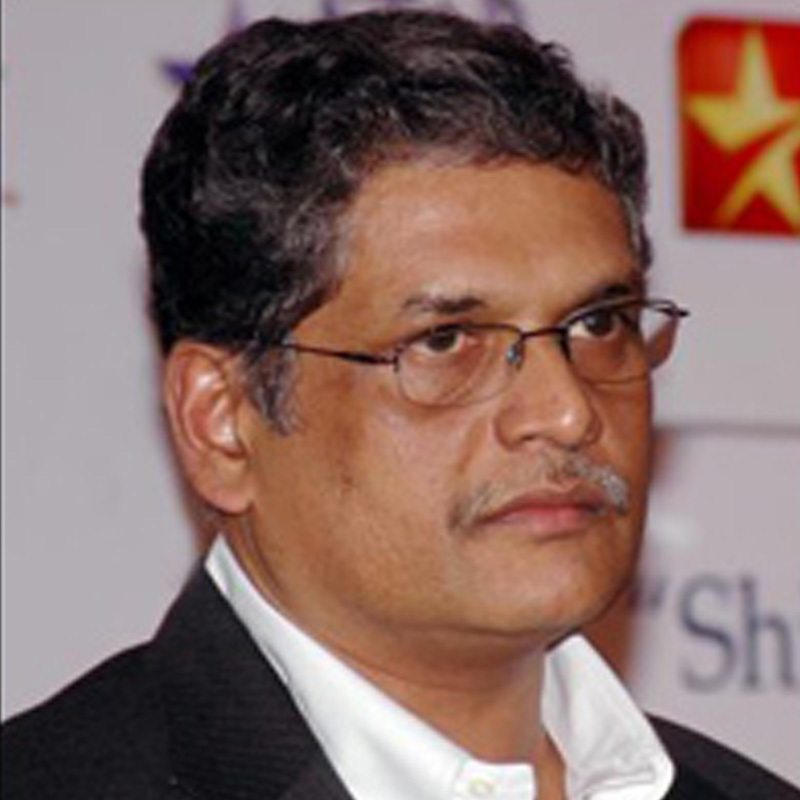
Coming Soon- A Tsunami of Creativity: Reliance Industries Ltd President of media and entertainment Jagdish Kumar

Year 2012: “I missed the TV show last night but watched the TV show on my IPad later”, a friend informs me.
On the face of it, that statement looked perfectly normal. But wait…just think a bit more on that statement. Why should a video show be known as a “TV show” and be tagged only to television, which is but a mere technical device for watching video content?

Extending this argument further why should the TV programming industry, which is a thriving and flourishing content industry, be known by only one of the many consumption devices which consumers use for watching video content? Nomenclatures like “Television industry” and “Film industry” is rapidly becoming meaningless; it is time to rename these industries by a label, which truly reflects their character: ” Content Industry”.
Circa (not too far in the distant future): There will come a time when the same friend will tell me “My IPad is not working but I watched the video on Television ” or ” I surfed the Internet on my smart TV”.
Now for some statistics to set the background to the point, I am attempting to make on creative forces: On last count we are a nation with a population of 1200 million people. For a country of our size that prides itself for the progress we have made in the IT industry, it is a shame that broadband penetration is currently abysmally low at 1 per cent with 12 million broadband connections!
The figure for broadband penetration will be embarrassingly smaller when we consider at least 1 Mbps as the cut-off to define a real broadband connection instead of the current definition of 256 Kbps. The network effects of ubiquitous real broadband connectivity on a nation‘s economy are well proven and demonstrated. Various research studies have shown that a 10 per cent increase in broadband penetration can increase GDP by 1.5 per cent. It is estimated that India lost approx. $100 billion in GDP due to the failure in achieving the broadband penetration target of 40 million by 2010 set by the National Broadband Plan, 2004.
Thankfully various initiatives, both private and public, are at work to rectify this anomaly. The stated target of the Indian government is to reach a level of 100 million broadband connections by 2014. Given current indications and trends, we will hopefully surpass this target by a large margin, mainly driven by portable broadband connectivity devices like Tablets and Smartphones.
Now back to the topic under discussion: The current state of the video industry is characterised by nearly homogenous content which panders to the overwhelming demands of a vast majority while completely ignoring the diversity and plurality of our nation. There is no system, which incentivizes and encourages creativity and innovation. All players in this space, be it moviemakers or producers of other forms of video entertainment, have been drugged by a market system which panders to the lowest common denominator. Viewers are narcotized into a cloistered environment by a constant barrage of award ceremonies, high-cost and alien format shows, “scripted” reality shows and highly emotive and blingful performances masquerading as social drama.
The tyranny of weekly programme ratings and vagaries of an advertising based business model coupled with the imperfections in the content distribution system by way of under-declared subscribers and carriage fees has shackled the content industry. Resource allocation is governed by businesses, which are sustained on the principle that puts a disproportionate focus on combating competition to maintain pole positions in the weekly ratings charts rather than creating innovative content for the consumer. Add to this the vanities of the participants and ego clashes between creative personalities, we have a potent mix that has drawn the content industry into a vicious vortex trapping all the players: creators, artists, managers, media agencies,advertisers, distributors and consumers.
What does the future hold for the content industry? I foresee a combination of 4 forces that will define the way forward for the content industry:
a) The proliferation of DTH connections
b) The last mile digitisation drive by the Government of India
c) The growth in broadband connectivity and
d) The unleashing of creative forces that can easily find avenues for exhibition.
Digitisation enabled by the above mentioned forces would equip content providers with the ability to reach their target audience with minimal intervention from intermediaries. Content creation will become more consumer focused and not get distracted by short-term demands of the current system. Content will not fall into strait jacket formats of half hour episodes or three-hour movies; even a one-minute video can deliver a compelling and riveting story provided it has the ability to reach relevant viewers, who will be more than willing to attribute value for good quality.
Consumers will be the winners in a digital environment. They will not be treated like sheep who are shepherded to watch content which is pushed down to them without any consideration to their time, needs or preferences. They will be freed from the clutches of the vanity of channels and their programming schedules.
The technique for making videos is fast becoming easily accessible to the common man. Every person who has a smartphone with a camera has the potential to create a video to strike a primordial chord and become as sensational as the recent song, Kolaveri Di. Such smartphones are rapidly becoming a necessity rather than an item of luxury.
In my view, the fourth force mentioned above, “unleashing of creative forces”, is going to be the surprise element in the future. With the inherent creativity and “jugaardness” in Indians, I am betting that we will witness some ingenious form of content, application or service, which ignites a primal human instinct and becomes a rage in a short time. Facebook is an example that springs to mind; Facebook tapped into a primary human need for social interaction and created an enterprise that has reached a value of nearly $100 billion in a short span of 8 years! Such an enterprise is waiting to happen in India in the content space.
A word of caution to people who think that television as a device for media consumption is losing the battle for eyeballs. Evidence from developed markets has shown that newer media consumption devices like Tablets and Smartphones supplement television viewing. Research has shown that proliferation of newer devices has not cannibalized television viewing; it has actually increased overall media consumption. People watch television while simultaneously interacting with other devices to enhance their viewing experience.
Like all other industries, the content industry is also akin to a living organism facing relentless forces, which may be either headwinds or tailwinds to the players in varying proportions. And like living organisms, the content industry will learn to adapt and change.
The race to get to the Consumer is getting exciting. Thankfully, it is a never-ending race with only one permanent winner who has no rival… the Consumer!!



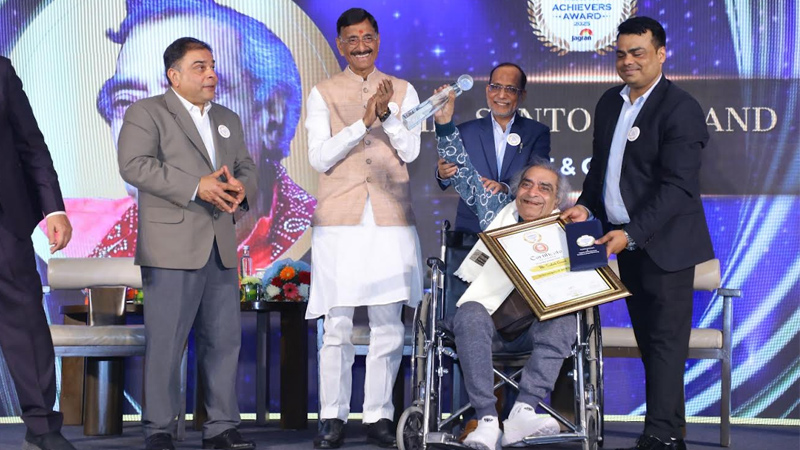
NEW DELHI: Hamdard Laboratories gathered a cross-section of India’s achievers in New Delhi on Friday, handing out the Hakeem Abdul Hameed Excellence Awards to figures who have left their mark across healthcare, education, sport, public service and the arts.
The ceremony, attended by minister of state for defence Sanjay Seth and senior officials from the ministry of Ayush, celebrated individuals whose work blends professional success with a sense of public purpose. It was as much a roll call of achievement as it was a reminder that influence is not measured only in profits or podiums, but in people reached and lives improved.
Among the headline awardees was Alakh Pandey, founder and chief executive of PhysicsWallah, recognised for turning affordable digital learning into a mass movement. On the sporting front, Arjuna Awardee and kabaddi player Sakshi Puniya was honoured for her contribution to the game and for pushing women’s participation onto bigger stages.
The cultural spotlight fell on veteran lyricist and poet Santosh Anand, whose songs have echoed across generations of Hindi cinema. At 97, Anand accepted the honour with characteristic humility, reflecting on a life shaped by perseverance and hope.
Healthcare honours spanned both modern and traditional systems. Manoj N. Nesari was recognised for strengthening Ayurveda’s place in national and global health frameworks. Padma shri Mohammed Abdul Waheed was honoured for his research-backed work in Unani medicine, while padma shri Mohsin Wali received recognition for his long-standing contribution to patient-centred care.
Education and social development also featured prominently. Padma shri Zahir Ishaq Kazi was honoured for decades of work in education, while former Meghalaya superintendent of Police T. C. Chacko was recognised for public service. Goonj founder Anshu Gupta received an award for his dignity-centred rural development initiatives, and the Hunar Shakti Foundation was honoured for empowering women and young girls through skill development.
The Lifetime Achievement Award went to former IAS officer Shailaja Chandra for her long career in public healthcare and governance, particularly in the traditional systems under Ayush.
Speaking at the event, Hamdard chairman Abdul Majeed said the awards were a tribute to those who combine excellence with empathy. “These awardees reflect Hakeem Sahib’s belief that healthcare, education and public service must ultimately serve humanity,” he said.
Minister Seth struck a forward-looking note, saying India’s young population gives the country a unique opportunity to become a global destination for learning, health and wellness by 2047.
The ceremony also featured the trailer launch of Unani Ki Kahaani, an upcoming documentary starring actor Jim Sarbh, set to premiere on Discovery on 11 February.
Instituted in memory of Unani scholar and educationist Hakeem Abdul Hameed, the awards have grown into a national platform that celebrates those building a more inclusive and resilient India. For one evening at least, the spotlight was not just on success, but on service with substance.







