GECs
Colosceum and Ormax to launch consumer-created fiction shows


MUMBAI: There is no dearth of creativity in the country and to give a new meaning to how content is generated, Colosceum Media and Ormax Media, have come together to introduce consumer-created fiction shows for the Indian television industry.
Consumer research was conducted over the last six months across more than 15 cities in India to generate original stories and then tested using Ormax True Value, an industry standard that has been used on more than 250 television shows across more than 20 channels since 2008. Together, the two companies will approach leading broadcasters with shows that have tested exceptionally well, with more than 85 per cent probability of success.
Speaking about the deal, Colosceum Media CEO Lalit Sharma said, “Ormax has used very advanced consumer research techniques to generate original stories for daily fiction shows for Hindi GECs. These concepts are stories that have been both created and validated with the consumers. A story may have originated in Indore, developed in Jalandhar and then fine-tuned by another set of consumers in Amravati. Currently, production houses make large investments in getting concept developed in-house. The broadcasters then make investments to judge their viability. By creating concepts that are sourced from consumers, we are creating a win-win situation for all stakeholders.”

Ormax Media founder and CEO Shailesh Kapoor said, “It’s been a long but fulfilling process of engaging with the actual consumers in story generation. Having produced shows like Roadies, Splitsvilla and MasterChef India, Colosceum are an established leader in the non-fiction space. We’re excited to partner them in their plans to establish a strong presence in the fiction space.”
Sharma added, “Having produced shows like Jai Shree Krishna, Bandhan, Shakuntala and Bani Ishq Da Kalma in partnership with boutique creative outfits, we were keen on identifying a differentiated proposition for our next fiction offering. We couldn’t have asked for a better partner than Ormax, who are a leader in providing the industry with market insights for seven years now.”
“When we meet the broadcasters, we are not just going with a concept but a complete consumer package that has a potent combination of consumer insights, fine storytelling and a very capable creative and producing team.” Kapoor stated.
Tulsea Pictures conceived this partnership and brought both Colosceum and Ormax together.
“We believe this partnership will be disruptive and will bring the much need diversification in the themes of shows running on prime time. The business model created by this partnership is very unique and there is no global precedence that we are aware of. It’s content of the consumer, by the consumer, for the consumer,” said Tulsea Datta Dave. “It’s very exciting to bring Colosceum and Ormax together. They are leaders in their respective fields and this innovative partnership has potential implications for the global entertainment industry.”






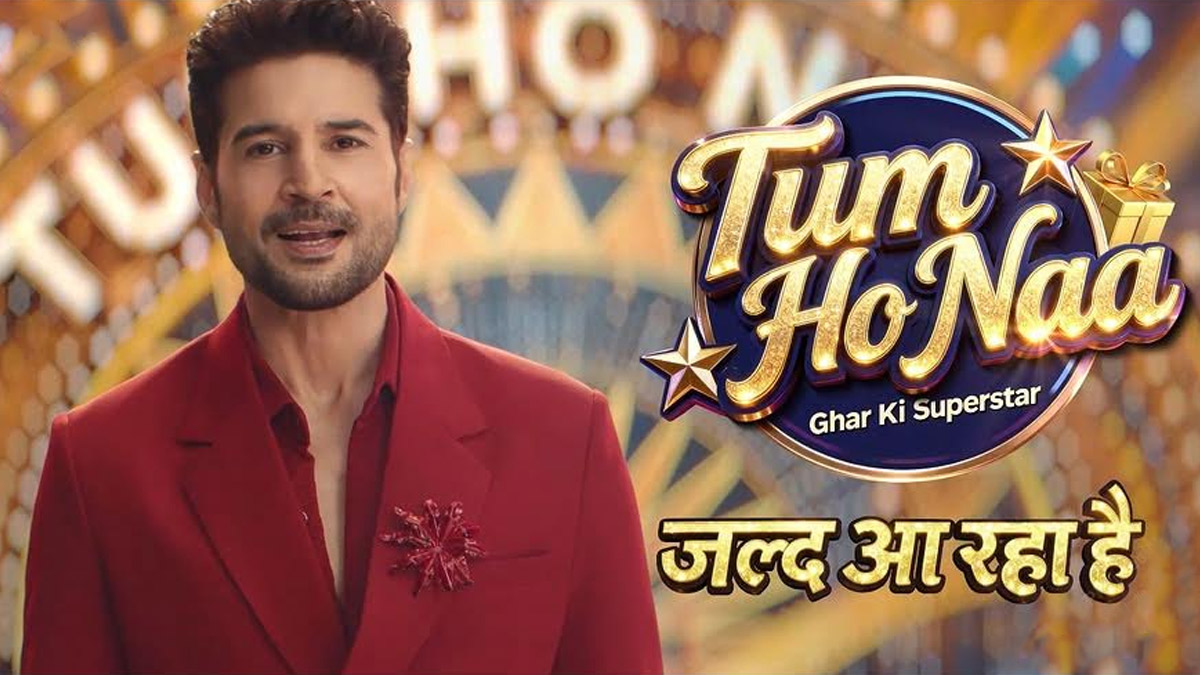
MUMBAI: Lights, camera… connection because this time, the game isn’t just about winning, it’s about who’s with you. Sony Pictures Networks India is gearing up to launch a new reality game show, Tum Ho Naa, expanding its unscripted slate with a format that promises both emotion and engagement.
The show will premiere soon on Sony Entertainment Television and stream on Sony LIV, with Rajeev Khandelwal stepping in as host. Known for his measured screen presence and selective choices, Khandelwal’s return to television adds a layer of familiarity and credibility to the upcoming format.
While specific details of the gameplay remain under wraps, the positioning suggests a reality format that leans as much on emotional resonance as it does on competition, an increasingly popular blend in Indian television, where audiences are gravitating towards content that offers both stakes and storytelling.
Khandelwal, reflecting on his return, noted that his choices have often been guided by instinct rather than convention, describing Tum Ho Naa as a project that feels “close to the heart”. His association also signals Sony’s continued focus on anchoring new formats with recognisable faces who bring both relatability and depth.
The launch comes at a time when broadcasters are doubling down on original non-fiction formats to drive appointment viewing, even as digital platforms expand parallel reach. By placing the show across both linear television and OTT, Sony appears to be aiming for a dual-audience strategy capturing traditional viewers while engaging digital-first consumers.
As the countdown to premiere begins, Tum Ho Naa positions itself not just as another game show, but as a reminder that sometimes, the biggest prize on screen isn’t the jackpot, it’s the journey shared along the way.






