News Broadcasting
Co-location


Co-location, in this particular context, is the term used to mean locating the transmitting setups of various broadcasters of a particular city in the same premises and sharing the common tower. This term gathers more significance in the situations of lesser frequency separation between the channels allotted for the same city. The basic idea behind co-location is that the Effective Radiated Power (ERP) of all the channels would be nearly the same and since they are located at the same site, they will be attenuated similarly with the distance thus maintaining the same protection between the channels.
In this context, following observations are made:

(i) Co-location in metro cities was mandatory in Phase-I. The objective was to increase the availability of frequencies by spacing them 400 kHz instead of 800 kHz.
(ii) Most of the representations received by the Committee have opposed co-location due to the following reasons:
(a) For co-location purpose, it is necessary for private broadcasters to form a consortium.
(b) It is very difficult to form a consortium of private broadcasters competing with each other.
(c) If a Private broadcaster backs out, his share of cost on common infrastructure would have to be borne by the remaining ones.
(d) Private broadcasters have to bear substantial cost on studio-transmitter link as in co-location case; the studio setup would mostly be at a different location.
(e) There are number of other operational difficulties.
In view of the above difficulties expressed by the private broadcasters, it is recommended that co-location may not be made mandatory in Phase-II.



News Broadcasting
Kamlesh Singh receives Haldi Ghati Award from MMCF
India Today Group editor honoured for three decades of journalism at Udaipur ceremony.
MUMBAI- Kamlesh Singh just turned a lifetime of sharp words into a shiny shield because when journalism wakes up a society, even the Maharana of Mewar wants to pin a medal on it.
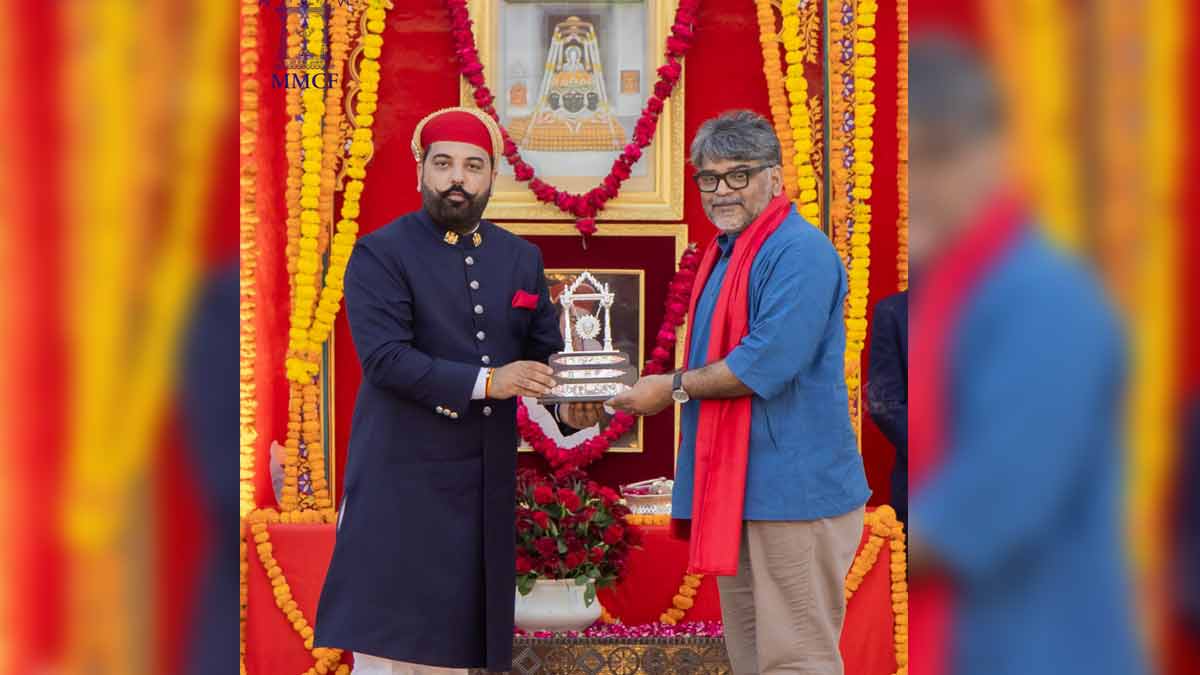
The Maharana of Mewar Charitable Foundation (MMCF) conferred its prestigious Haldi Ghati Award on Kamlesh Singh, a senior editor at the India Today Group, during a ceremony in Udaipur on 15 March 2026. The national award, instituted in 1981-82, recognises “work of permanent value that initiates an awakening in society through the medium of journalism.”
Singh, who leads several editorial initiatives including Aaj Tak Radio, the Teen Taal community and The Lallantop, was presented the honour by Lakshyaraj Singh Mewar, Managing Trustee of MMCF. The citation highlighted his three decades of contributions to Indian media, innovations in digital journalism, mentoring young reporters, and his popular podcast persona “Tau” on Teen Taal, which fosters thoughtful public discourse.
The Haldi Ghati Award, named after the historic Battle of Haldighati symbolising valour and resilience, is one of four national awards given annually by MMCF. Past recipients include Tavleen Singh, Piyush Pandey and Raj Chengappa.
Other honourees this year included Padma Vibhushan Pt Hari Prasad Chaurasia, Vedamurti Devvrat Rekhe, Treeman of India Marimuthu Yoganathan, Vir Chakra Capt Rizwan Malik, and US-based researcher Molly Emma Aitken, who received the Colonel James Tod Award for contributions to understanding Mewar’s spirit and values.
In an era where headlines often shout louder than substance, the MMCF quietly reminded everyone that real journalism isn’t about noise, it’s about the quiet, persistent work that stirs society awake, one thoughtful story at a time.