News Broadcasting
CNN’s Inventing Tomorrow explores the impact of Covid2019 on education and self-learning

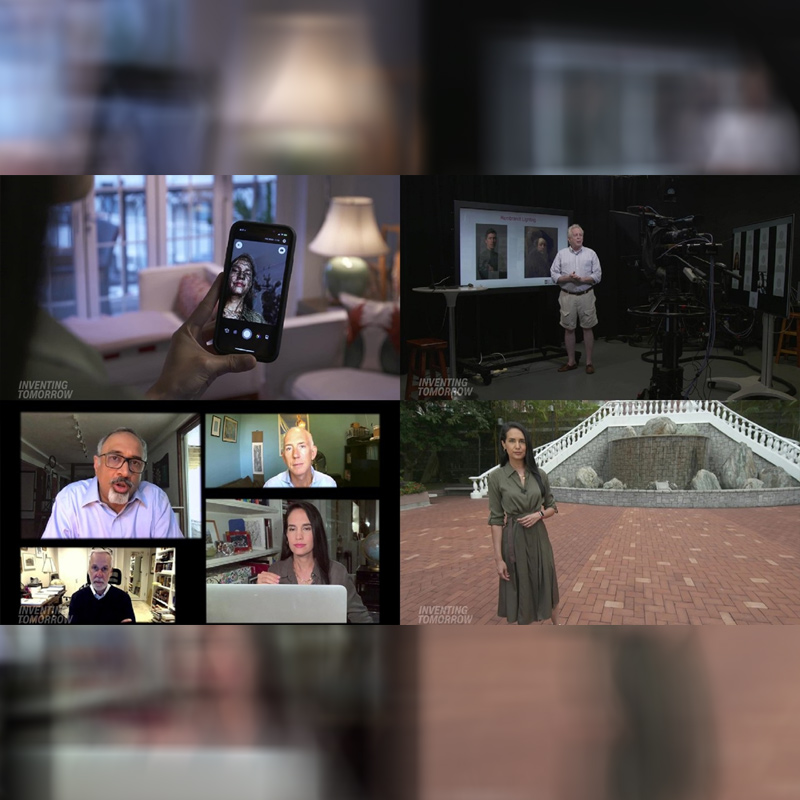
MUMBAI: When schools closed their doors around the globe to contain the spread of Covid2019, what followed was the biggest home learning experiment the world has ever seen.
In the latest edition of Inventing Tomorrow: Tech in a Time of Pandemic, CNN’s Kristie Lu Stout examines the technologies that have reshaped education for students, teachers and parents.
As schools across Asia begin to reopen, Lu Stout reports from Hong Kong University (HKU), where Keith Richburg, the director of their journalism faculty, outlines how higher education has adapted to the digital transition and whether HKU will maintain online classes in the future.

Lu Stout speaks to experts from ed-tech and remote learning to hear how these industries have rapidly developed periphery of the conventional education system.
CNN hears from Simon Nelson, CEO of FutureLearn, Sanjay Sarma, VP of open learning, Massachusetts Institute of Technology and Paul LeBlanc, pr,esident, Southern New Hampshire University, on how prepared educational institutions were for the shift to online learning and whether online teaching will ever be as attractive as traditional tuition.
With millions of people furloughed or laid off during the lockdown, adult education courses and self-improvement apps are also experiencing a huge boom. Lu Stout speaks to Luis von Ahn, the co-founder and CEO of Duolingo, about how the language-learning app uses AI to tailor the experience to each student and how long it takes to develop proficiency in a new language.
CNN Inventing Tomorrow Education Trailer from CNN Creative Mktg on Vimeo.







News Broadcasting
News18 India launches Command Centre war explainer with Arya
New show shifts from debates to decoding global conflicts and impacts

MUMBAI: News18 India has rolled out a new war-focused programme, Command Centre, featuring Gaurav Arya, as it looks to offer viewers a sharper, more grounded take on global conflicts amid rising tensions in West Asia.
Positioned as an “insider war room”, the show moves away from conventional panel debates and instead focuses on explaining military developments, decoding strategy and connecting global events to their everyday impact, from fuel prices to economic shifts.
The format leans heavily on visuals and data. The studio has been designed like a command hub, complete with large LED war maps, real-time graphics and an alert system to track developments as they unfold.
At the centre of it all is Arya, who brings his military background to simplify complex war strategies for viewers. His signature line, “Seedhi baat samjhiye”, anchors the show’s promise of clarity over noise.
News18 India managing editor Jyoti Kamal said, “Command Centre, featuring Major Gaurav Arya is designed to deliver accurate insights and a clear perspective on how evolving conflicts impact everyday life, from household budgets to national security. With expert voices analysing every development in real time, the show goes beyond headlines to decode what’s happening now, what it means, and what could come next.”
Echoing the intent, Gaurav Arya added, “In times of war, confusion is the biggest threat. With News18 India’s Command Centre, we are bringing viewers inside the war room, decoding strategies, tracking every escalation, and explaining, in the simplest terms, what it means for India and for every household. Seedhi baat samjhiye, this is where you understand not just what is happening, but what happens next.”
The weekday show will air in the afternoon slot and will also feature Gaurav Shukla, adding to its editorial depth.
With its mix of analysis, visuals and a clear focus on impact, the show reflects a broader shift in news consumption. Viewers are no longer just watching events unfold, they are looking to understand what those events mean for them.







