News Broadcasting
‘CNN working to build India content’


CNN International, which lags far behind other international news channels like CNBC and the BBC World in India, aims to expand its coverage of the subcontinent, Anshuman Mishra, managing director of Turner International India, has said.
He made his comments while attending the ‘Eureka 2001’ awards ceremony in Mumbai on Monday organised by the Entrepreneurship Cell of Indian Institute of Technology (IIT), Mumbai, in association with CNN and Avendus.

Responding to queries on why the ratings of CNN had failed to pick up in comparison to CNBC and BBC, he said he had yet to go through the details of the rating. “But we are working to built the Indian content. Other channels like TCM Cartoon Network are doing well,” Mishra said, indicating that at this juncture the ratings issue was no paramount to CNN’s opeartions.
Ranjita Menon, marketing communication manager, South Asia, while echoing Mishra on the rartings issue, said shows like Q & A at prime time were doing extremely well. “We get responses from all parts India. The special show for the Gujarat earthquake was well received. Other India related programes like CNN India dotcom and Style South Asia are also doing well. We are looking forward to more India related programmes,” Menon said.
On the issue of outsourcing of content from Indian producers like Bharat Bala Productions, Menon said that for now they were providing fillers only.
“We reach around 5 million homes in India, while we are the leader in Asia”, Menon said. Quoting figures from The Asian Target Market Survey 2000 (ATMS) conducted by AC Nielsen, Menon said CNN International reaches 38 per cent of upscale business people in Asia on a monthly basis compared to CNBC’s 20 per cent and BBC World’s 19 per cent.
The association with Eureka 2001 is the first major on-ground initiative by CNN in India. “We are looking forward to supporting budding entrepreneurs in India. These awards are just one step in that direction. The winners will be taken to Silicon Vally where they will actually be presenting their products to prospective investors,” Menon said.






News Broadcasting
CNN-News18 to host Fury in the Gulf conclave on West Asia crisis
Three-hour summit to unpack geopolitical fallout and impact on India
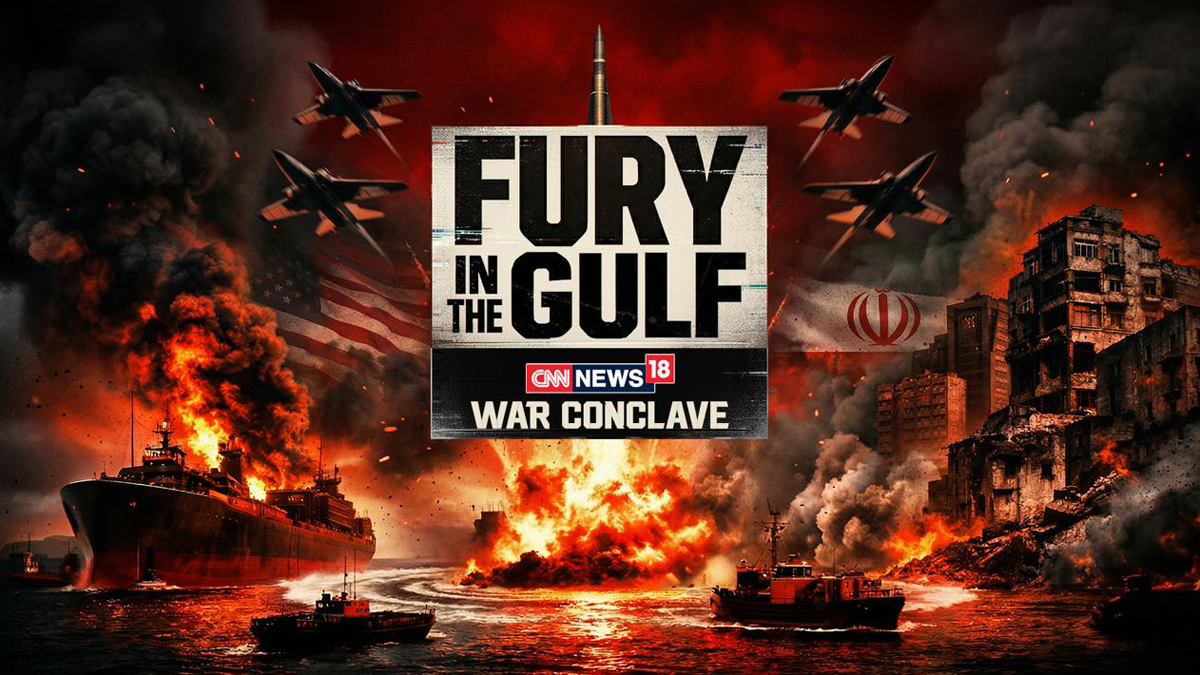
MUMBAI: CNN-News18 is set to host a special three-hour broadcast, Fury in the Gulf – War Conclave, on April 7, aiming to decode the escalating West Asia crisis and its far-reaching implications for India.
Scheduled from 4:00 PM to 7:00 PM, the conclave comes at a time when tensions between Iran and the United States are reshaping global geopolitics and triggering economic uncertainty. With India’s deep energy ties, trade links and large diaspora in the Gulf, the developments carry significant domestic relevance.
Built around the theme ‘Conflict, Consequences, and The Future,’ the programme will feature six curated sessions combining one-on-one interviews and panel discussions. The focus is to cut through the clutter and offer viewers a clearer understanding of the fast-evolving situation.
Key sessions include ‘Diplomacy in Times of War’ featuring Shashi Tharoor, and ‘World After the Iran Conflict’ with voices such as Ram Madhav, Reuven Azar, representatives from the European Union and the Iranian Deputy Envoy. Another session titled ‘Another Dunkirk?’ will bring together K. J. S. Dhillon and Jitin Prasada among others.
CNN-News18 editorial affairs director Rahul Shivshankar said, “In times of war, clarity becomes the most powerful tool. Fury in the Gulf – War Conclave brings together credible voices to address the questions and confusion that arise amid an overwhelming influx of information.”
He added that the initiative is aimed at delivering “facts, perspective, and insight” at a time when misinformation can easily cloud public understanding.
Echoing the sentiment, CNN-News18 CEO– English and business news Smriti Mehra said the conflict marks a defining global moment, with consequences that extend well beyond the region. She noted that the conclave seeks to present the crisis with “depth, nuance and responsibility” so audiences can better grasp its real-world impact.
As geopolitical tensions continue to dominate headlines, the conclave positions itself as an attempt to bring order to the noise, offering viewers a structured, insight-led look at a complex and rapidly shifting global situation.






