News Broadcasting
CNN to invest in expanding newsgathering network

MUMBAI: In the biggest expansion of international newsgathering resources in its 27-year history, CNN Worldwide has announced plans to significantly increase the number of correspondents worldwide, open a regional newsgathering hub in the United Arab Emirates, invest in a London-based digital-production unit, and make major investments in CNN’s International Newsource and CNN’s in-house wire operations.
CNN International executive VP, MD Tony Maddox says, “This is all about owning more content; these new resources will have a huge impact across all of CNN’s networks and platforms. Owning the content we broadcast, publish and make available to affiliates and other platforms is the backbone of this business. This multi-million dollar investment in staff and resources bolster our world-class, award-winning journalism as well as give us the power to move swiftly into developing new business models.”
New operations are also planned for India, Afghanistan, Belgium, Kenya, Malaysia, Nigeria, the Philippines, Poland and Vietnam. CNN will also appoint two new correspondents for the network’s Johannesburg bureau and add an additional correspondent at both its London and Istanbul bureaus.

Investments are underway in CNN’s Asia Pacific newsgathering hub in Hong Kong to increase staffing, and the network plans to assign additional correspondents in Beijing, Jakarta and Pakistan.
At the same time, CNN is also revitalizing its Tokyo bureau to encompass additional reporting duties in South Korea to work within the current structure.
CNN will expand both its newsgathering and production facilities in the United Arab Emirates, bringing to bear more resources across the region in terms of programming and reporting, including more business coverage.
CNN is also expanding its international online services with the creation of a digital production unit that will be primarily based in London, with additional staffing also in Hong Kong and Atlanta. This unit will produce and feed the rapidly growing number of new platforms that CNN services globally. This team will work alongside the television operation and will be responsible for providing content for CNN International, CNNArabic.com, CNNMobile and new CNN services on TV-to-broadband sites.
CNN’s International Newsource operation will also expand to provide additional editorial, content and newsgathering services to CNN’s more than 1,000 affiliates worldwide. CNN’s in-house wire service is also being strengthened with additional staff to ensure swift and accurate dissemination of all of the additional material becoming available across all of CNN Worldwide services and networks.
In Mexico, CNN en Español will strengthen its presence with the hiring of an anchor and correspondent and an additional editor working from the network’s Mexico City newsgathering bureau and production center. CNN en Español also will add to its editorial team in Atlanta to better service the increased volume of affiliate and stringer content and the development of new digital services.





News Broadcasting
Kamlesh Singh receives Haldi Ghati Award from MMCF
India Today Group editor honoured for three decades of journalism at Udaipur ceremony.
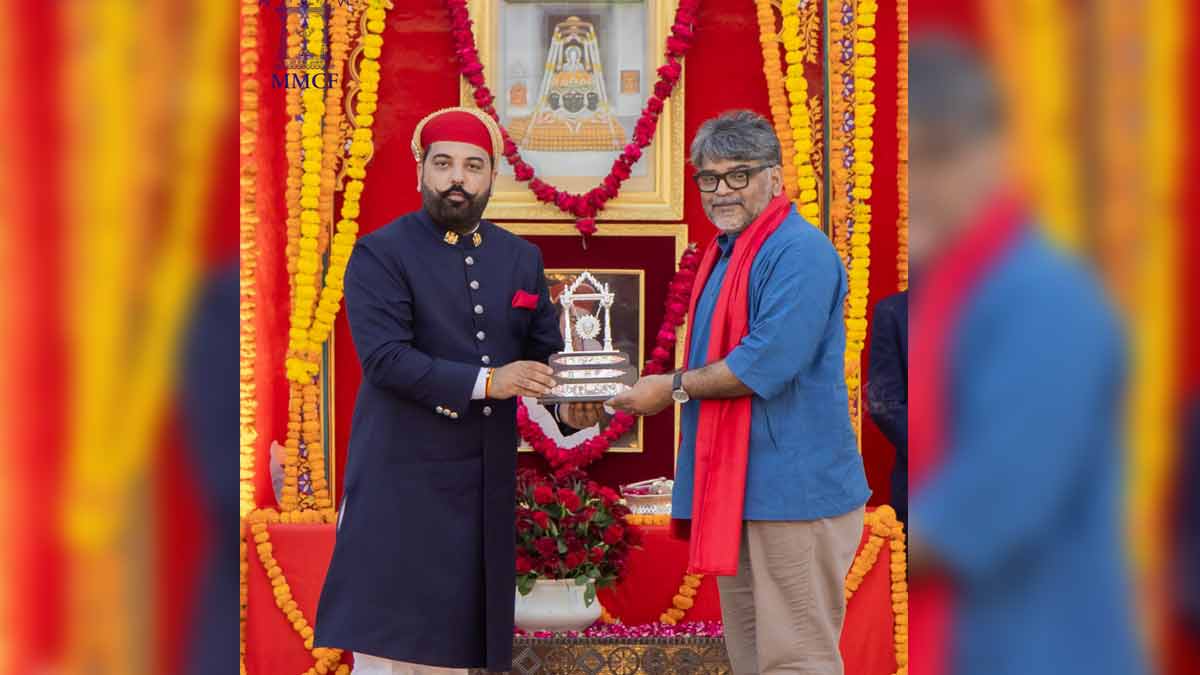
MUMBAI- Kamlesh Singh just turned a lifetime of sharp words into a shiny shield because when journalism wakes up a society, even the Maharana of Mewar wants to pin a medal on it.
The Maharana of Mewar Charitable Foundation (MMCF) conferred its prestigious Haldi Ghati Award on Kamlesh Singh, a senior editor at the India Today Group, during a ceremony in Udaipur on 15 March 2026. The national award, instituted in 1981-82, recognises “work of permanent value that initiates an awakening in society through the medium of journalism.”
Singh, who leads several editorial initiatives including Aaj Tak Radio, the Teen Taal community and The Lallantop, was presented the honour by Lakshyaraj Singh Mewar, Managing Trustee of MMCF. The citation highlighted his three decades of contributions to Indian media, innovations in digital journalism, mentoring young reporters, and his popular podcast persona “Tau” on Teen Taal, which fosters thoughtful public discourse.
The Haldi Ghati Award, named after the historic Battle of Haldighati symbolising valour and resilience, is one of four national awards given annually by MMCF. Past recipients include Tavleen Singh, Piyush Pandey and Raj Chengappa.
Other honourees this year included Padma Vibhushan Pt Hari Prasad Chaurasia, Vedamurti Devvrat Rekhe, Treeman of India Marimuthu Yoganathan, Vir Chakra Capt Rizwan Malik, and US-based researcher Molly Emma Aitken, who received the Colonel James Tod Award for contributions to understanding Mewar’s spirit and values.
In an era where headlines often shout louder than substance, the MMCF quietly reminded everyone that real journalism isn’t about noise, it’s about the quiet, persistent work that stirs society awake, one thoughtful story at a time.







