News Broadcasting
CNN to commemorate 9/11 anniversary with documentary ‘America Remembers’


MUMBAI:With the anniversary 9/11 close at hand, US news network CNN has announced a two part special America Remembers. The special comes under the programme band CNN Perspectives.
The first part of America Remembers airs Saturday 17 August at 4:30 pm. The second part airs on 24 August at the same time.
An official release informs that CNN – through the eyes and thoughts of its staff – will offer a vivid and personal account of that day and its aftermath in the show.

The CNN Perspectives documentary recounts the events of 9/11 through the use of the personal recollections of CNN production staff involved in covering the story including anchors, correspondents, executives, producers and camera people. The documentary also airs previously unseen footage of the devastation and destruction in New York and Washington, D.C. CNN staffers relate their immediate thoughts and reactions to the news of the plane crashes; and some even share their efforts to stay alive as they gathered the news says the release.
The first part offers viewers a glimpse into the hectic activity taking place in CNN’s newsroom as the planes crashed into the World Trade Center and the Pentagon; plus replays the reactions from citizens and CNN employees in New York and Washington, D.C. as they witnessed their cities under attack. Viewers get an intricate look at US President George Bush’s immediate reactions and his actions in the hours that followed. The documentary gives an in-depth view into the US President’s flight around the country on Air Force One to ensure his safety and his addresses to the American people and the rest of the world.
In Part II, the documentary delves into the aftermath of the terror attacks. CNN anchors and correspondents retell the US government’s swift actions in calling upon global leaders for aid in the War Against Terrorism. The report also looks at the strange anthrax attacks in the US and the healing process for America amidst the state of fear that pervaded the American psyche. In addition, the documentary looks at the response from Afghanistan including those who sided with Al Qadea and the other Afghani civilians who welcomed freedom from the Taliban.
CNN Perspectives is a series of hard-hitting, news-focused documentaries. Each programme highlights controversial subjects through unique viewpoints and first-hand experiences. The series covers diverse newsworthy topics from all corners of the globe. Since its launch, the Perspectives series has won numerous awards and accolades for such documentaries as Saira Shah’s Beneath the Veil, which profiled life in Afghanistan under Taliban rule and Sorious Samura’s internationally acclaimed Cry Freetown, presenting the civil war atrocities in Samura’s native Sierra Leone.







News Broadcasting
CNN-News18 to host Fury in the Gulf conclave on West Asia crisis
Three-hour summit to unpack geopolitical fallout and impact on India
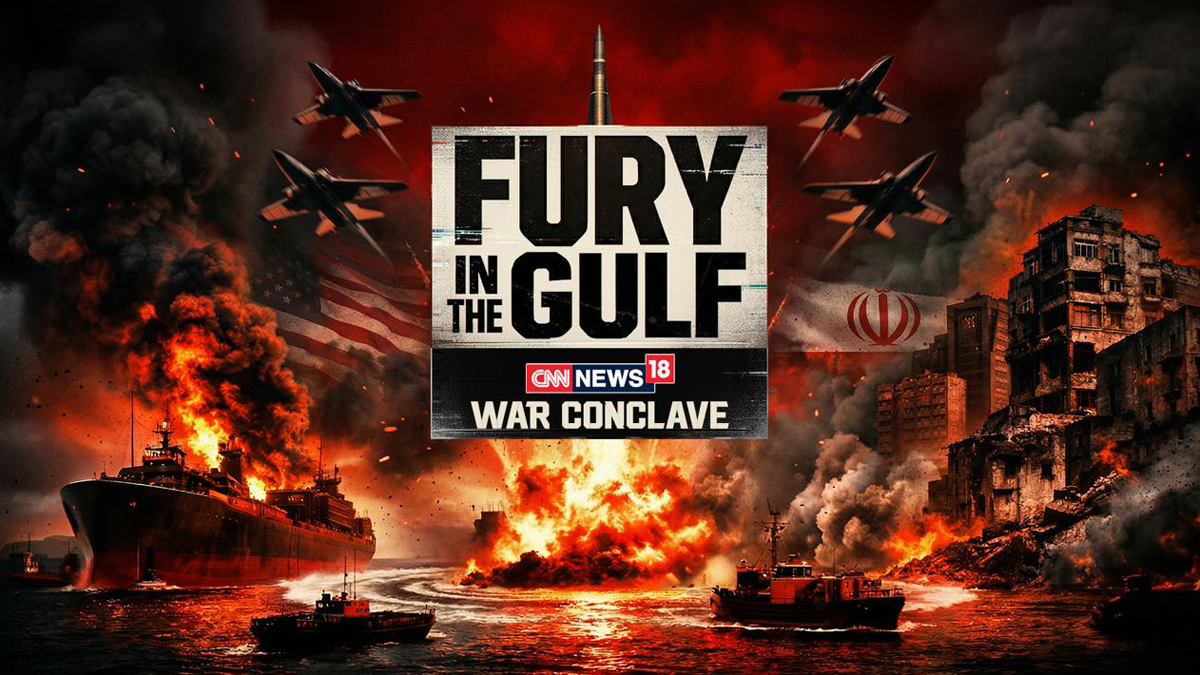
MUMBAI: CNN-News18 is set to host a special three-hour broadcast, Fury in the Gulf – War Conclave, on April 7, aiming to decode the escalating West Asia crisis and its far-reaching implications for India.
Scheduled from 4:00 PM to 7:00 PM, the conclave comes at a time when tensions between Iran and the United States are reshaping global geopolitics and triggering economic uncertainty. With India’s deep energy ties, trade links and large diaspora in the Gulf, the developments carry significant domestic relevance.
Built around the theme ‘Conflict, Consequences, and The Future,’ the programme will feature six curated sessions combining one-on-one interviews and panel discussions. The focus is to cut through the clutter and offer viewers a clearer understanding of the fast-evolving situation.
Key sessions include ‘Diplomacy in Times of War’ featuring Shashi Tharoor, and ‘World After the Iran Conflict’ with voices such as Ram Madhav, Reuven Azar, representatives from the European Union and the Iranian Deputy Envoy. Another session titled ‘Another Dunkirk?’ will bring together K. J. S. Dhillon and Jitin Prasada among others.
CNN-News18 editorial affairs director Rahul Shivshankar said, “In times of war, clarity becomes the most powerful tool. Fury in the Gulf – War Conclave brings together credible voices to address the questions and confusion that arise amid an overwhelming influx of information.”
He added that the initiative is aimed at delivering “facts, perspective, and insight” at a time when misinformation can easily cloud public understanding.
Echoing the sentiment, CNN-News18 CEO– English and business news Smriti Mehra said the conflict marks a defining global moment, with consequences that extend well beyond the region. She noted that the conclave seeks to present the crisis with “depth, nuance and responsibility” so audiences can better grasp its real-world impact.
As geopolitical tensions continue to dominate headlines, the conclave positions itself as an attempt to bring order to the noise, offering viewers a structured, insight-led look at a complex and rapidly shifting global situation.






