News Broadcasting
CNN-News18 gears up for Union Budget 2020; lines up special programming


MUMBAI: To bring most incisive reportage with diversified formats, CNN-News18 has lined-up an array of in-depth yet engaging programming for Budget 2020 that will be presented by Finance Minister Nirmala Sitharaman on 1 Feb 2020.
Under the umbrella branding ‘Vision 2020’, the programming aims to decode and analyse the budget of 2020. It will also gauge the political implications of this crucial budget.
The channel will focus on analysing the expectations of the common man and India Inc. from the upcoming budget and ultimately evaluating its impact on individuals, industry and the overall economy of the country, the release said.

The channel will kick start its programming with its popular segment ‘If I were FM' which will capture suggestions from common citizens for the Finance Minister, along with Corporate Wish list and a special show on personal tax from CNBC-TV18.
CNBC-TV18 managing editor Shereen Bhan will present live pre and post-budget analysis with the panel of leading industry experts at Confederation of Indian Industry.
Network18’s English and business news cluster – chief executive officer Basant Dhawan said, "Expectations from Budget 2020 are high. There are several economic challenges that the Budget is expected to address. CNN-News18 has lined up a comprehensive mix of special programming that will provide viewers a holistic view of the budget through insightful analysis and its impact across sectors."
The budget programming will be led by the channel’s best editorial experts – Bhupendra Chaubey, executive editor; Zakka Jacob, executive editor– output and Anand Narasimhan, executive editor.
They will be joined by a renowned panel of experts comprising Gaurav Choudhury (economy editor & delhi bureau chief, Moneycontrol.com); Saket Mishra, investment banker, Siddharth Zarabi, former executive editor-Business Television India & Dhiraj Nayyar economist/ex-head of economics, financing & commerce, NITI Aayog amongst others.





News Broadcasting
News18 India launches Command Centre war explainer with Arya
New show shifts from debates to decoding global conflicts and impacts
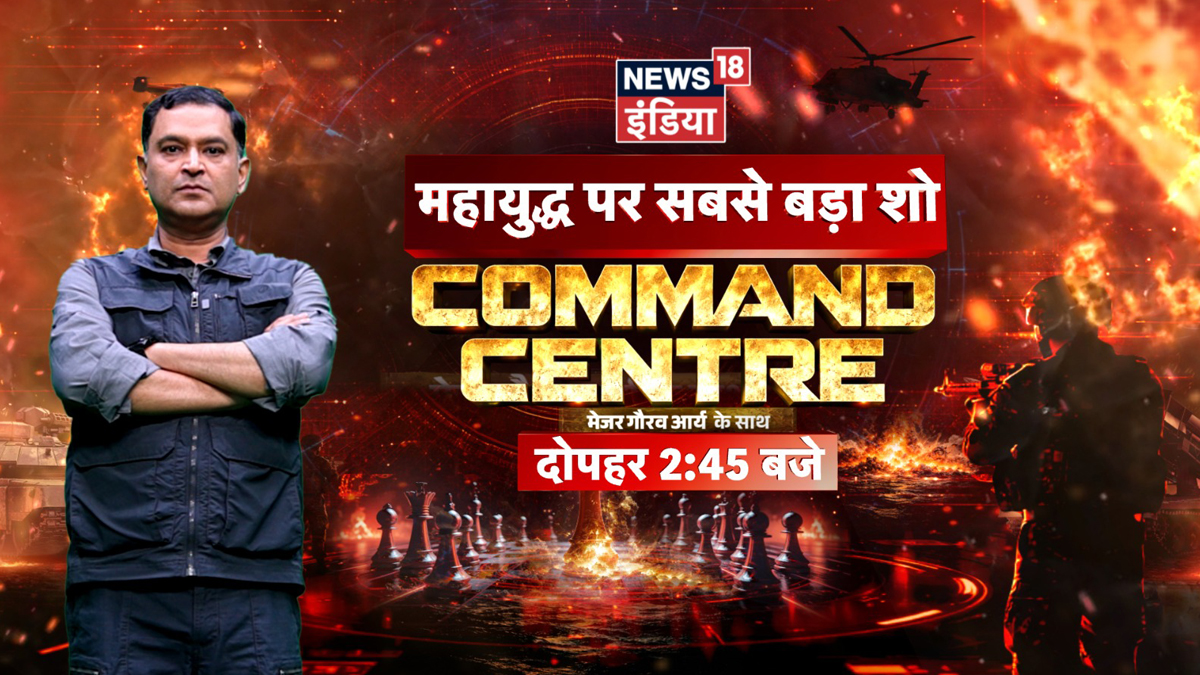
MUMBAI: News18 India has rolled out a new war-focused programme, Command Centre, featuring Gaurav Arya, as it looks to offer viewers a sharper, more grounded take on global conflicts amid rising tensions in West Asia.
Positioned as an “insider war room”, the show moves away from conventional panel debates and instead focuses on explaining military developments, decoding strategy and connecting global events to their everyday impact, from fuel prices to economic shifts.
The format leans heavily on visuals and data. The studio has been designed like a command hub, complete with large LED war maps, real-time graphics and an alert system to track developments as they unfold.
At the centre of it all is Arya, who brings his military background to simplify complex war strategies for viewers. His signature line, “Seedhi baat samjhiye”, anchors the show’s promise of clarity over noise.
News18 India managing editor Jyoti Kamal said, “Command Centre, featuring Major Gaurav Arya is designed to deliver accurate insights and a clear perspective on how evolving conflicts impact everyday life, from household budgets to national security. With expert voices analysing every development in real time, the show goes beyond headlines to decode what’s happening now, what it means, and what could come next.”
Echoing the intent, Gaurav Arya added, “In times of war, confusion is the biggest threat. With News18 India’s Command Centre, we are bringing viewers inside the war room, decoding strategies, tracking every escalation, and explaining, in the simplest terms, what it means for India and for every household. Seedhi baat samjhiye, this is where you understand not just what is happening, but what happens next.”
The weekday show will air in the afternoon slot and will also feature Gaurav Shukla, adding to its editorial depth.
With its mix of analysis, visuals and a clear focus on impact, the show reflects a broader shift in news consumption. Viewers are no longer just watching events unfold, they are looking to understand what those events mean for them.






