News Headline
CNN explores Asia’s ancient temple cuisine

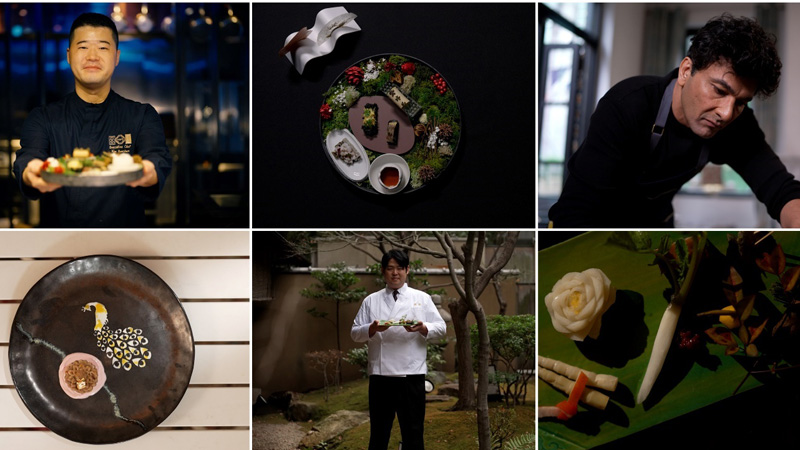
Mumbai: Asia’s wide variety of temple food has a long and ancient history of focusing the mind, balancing the body and nourishing the soul. Ingredients are fresh, local, often vegetarian, and always healthy, offering a cleansing template for eating in today’s modern world. This month, CNN’s Food for Thought visits several temples across Asia making exceptional food for its devotees and the award-winning chefs bringing those health-giving traditions and ingredients to some of the world’s top tables.
In central Tokyo, Seishoji Temple is an oasis of calm. CNN meets up with chef Yusuke Nomura, whose grandmother founded a restaurant over seventy years ago on the temple grounds dedicated to cooking the ancient art of Japanese temple food – ‘shojin ryori’. The plant-based cuisine is focused on fresh seasonal ingredients and minimal seasoning to maintain a balance of the mind through balance on the plate. Now with one Michelin star, the family restaurant, Daigo, continues to serve high-end shojin ryori inspired by Buddhist teachings and Nomura’s family legacy.
CNN then travels to Jinkwansa Temple in Bukhansan National Park in Seoul to learn about the ancient art of fermentation and Korean Buddhist temple cuisine. The nuns, led by the Master of Korean Buddhis temple food Ven. Gyeho Sunim, cook with vegetables grown on temple grounds and forage for local wild delicacies like mushrooms and herbs depending on the season. Back in Seoul’s busy hub, CNN talks to chef Kim Dae-Chun, of Seventh Door restaurant, who uses the ancient fermentation and ageing processes inherent in Korean food to create Michelin-starred dishes based on what he considers the country’s culinary DNA. Ever since visiting Jinkwansa Temple, he has been fascinated by their cooking, which now provides inspiration for his innovative dishes.

Finally, CNN visits the heart and soul of Sikhism – the Golden Temple in Amritsar, in northern India. Here, the community kitchen feeds tens of thousands of people a day with fresh vegetarian cooking. Spices play a key role here, including the ‘golden spice’ — turmeric. Its health-giving properties may help treat inflammation, arthritis, and high cholesterol. CNN meets Indian celebrity chef Vikas Khanna, who grew up in Amritsar and continues to be inspired by the giant community kitchen of the Sikhs in his hometown. He’s now on a mission to bring the flavours of India back to his adopted hometown of New York.








NEW DELHI: Hamdard Laboratories gathered a cross-section of India’s achievers in New Delhi on Friday, handing out the Hakeem Abdul Hameed Excellence Awards to figures who have left their mark across healthcare, education, sport, public service and the arts.
The ceremony, attended by minister of state for defence Sanjay Seth and senior officials from the ministry of Ayush, celebrated individuals whose work blends professional success with a sense of public purpose. It was as much a roll call of achievement as it was a reminder that influence is not measured only in profits or podiums, but in people reached and lives improved.
Among the headline awardees was Alakh Pandey, founder and chief executive of PhysicsWallah, recognised for turning affordable digital learning into a mass movement. On the sporting front, Arjuna Awardee and kabaddi player Sakshi Puniya was honoured for her contribution to the game and for pushing women’s participation onto bigger stages.
The cultural spotlight fell on veteran lyricist and poet Santosh Anand, whose songs have echoed across generations of Hindi cinema. At 97, Anand accepted the honour with characteristic humility, reflecting on a life shaped by perseverance and hope.
Healthcare honours spanned both modern and traditional systems. Manoj N. Nesari was recognised for strengthening Ayurveda’s place in national and global health frameworks. Padma shri Mohammed Abdul Waheed was honoured for his research-backed work in Unani medicine, while padma shri Mohsin Wali received recognition for his long-standing contribution to patient-centred care.
Education and social development also featured prominently. Padma shri Zahir Ishaq Kazi was honoured for decades of work in education, while former Meghalaya superintendent of Police T. C. Chacko was recognised for public service. Goonj founder Anshu Gupta received an award for his dignity-centred rural development initiatives, and the Hunar Shakti Foundation was honoured for empowering women and young girls through skill development.
The Lifetime Achievement Award went to former IAS officer Shailaja Chandra for her long career in public healthcare and governance, particularly in the traditional systems under Ayush.
Speaking at the event, Hamdard chairman Abdul Majeed said the awards were a tribute to those who combine excellence with empathy. “These awardees reflect Hakeem Sahib’s belief that healthcare, education and public service must ultimately serve humanity,” he said.
Minister Seth struck a forward-looking note, saying India’s young population gives the country a unique opportunity to become a global destination for learning, health and wellness by 2047.
The ceremony also featured the trailer launch of Unani Ki Kahaani, an upcoming documentary starring actor Jim Sarbh, set to premiere on Discovery on 11 February.
Instituted in memory of Unani scholar and educationist Hakeem Abdul Hameed, the awards have grown into a national platform that celebrates those building a more inclusive and resilient India. For one evening at least, the spotlight was not just on success, but on service with substance.