News Broadcasting
CNBC-TV18 Prime Circle sets the stage for a global mind jam

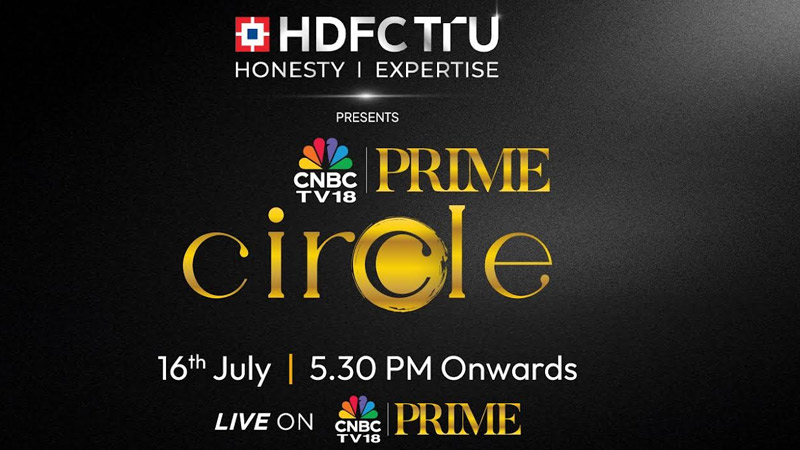
MUMBAI: The suits are getting serious and global. CNBC-TV18 Prime is all set to unveil its latest brainchild: the Prime Circle, a high-octane, invitation-only gathering of heavyweight thinkers, business titans and policy pundits. The debut edition kicks off on 16 July in partnership with HDFC Tru, promising an evening brimming with ideas, intellect and a splash of wine wisdom.
Designed as a marquee platform for global dialogue, Prime Circle will bring together powerhouses navigating today’s fractured world from macroeconomic mayhem to AI overdrive and geopolitical chess.
On the speakers’ list: Manny Maceda, chairman of Bain & Company; Robert Rosenkranz, chairman of Delphi Capital Management; George Yeo, former foreign affairs minister of Singapore; Shyam Saran, ex-foreign secretary of India; and Dhiraj Relli, MD and CEO at HDFC Securities. These aren’t your everyday talking heads, they’re the ones shaping the playbook.

Adding sparkle to the evening: Sonal Holland, India’s only Master of Wine, who’ll uncork a curated tasting session to keep the conversation as smooth as the pour.
Speaking about the event, Smriti Mehra, CEO, Business News, Network18 from CNBC-TV18 Prime said, “CNBC-TV18 Prime aims to bring the pulse of global markets to India through an India-first lens. With Prime Circle, we are creating a marquee platform for high-impact, strategic conversations that reflect the opportunities and risks for India, a global force to recon with . We are honoured to welcome an exceptional line-up of voices who offer real perspective, experience, and foresight.”
Speaking on the partnership, Relli stated, “Our partnership with CNBC-TV18 Prime enables us to leverage our research-driven expertise to deliver actionable market insights and foster financial literacy across television and digital platforms. We look forward to co-creating impactful content, engaging with investors at marquee events, and, through the upcoming Prime Circle event, facilitating meaningful global dialogue that shapes the future of India’s capital markets.”
The Prime Circle is CNBC-TV18 Prime’s bid to push past the predictable panel and into something punchier: a space where power meets perspective, with a twist of terroir.



News Broadcasting
Network18 channels lead YouTube news viewership in March 2026
CNN-News18, News18 India and CNBC channels top categories with record views
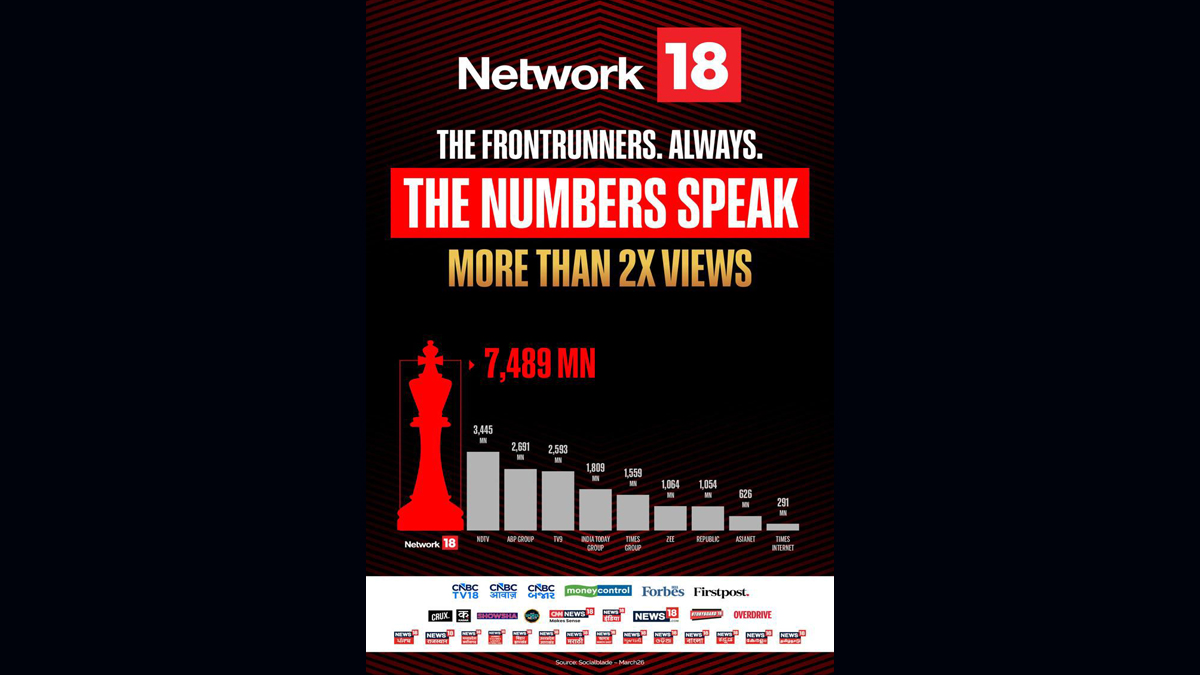
MUMBAI: When the world hit refresh on breaking news, Network18’s channels were already streaming ahead. As geopolitical tensions and war-driven headlines fuelled a surge in global news consumption, the network’s digital playbook delivered big clocking record Youtube viewership across English, Hindi and business news categories in March 2026.
At the forefront was CNN-News18, which emerged as the clear leader in the English news segment with 130 million live and video-on-demand views. The channel edged past competitors such as Times of India (126.5 million), Times Now (101.1 million), India Today (88.2 million) and NDTV (77.5 million), according to Databeings data for March.
In the Hindi news arena, News18 India delivered a commanding performance, racking up a staggering 3,297 million views on YouTube. The channel comfortably outpaced NDTV India, which recorded 3,119 million views, underlining its deep reach and consistent engagement with mass audiences, as per Playboard data.
The network’s dominance wasn’t confined to general news. In the Hindi business segment, CNBC Awaaz topped the charts with 92 million views, narrowly ahead of Zee Business (90 million) and well ahead of ET Now Swadesh (57 million). Meanwhile, its English counterpart CNBC-TV18 posted a strong 58 million views, reinforcing the network’s cross-category strength.
The spike in viewership reflects a broader shift in audience behaviour, with viewers increasingly turning to digital platforms particularly Youtube for real-time updates and in-depth coverage during high-intensity news cycles. For Network18, the numbers signal more than just scale; they underline the effectiveness of a multi-platform strategy that blends speed, credibility and continuous coverage.
In a month where the news never paused, it seems viewers chose to stay tuned where the stream never stopped.






