News Broadcasting
CNBC launches new ‘Managing Asia’ series sponsored by Hitachi


MUMBAI: CNBC has launched its second regional, multi-platform sponsorship deal with Hitachi for the network’s Managing Asia: Asia Builders series. Content will largely be drawn from a special event in Jakarta on 11 June and broadcast in two-parts on 26 June and 3 July across CNBC’s Asia Pacific TV and all digital platforms.
CNBC award-winning anchor Christine Tan will host the Jakarta discussions, titled Innovative Cities: Rising to the Challenge, at Hotel Indonesia Kempinski. She will talk to a high-powered panel of influential developers, who are behind some of the biggest urban development projects in Southeast Asia, exploring solutions to today’s urban challenges such as overcrowding, congestion and pollution. On the panel will be Datuk Ismail Ibrahim of the Iskandar Regional Development Authority, Liew Mun Leong of Surbana & Jurong International and SD Darmono of PT Jababeka.

Tan also sits down with Indonesian billionaire-property tycoon Dr (HC) Ir Ciputra, known for the large-scale townships built by his eponymous company, along with his son Candra Ciputra, in a rare interview to examine how innovation has played a key role in building the Ciputra empire.
A poll to assess public opinion on the biggest challenges facing Asian cities is already active on the Asia Builders website at http://cnbcasia.com/events/asiabuilders.
CNBC Asia Pacific vice president of sales Kerry Tarrant said, “We are delighted to be working with Hitachi again. This event and campaign closely aligns with Hitachi’s strategic priorities in the fields of innovation and infrastructure development, while also engaging the influential CNBC business audience on some of the big pan-regional challenges that the Asian economy faces.”
Hitachi Asia managing director Hirohiko Morisaki added, “Hitachi’s Social Innovation Business focuses on improving quality of life for the global community by combining infrastructure solutions with advanced IT technologies. As such, we are excited to partner CNBC once again for this meaningful event and broadcast. While Hitachi is already working closely with key stakeholders from both public and private sectors regionally to resolve urbanization-related issues, this event will provide new perspectives on how Hitachi can better address critical issues through our expertise in areas such as transportation, energy and water solutions.”







News Broadcasting
CNN-News18 to host Fury in the Gulf conclave on West Asia crisis
Three-hour summit to unpack geopolitical fallout and impact on India
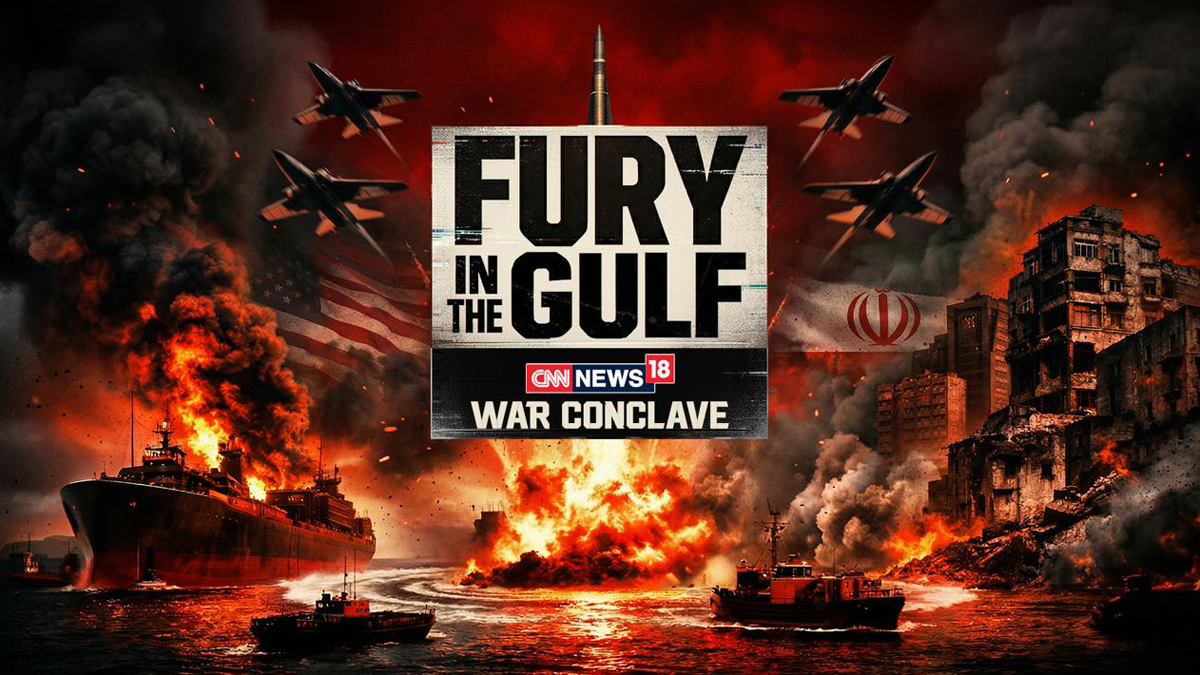
MUMBAI: CNN-News18 is set to host a special three-hour broadcast, Fury in the Gulf – War Conclave, on April 7, aiming to decode the escalating West Asia crisis and its far-reaching implications for India.
Scheduled from 4:00 PM to 7:00 PM, the conclave comes at a time when tensions between Iran and the United States are reshaping global geopolitics and triggering economic uncertainty. With India’s deep energy ties, trade links and large diaspora in the Gulf, the developments carry significant domestic relevance.
Built around the theme ‘Conflict, Consequences, and The Future,’ the programme will feature six curated sessions combining one-on-one interviews and panel discussions. The focus is to cut through the clutter and offer viewers a clearer understanding of the fast-evolving situation.
Key sessions include ‘Diplomacy in Times of War’ featuring Shashi Tharoor, and ‘World After the Iran Conflict’ with voices such as Ram Madhav, Reuven Azar, representatives from the European Union and the Iranian Deputy Envoy. Another session titled ‘Another Dunkirk?’ will bring together K. J. S. Dhillon and Jitin Prasada among others.
CNN-News18 editorial affairs director Rahul Shivshankar said, “In times of war, clarity becomes the most powerful tool. Fury in the Gulf – War Conclave brings together credible voices to address the questions and confusion that arise amid an overwhelming influx of information.”
He added that the initiative is aimed at delivering “facts, perspective, and insight” at a time when misinformation can easily cloud public understanding.
Echoing the sentiment, CNN-News18 CEO– English and business news Smriti Mehra said the conflict marks a defining global moment, with consequences that extend well beyond the region. She noted that the conclave seeks to present the crisis with “depth, nuance and responsibility” so audiences can better grasp its real-world impact.
As geopolitical tensions continue to dominate headlines, the conclave positions itself as an attempt to bring order to the noise, offering viewers a structured, insight-led look at a complex and rapidly shifting global situation.






