News Broadcasting
CNBC chairman Pamela Thomas-Graham joins Liz Claiborne as group presi

MUMBAI: Pamela Thomas-Graham will be stepping down as the chairman of CNBC and will be joining Liz Claiborne Inc. as group president, with responsibility for the company’s flagship Liz Claiborne label as well as other brands.
Thomas-Graham said, “I am delighted to be joining the outstanding management team at Liz Claiborne Inc. This well-respected Fortune 500 company has an enviable track record and has several of the most highly regarded apparel brands in America in its portfolio. I worked with several apparel companies when I was a partner at McKinsey & Company, and joining one of the most successful companies in the industry is an opportunity I could not pass up. In order to accept this challenging new assignment, I am, effective today, resigning my position as Chairman of CNBC. While I look forward to my new responsibilities, I also will miss working with my distinguished colleagues at GE, NBCU and CNBC. These past six years have been extraordinarily fulfilling both professionally and personally. I am proud of all that we have accomplished as a team, and I am particularly grateful to Bob Wright for the opportunity to work with him and for my leadership role at CNBC. I know the network will continue to flourish because of the quality of the team here, which has made CNBC the industry standard for world class business news coverage.”
NBC Universal chairman and CEO Bob Wright said, “While we regret losing Pamela as a colleague, we congratulate her on her new position. As CEO and then Chairman of CNBC, Pamela led the network through a most challenging era in business news reporting. The network has retained its strong profitability, and the CNBC audience continues to be among the wealthiest in all of cable television. During her tenure, the organization successfully built and moved to its new global headquarters, and the network earned its first Peabody Award. Pamela’s talents are many and I have confidence in her ability to succeed in her future endeavors. We all wish Pamela the very best in this exciting career opportunity.”
Thomas-Graham has served as chairman of CNBC since February 2005. Before her promotion to chairman, she served as president and CEO of CNBC for four years. Previously, she was the president and CEO of CNBC.com, the network’s website.

She joined NBC in 1999 from management consulting firm McKinsey & Company, where she was the firm’s first black female partner and a member of its Consumer practice. She is a Phi Beta Kappa graduate of Harvard College, Harvard Business School, and Harvard Law School, where she served as an editor of the Harvard Law Review. Thomas-Graham is the author of three mystery novels published by Simon & Schuster.






News Broadcasting
CNN-News18 to host Fury in the Gulf conclave on West Asia crisis
Three-hour summit to unpack geopolitical fallout and impact on India
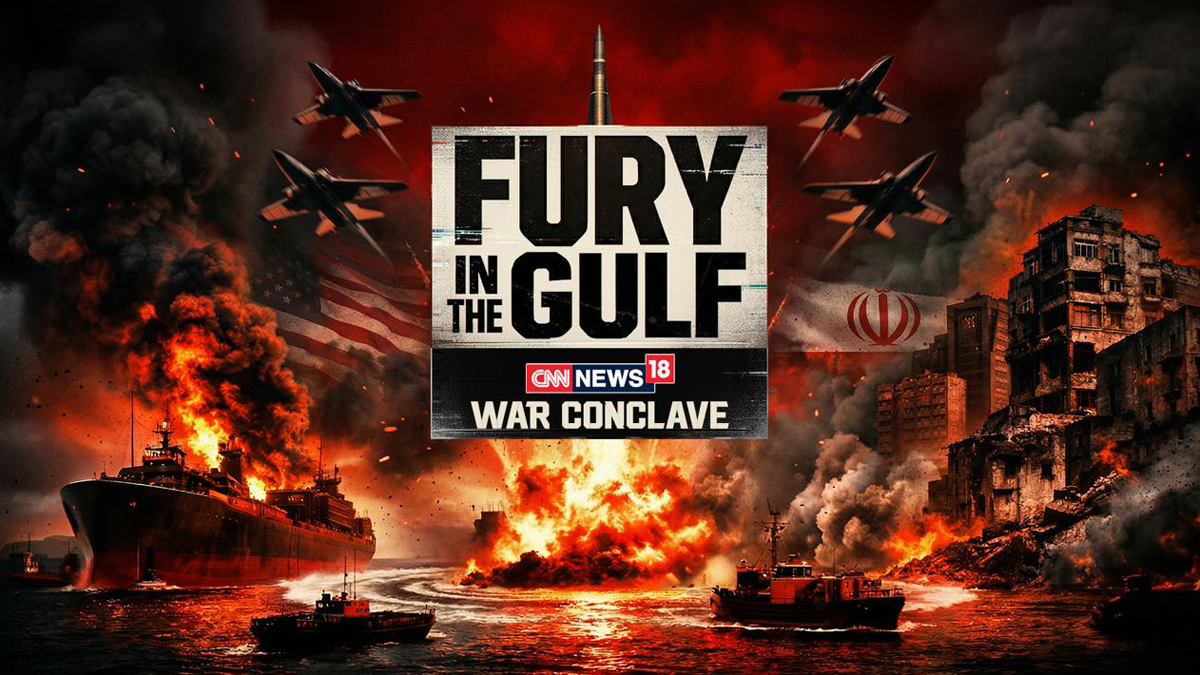
MUMBAI: CNN-News18 is set to host a special three-hour broadcast, Fury in the Gulf – War Conclave, on April 7, aiming to decode the escalating West Asia crisis and its far-reaching implications for India.
Scheduled from 4:00 PM to 7:00 PM, the conclave comes at a time when tensions between Iran and the United States are reshaping global geopolitics and triggering economic uncertainty. With India’s deep energy ties, trade links and large diaspora in the Gulf, the developments carry significant domestic relevance.
Built around the theme ‘Conflict, Consequences, and The Future,’ the programme will feature six curated sessions combining one-on-one interviews and panel discussions. The focus is to cut through the clutter and offer viewers a clearer understanding of the fast-evolving situation.
Key sessions include ‘Diplomacy in Times of War’ featuring Shashi Tharoor, and ‘World After the Iran Conflict’ with voices such as Ram Madhav, Reuven Azar, representatives from the European Union and the Iranian Deputy Envoy. Another session titled ‘Another Dunkirk?’ will bring together K. J. S. Dhillon and Jitin Prasada among others.
CNN-News18 editorial affairs director Rahul Shivshankar said, “In times of war, clarity becomes the most powerful tool. Fury in the Gulf – War Conclave brings together credible voices to address the questions and confusion that arise amid an overwhelming influx of information.”
He added that the initiative is aimed at delivering “facts, perspective, and insight” at a time when misinformation can easily cloud public understanding.
Echoing the sentiment, CNN-News18 CEO– English and business news Smriti Mehra said the conflict marks a defining global moment, with consequences that extend well beyond the region. She noted that the conclave seeks to present the crisis with “depth, nuance and responsibility” so audiences can better grasp its real-world impact.
As geopolitical tensions continue to dominate headlines, the conclave positions itself as an attempt to bring order to the noise, offering viewers a structured, insight-led look at a complex and rapidly shifting global situation.






