News Broadcasting
Clearances to TV proposals after review of FDI rules

MUMBAI: Applications for starting around ten news television channels have been referred to the Finance ministry for veracity of their claims about foreign investment.
While sources in both Information and Broadcasting and Finance ministries insisted that such reference to the sister ministry was made every time a proposal came for any venture with a foreign component, it was clarified by the Finance ministry that the rules pertaining to foreign direct investment were being reviewed and the proposals would be cleared after this was completed.
But Finance ministry sources told Indiantelevision.com that an announcement about the changed and simplified rules was expected shortly.
I&B ministry sources told Indiantelevision.com that this will not mean any further delay in clearing various applications pending with it for licences to start new television channels.

Finance ministry sources said the relevant files had been referred to the Foreign Institutions Unit (FIU) which would refer them to the Foreign Investment Promotion Board (FIPB) after examination.
The examination by the Finance ministry becomes important in view of the overall cap of 26 per cent on foreign direct investment. The specific purpose would also be to examine the ownership pattern of the channels as the government regulations say that the ownership of a channel uplinking from within the country has to be Indian irrespective of the FDI investment.
Proposals of 71 private satellite channels from 52 different companies awaiting permission as on April 30 to uplink from within the country were at different stages of scrutiny, which included clearances from other ministries.
The Uplinking Guidelines issued in November 2005 prescribe two categories of channels: news and current affairs, or non-news and current affairs.
Meanwhile, a total of 222 private satellite television channels have been permitted to uplink from India as on April 30 apart from six channels uplinked from abroad which have been permitted to downlink in India. In addition to this, 54 foreign TV channels have been provisionally permitted to downlink in India.
Ministry sources said only 25 of the proposals are in the non-news category – some relating to music – while the balance are in the news category.
The highest number of proposals – seven – is from three companies linked to the NDTV group. There are four proposals each from ZEE Telefilms, BAG Films group, and the TV 18 group, and three each from Malar Network, Maa TV Network, and STV Enterprises. Two proposals have come from the INX group. The rest of the proposals are from companies wanting to beam single channels.
One proposal for two channels from Raj TV Network has been pending since May 2005. While 23 proposals were sent in during 2006, the rest were all made this year.

News Broadcasting
CNN-News18 to host Fury in the Gulf conclave on West Asia crisis
Three-hour summit to unpack geopolitical fallout and impact on India
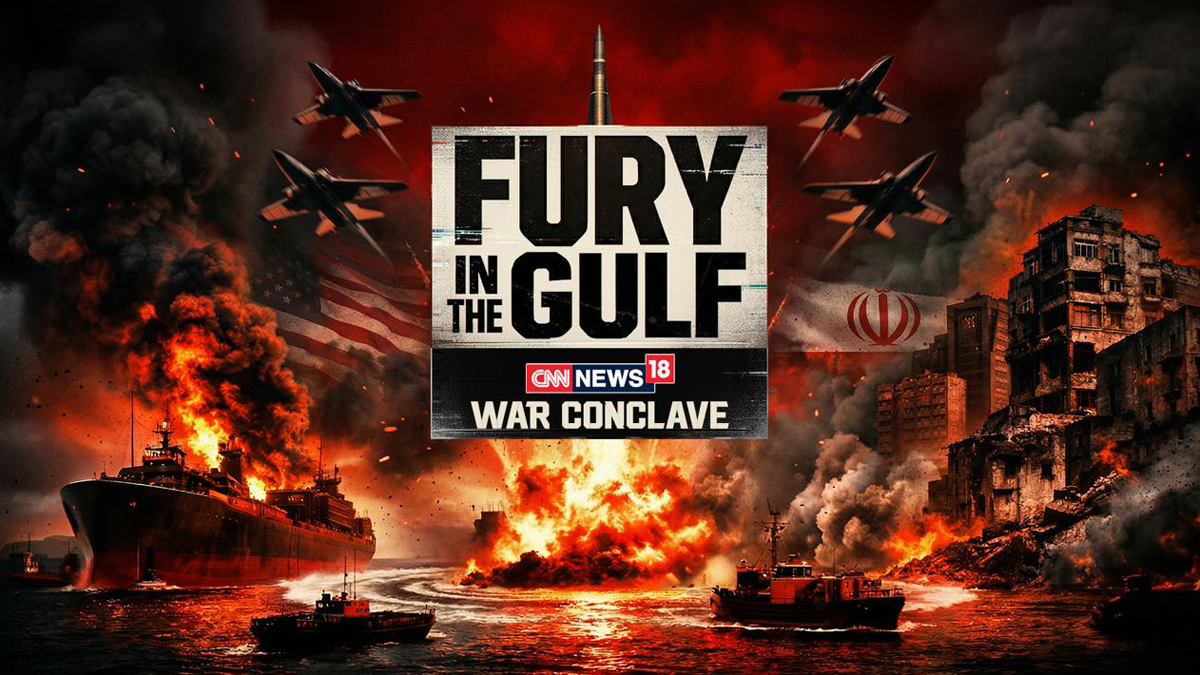
MUMBAI: CNN-News18 is set to host a special three-hour broadcast, Fury in the Gulf – War Conclave, on April 7, aiming to decode the escalating West Asia crisis and its far-reaching implications for India.
Scheduled from 4:00 PM to 7:00 PM, the conclave comes at a time when tensions between Iran and the United States are reshaping global geopolitics and triggering economic uncertainty. With India’s deep energy ties, trade links and large diaspora in the Gulf, the developments carry significant domestic relevance.
Built around the theme ‘Conflict, Consequences, and The Future,’ the programme will feature six curated sessions combining one-on-one interviews and panel discussions. The focus is to cut through the clutter and offer viewers a clearer understanding of the fast-evolving situation.
Key sessions include ‘Diplomacy in Times of War’ featuring Shashi Tharoor, and ‘World After the Iran Conflict’ with voices such as Ram Madhav, Reuven Azar, representatives from the European Union and the Iranian Deputy Envoy. Another session titled ‘Another Dunkirk?’ will bring together K. J. S. Dhillon and Jitin Prasada among others.
CNN-News18 editorial affairs director Rahul Shivshankar said, “In times of war, clarity becomes the most powerful tool. Fury in the Gulf – War Conclave brings together credible voices to address the questions and confusion that arise amid an overwhelming influx of information.”
He added that the initiative is aimed at delivering “facts, perspective, and insight” at a time when misinformation can easily cloud public understanding.
Echoing the sentiment, CNN-News18 CEO– English and business news Smriti Mehra said the conflict marks a defining global moment, with consequences that extend well beyond the region. She noted that the conclave seeks to present the crisis with “depth, nuance and responsibility” so audiences can better grasp its real-world impact.
As geopolitical tensions continue to dominate headlines, the conclave positions itself as an attempt to bring order to the noise, offering viewers a structured, insight-led look at a complex and rapidly shifting global situation.






