I&B Ministry
CINTAA welcomes move to expedite extending industry status to entertainment sector


MUMBAI: Cine and TV Artists Association (CINTAA) has welcomed the Maharashtra government’s move to formulate a comprehensive policy for entertainment sector and expedite procedure of extending industry status.
''The decision of the Maharashtra government has come at a most appropriate time for the fraternity. This will undoubtedly bring in progressive ramifications to the sector,'' CINTAA said in a statement.
The state government on October 23 announced that it will devise a policy for the entertainment sector as well as declare rebate of up to 25 per cent in shooting charges at Goregaon Film City, while also advancing the process to grant industry status to the sector. The decision to formulate a comprehensive policy was taken in a meeting chaired by cultural affairs minister Amit Deshmukh.

The minister has asked Maharashtra film, stage and cultural development corporation limited (MFSCDC) to prepare a draft for the policy. “The comprehensive policy will cover all aspects dealing with various platforms such as films, theatre, documentaries, serials to over-the-top (OTT) content. It will be presented before the state cabinet for its final nod,” Deshmukh said.
CINTAA stated that it has strived very hard to get support for the betterment of the fraternity in general and the actors community in particular. “Realizing the challenges faced and to be on par with other sectors, the idea to have an Industry status for us has always been our foremost objective and our pursuit has always been rationale driven. Our efforts have been truly paid,” it added.
MFSCDC MD Manisha Verma said, “The policy will have a holistic approach towards all aspects related to the sector. We will consider simplification of taxation, increasing screens, fiscal incentives, changing technology besides generation of skilled manpower. It’s a labour-intensive industry and has the potential of job generation. All these aspects will be deliberated upon during a webinar with all stakeholders between 5 and 7 November. Valid suggestions and recommendations that we will get during the deliberation will be incorporated in the policy.”




I&B Ministry
Digital radio, D2M tech set to reshape broadcasting and public messaging
Govt pushes next-gen delivery while TRAI tightens grip on spam ecosystem
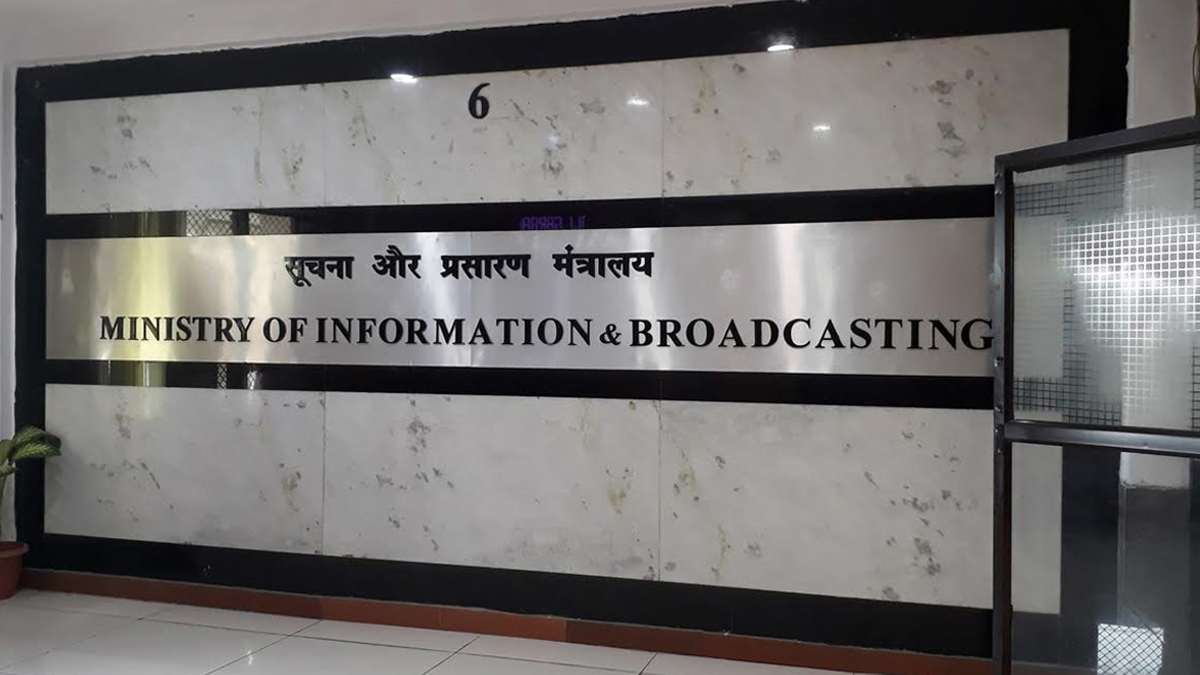
NEW DELHI: India’s broadcasting and telecom landscape is undergoing a quiet but significant upgrade, with digital radio and Direct-to-Mobile (D2M) technologies emerging as powerful tools for mass communication, while regulators step up efforts to tackle spam calls.
According to the Ministry of Information and Broadcasting, digital radio and D2M are poised to transform how content reaches audiences by making more efficient use of spectrum. In simple terms, multiple channels can now be delivered over a single frequency, opening the door to a wider range of free-to-air content.
D2M technology takes this a step further by enabling video, audio and data to be broadcast directly to mobile handsets without relying on SIM cards or mobile data. The result is a resilient and cost-effective data pipe that can deliver everything from entertainment and education to critical emergency alerts, even in low-connectivity scenarios.
At the same time, the Telecom Regulatory Authority of India is tightening its grip on unsolicited commercial communication, better known as spam calls. The regulator has deployed a distributed ledger technology platform to bring transparency and accountability into the system.
Through this blockchain-based setup, consumers can register their preferences on receiving promotional messages, while businesses and telemarketers must also sign up and operate within defined rules. The platform also includes a complaint mechanism that allows users to report spam, with complaints shared across telecom operators for coordinated action.
The government’s broader push is being supported by infrastructure upgrades under the Broadcasting Infrastructure and Network Development scheme. Implemented through Prasar Bharati, the initiative focuses on modernising networks such as Akashvani and Doordarshan, including digitisation and adoption of next-generation broadcast equipment.
In a written reply in the Lok Sabha, Ministry of Information and Broadcasting minister of state for information and broadcasting L. Murugan said these steps are part of a larger effort to promote emerging technologies and strengthen the country’s broadcasting backbone. The response came to a query raised by member of Parliament Rao Rajendra Singh.
Together, these developments point to a dual-track strategy: expanding access to reliable, low-cost content while cleaning up the communication ecosystem. As digital pipes get smarter and spam filters sharper, India’s airwaves may soon feel a lot less noisy and far more useful.






