Hindi
Changes in archaic Cinematograph Act can be expected soon


MUMBAI: Aptly titled, “Cuts So Deep: Are We Sacrificing Creativity at the Altar of Morality?”, one of the sessions on the first day of FICCI Frames 2014 spoke about those ‘cuts’ in the films that leave a deep mark in the memory of the filmmakers. Most of the times, these cuts suggested by the Central Board of Film Certification (CBFC) doesn’t even make sense to the people who were involved creatively in the making of the film.
The debate, in the presence of esteemed guests like Sudhir Mishra, Ramesh Sippy, Ravi Kottarakara, Kajol and the newly appointed CEO of CBFC Rakesh Kumar, highlighted many issues that filmmakers are grappling with because of the guidelines stated in the archaic Cinematograph Act of 1952.

However, the film industry is pinning its hopes on the new government for amendments to the Cinematograph Act.
At the session, the filmwallahs brought to the fore how the guidelines push them back by many years by not giving them the freedom that’s actually their right.
“When a director shoots a scene, he envisions it in a certain way. If there’s a smoking scene, an atmosphere is created with that. When it is cut, the shot loses its charm,” remarked Mishra while putting across an example.
Another major issue discussed was that of a scroll on the frame showing smoking, sex scenes etc for which filmmaker Anurag Kashyap has even gone to the court and the matter is still pending in the court.
Another point that came up during the discussion was of giving ‘A’ certificate to certain films based on real issues that need to be promoted all across, while some films just because they come from ‘bigger’ banners are passed with U or U/A even when they have ‘bold’ scenes.
To deal with all this, a committee headed by Justic Mukul Mudgal is travelling across the country to take suggestions from the film fraternity across India, the audiences and all the other stakeholders involved.
While Rakesh Kumar from CBFC was left in a fix with complex questions being posed to him, Film and TV Producers Guild of India CEO Kulmeet Makkar came to his rescue by stating that the industry needs to be patient for a little more time. “Since the revised guidelines have already been formed, we may expect things to change pretty soon,” said Makkar, also revealing that 18 of the suggestions discussed in Chennai have already been accepted.
It seems the film industry can soon hope for better days ahead.







Hindi
Zee5 and Applause Entertainment team up for whodunnit ‘Everybody Loves Sohrab Handa’
Rajat Kapoor directs star-studded murder mystery streaming from 10 April.
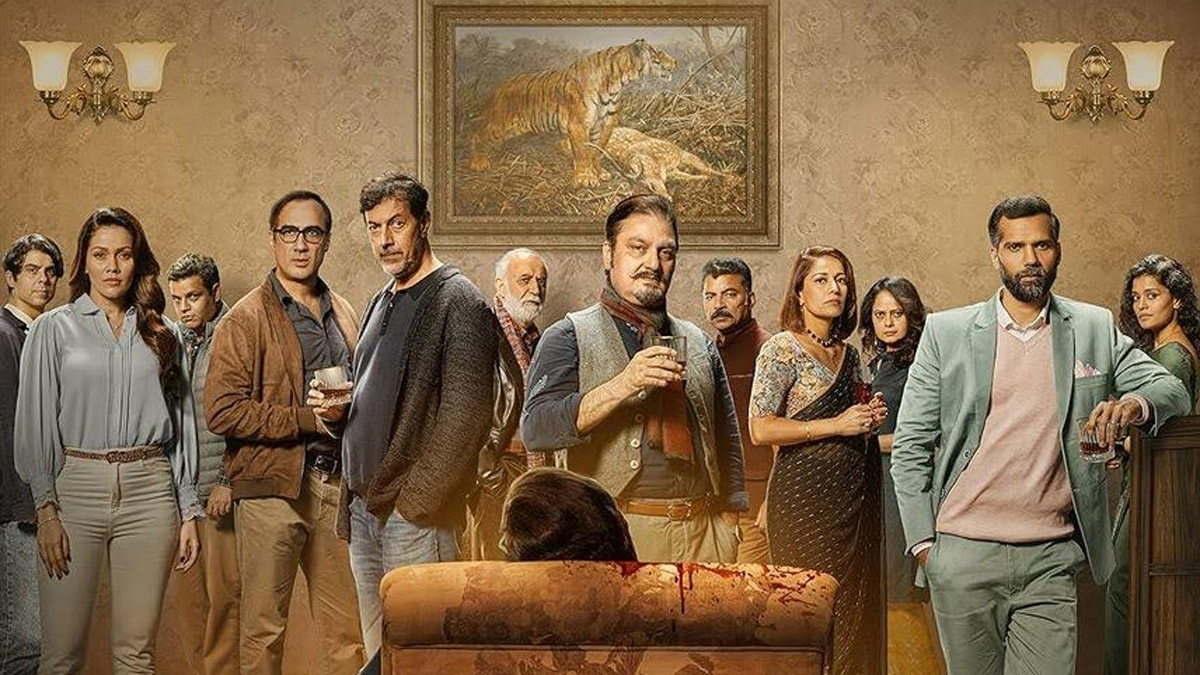
MUMBAI: Zee5 is serving up another killer collaboration and this time, the murder mystery comes with a generous side of dark humour and family dysfunction. The streaming platform has partnered with Applause Entertainment and Mithya Talkies to bring Everybody Loves Sohrab Handa, a fresh, twisted whodunnit written and directed by acclaimed filmmaker and actor Rajat Kapoor. The film will stream exclusively on Hindi Zee5 from 10 April.
The movie reimagines the classic murder mystery genre with a contemporary, darkly comic edge. It revolves around a group of friends and family who smile, drink, and celebrate together until the silence snaps and long-buried secrets spill out. The stellar ensemble cast includes Vinay Pathak, Ranvir Shorey, Waluscha De Sousa, Saurabh Shukla, Chandrachoor Rai, Neil Bhoopalam, Koel Purie, Palomi Ghosh, and Rajat Kapoor himself.
This latest offering continues the successful partnership between Zee5 and Applause Entertainment, which has previously delivered diverse hits such as Mithya, Bloody Brothers, and Jab Khuli Kitaab.
&TV Business Head of hindi Zee5 and chief channel officer Kaveri Das said, “Our collaboration with Applause Entertainment has consistently delivered distinct, high-impact storytelling. Everybody Loves Sohrab Handa is a natural progression, reinforcing our focus on genre-led content with a compelling whodunnit premise and a strong ensemble cast.”
Applause Entertainment business head for movies Sunil Chainani added, “This film adds yet another compelling layer to our slate with Rajat Kapoor’s unmistakable voice.”
Rajat Kapoor shared, “What interested me was not just the mechanics of a whodunnit, but the emotional violence that precedes physical violence. These are people who smile at each other, but there’s so much that is not said.”
The film promises razor-sharp writing, layered performances, and simmering tension, inviting viewers not just to solve the crime but to unravel the complex relationships at its heart.
If you love a good murder mystery served with wit and emotional depth, Everybody Loves Sohrab Handa looks set to be your next addictive watch. Mark your calendars, the whodunnit drops on Hindi Zee5 from 10 April.







