News Headline
Change afoot at Star come 2004, says Nair

NEW DELHI: Star India, the Indian arm of Rupert Murdoch’s pan-Asian television venture Star Group Pvt Ltd, has drawn up some ambitious plans for 2004, which comprise a flanking programming strategy to counter cricket, forays into Indian language channels and increasing the subscription revenue base from the present 10.8 million to 14 million households.
Speaking to indiantelevision.com Star India COO Sameer Nair said, “We have some big plans for the next year. If 2003 was a time for consolidation, 2004 would be the time to look for new growth and do new things.”

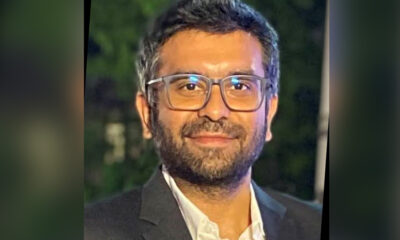
Sameer Nair
According to Nair, the new initiatives planned for 2004, hopefully, would also fuel revenue collection. “I think that Star India’s revenue growth would be in double digits; better than the industry average of about eight per cent,” he adds.
However, Star India would be watching closely the developments relating to CAS as its implementation (or the lack of it) even in a limited manner has the potential of affecting the revenue mop up.
India’s growth is crucial for the Star Group as it is forecasted that the company is on track for a $40 million FY 2004 profit as per the September-ended first quarter earnings. Lending a helping hand would be India and Taiwan, the Hong Kong-based Media Partners Asia (MPA) said a recent report.
“We estimate that India will continue to generate the bulk of cash flow and fund losses at Star’s emerging operation in tightly regulated China,” the MPA reports pointed out.
It is no wonder that Nair is all pepped up about 2004. Though he is hesitant in detailing the whole game plan, Nair does provide a sneak preview.
Growing the subscription household base to 14 million is a tall order, especially in a country like India where under-declaration is rampant (Star India only gets paid subscription money for 10 million-odd cable and satellite homes out of the total 40 million homes), but Nair feels that the distribution activities have to be aggressive.
“It’s a tall order, but the job has to be done. If 2003 was the year of transparency when we increased the base on the back of packages offered to the cable operators, the momentum has to be maintained and then stepped up,” Nair says.
Where the programming strategy is concerned, Star India wants to try out new things because, according to Nair, it has been confirmed that people “watch programmes and not channels.”
To ring in a new approach to programming, Star would not fight shy of retiring even existing successful shows to be replaced by fresh ones.
“We have discussed the programming strategy within the company in detail and feel that we must do some new stuff even if it means giving current successful shows a rest on the flagship channel, Star Plus,” Nair explains, adding that such a move would help in bring in variety.
Pointing out that the continued dominance of Star Plus for the last several years is a comforting as well as a disturbing feeling (it can make one complacent as the toppled from No. 1 position Hindustan Times would vouch for), Nair says Star Plus would not like to suddenly wake up one morning to see somebody else has usurped the top slot.
A still from ‘Krisshna Arjun’

So, some weekly and 30-minutes shows though doing well – like Krisshna Arjun, for instance – on Star Plus would have to make way for newer programming like a high-end detective series on the lines of Sherlock Holmes, some comedy/laugh shows and reality fare like Pop Idol.
“We are working on a project to bring to viewers of Star Plus an intellectual and classy detective series,” Nair says, hinting that such a show would be geared to bring in more male eyeballs. The new programming for 2004 will start airing by February end.
After making a success of Star Vijay, a Tamil language channel, Star India now wants to replicate the story with other languages too. A Telugu channel in the offing?
A cautious Nair states, “Regional expansion is certainly on the agenda for the year, but I would say it’s not high on the priority list.”
As far as ad sales go, Star India has acquired a new software, customised for it, to do a “better and more scientific airtime inventory management.” Says Nair, “Airtime is the most perishable commodity like an airline seat. This software would help us keep a better track of the inventory, which, in turn, would translate into more value for our clients and customers.”
What happens if CAS does not get implemented? Would there be some change in the pricing of the Star channels?
Ruling out changes in the pricing structure of Star pay channels, Nair says Star India doesn’t really have a specific CAS-related strategy.
“We actually don’t have a CAS or a non-CAS plan. We continue to look for transparency (in distribution activities) and we should get our fair share,” he says.
Now, if that is not confidence on Star’s part, then what is.






NEW DELHI: Hamdard Laboratories gathered a cross-section of India’s achievers in New Delhi on Friday, handing out the Hakeem Abdul Hameed Excellence Awards to figures who have left their mark across healthcare, education, sport, public service and the arts.
The ceremony, attended by minister of state for defence Sanjay Seth and senior officials from the ministry of Ayush, celebrated individuals whose work blends professional success with a sense of public purpose. It was as much a roll call of achievement as it was a reminder that influence is not measured only in profits or podiums, but in people reached and lives improved.
Among the headline awardees was Alakh Pandey, founder and chief executive of PhysicsWallah, recognised for turning affordable digital learning into a mass movement. On the sporting front, Arjuna Awardee and kabaddi player Sakshi Puniya was honoured for her contribution to the game and for pushing women’s participation onto bigger stages.

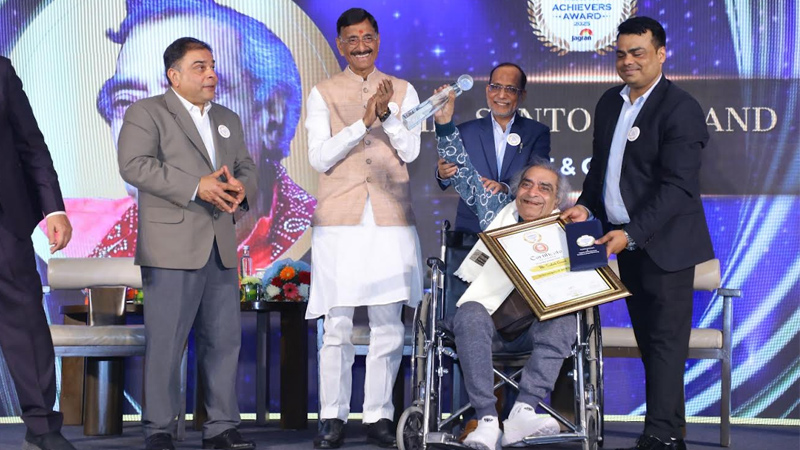
The cultural spotlight fell on veteran lyricist and poet Santosh Anand, whose songs have echoed across generations of Hindi cinema. At 97, Anand accepted the honour with characteristic humility, reflecting on a life shaped by perseverance and hope.
Healthcare honours spanned both modern and traditional systems. Manoj N. Nesari was recognised for strengthening Ayurveda’s place in national and global health frameworks. Padma shri Mohammed Abdul Waheed was honoured for his research-backed work in Unani medicine, while padma shri Mohsin Wali received recognition for his long-standing contribution to patient-centred care.
Education and social development also featured prominently. Padma shri Zahir Ishaq Kazi was honoured for decades of work in education, while former Meghalaya superintendent of Police T. C. Chacko was recognised for public service. Goonj founder Anshu Gupta received an award for his dignity-centred rural development initiatives, and the Hunar Shakti Foundation was honoured for empowering women and young girls through skill development.
The Lifetime Achievement Award went to former IAS officer Shailaja Chandra for her long career in public healthcare and governance, particularly in the traditional systems under Ayush.
Speaking at the event, Hamdard chairman Abdul Majeed said the awards were a tribute to those who combine excellence with empathy. “These awardees reflect Hakeem Sahib’s belief that healthcare, education and public service must ultimately serve humanity,” he said.
Minister Seth struck a forward-looking note, saying India’s young population gives the country a unique opportunity to become a global destination for learning, health and wellness by 2047.
The ceremony also featured the trailer launch of Unani Ki Kahaani, an upcoming documentary starring actor Jim Sarbh, set to premiere on Discovery on 11 February.
Instituted in memory of Unani scholar and educationist Hakeem Abdul Hameed, the awards have grown into a national platform that celebrates those building a more inclusive and resilient India. For one evening at least, the spotlight was not just on success, but on service with substance.