GECs
‘Challenges of cultural adaptability of international formats in India are tremendous’ : Siddhartha Basu- Synergy Adlabs CMD


Synergy Communications founder Siddhartha Basu shot to fame as the curt quizmaster in BBC’s Mastermind India. But he sure knows a thing or two about drama. And that comes across as no surprise since he has a background in theatre.
No wonder then that Basu was able to blend drama and quiz in the immensely popular Amitabh Bachchan-hosted show Kaun Banega Crorepati (KBC) that turned around the fortunes of Star Plus.
Post the acquisition of Synergy by Adlabs, Basu now plans to scale up operations to produce content across various genres. And he is already making inroads into the regional content market.

In an interview with Indiantelevision.com’s Arcopol Chaudhuri, Basu speaks about how the Adlabs association has helped and shares his views on the rapidly changing Indian television scenario. He hopes the relationship between content providers and broadcasters will be redefined.
Excerpts:
|
How has the acquisition of stake by Adlabs helped Synergy grow its business? The association with Adlabs, thus, gives us a more sound financial grounding and standing amongst the competition. It empowers us not only to grow creatively, but also as a business. |
||
|
Have you expanded your production facilities post the formation of Synergy Adlabs? |
||
|
Are you looking at producing regional content as well? |
||
|
Which shows are you producing on the regional front? In the coming days, we are also looking to produce regional content in languages for Malayalam, Telugu, Kannada. But we have done regional content before as well. That was before the Adlabs association. It was a cricket-based quiz show called Howzzat which aired on Tara. But then again, regional content is our secondary market. Hindi GEC programming still remains our primary interest. |
||
|
Will Synergy Adlabs make inroads into films and animated content? |
||
|
How would you describe the existing equation between content providers and broadcasters? There has been lack of accountability on key creative and programming decisions on many occasions. Often you have proxy producers and creative directors, who are arbitrary and unaccountable and it becomes a ridiculous situation. We fortunately have had cordial relationships with broadcasters, but that has been the generic equation between the channel and production house. They retain the IPR and we work on a commissioned basis. We are hoping to see that equation change and settle down into something that benefits both parties. |
||
|
With the huge demand for content coming from the existing and upcoming channels, how do you see the relationship evolve between the content providers and the broadcasters? |
||
|
Which broadcasters have you really enjoyed working with? |
||
|
Any shows that you’re doing for Zee? |
||
|
Kaun Banega Crorepati (KBC) really took Star Plus up the ratings ladder. Ironically, the channel, it seems needs another KBC to make it regain its lost audience share to Zee. |
||
|
You have been largely associated with quiz-based shows. Until last year you worked on Jhalak Dikhla Jaa, which is a celebrity-dance show. What prompted the foray into this genre? |
||
|
||
|
There were a number of quiz based shows that followed Kaun Banega Crorepati, none of which could replicate it’s success. Why do you think quiz-format shows have dried up now? But as it happens in films and television, there were attempts made to replicate the format in some way or the other and they did not work. Some shows work, some don’t. It’s not necessarily the format that is to be blame. But we hope to tap popular genres for wider appeal. Bollywood Ka Boss is one such show – it’s a film based quiz show and we hope that it will catch up. At the end of the day, a show has to have a specialized audience. |
||
| How much has KBC changed the profile of your company? The profile, I believe, changes with every new show that we do. With Jhalak Dikhla Jaa, the question mark transformed into an exclamation mark. A quiz master had now put on his dancing shoes. We are known for our thorough backend technological setup for the execution of television programming, a certain quality of content and class of presentation. That is the benchmark we will take to any genre we work upon. |
||
|
We have seen different phases in the Indian television scene. There was the time ofHum Log, Buniyaad and Mahabharat. Then there were the soaps which continue even today. Now reality TV and talent hunts have become popular. How do you view this change? |
||
| Which direction is Indian television moving in? Any genres of programming that are still missing? I don’t think it’s moving in one direction. I think we are still in an adolescent phase. The range within which we have been operating is still very limited. This is something that will now start finding definition. We are still a very amateur television watching community. We’ve been used to Doordarshan, which created a sort of a monoculture. Surprisingly we had a lot of variety then within those one or two channels of the public broadcaster, than we do now. The reason why I see the change coming is because broadcasters are actively seeking things that differentiate and mark them out. There are still so many genres that are waiting to be tapped – comedy in the form of sitcoms is something that’s missing. |
||
|
Do you see more of localization coming in? |
||
|
It is said that interactive TV is the key driver to the future of television programming? |
||
|
What kind of associations or affiliations are you looking to build up internationally? |
||
|
Why is that? |
||
|
What are your views on the existing audience measurement practices? |
||
|
Okay. When are you getting back to hosting a show? |
||
|
How did you narrow down upon Boman Irani as a host for Bollywood Ka Boss? |
||
|
When is KBC back for its next season? |






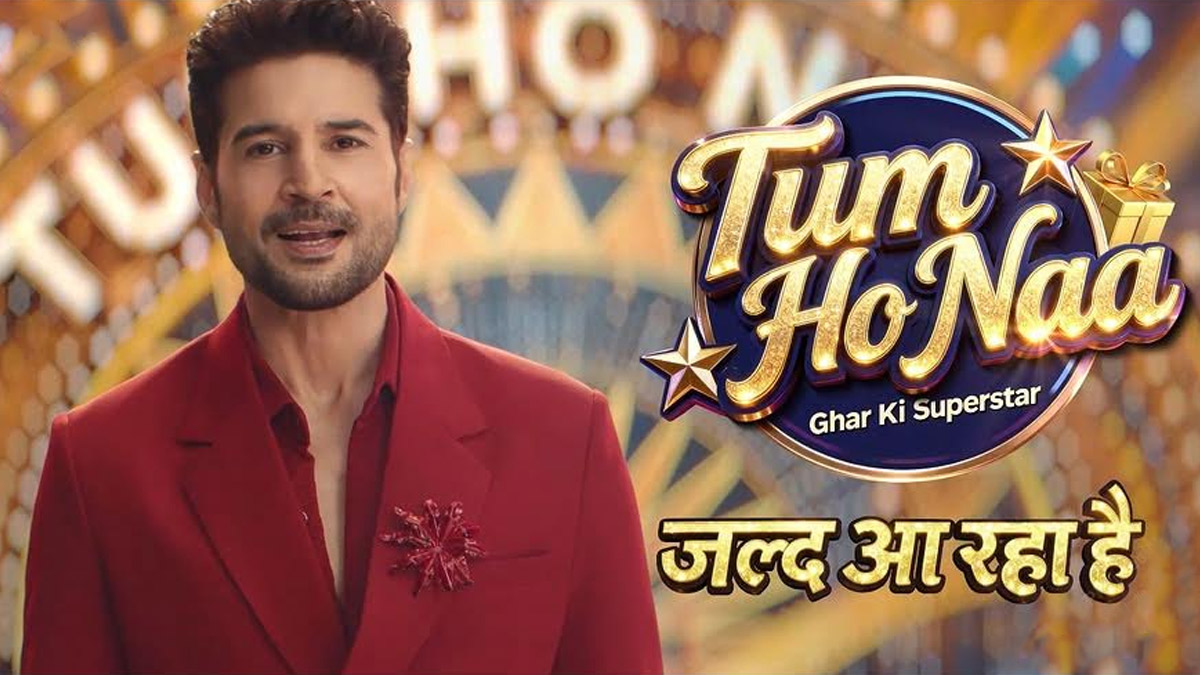
MUMBAI: Lights, camera… connection because this time, the game isn’t just about winning, it’s about who’s with you. Sony Pictures Networks India is gearing up to launch a new reality game show, Tum Ho Naa, expanding its unscripted slate with a format that promises both emotion and engagement.
The show will premiere soon on Sony Entertainment Television and stream on Sony LIV, with Rajeev Khandelwal stepping in as host. Known for his measured screen presence and selective choices, Khandelwal’s return to television adds a layer of familiarity and credibility to the upcoming format.
While specific details of the gameplay remain under wraps, the positioning suggests a reality format that leans as much on emotional resonance as it does on competition, an increasingly popular blend in Indian television, where audiences are gravitating towards content that offers both stakes and storytelling.
Khandelwal, reflecting on his return, noted that his choices have often been guided by instinct rather than convention, describing Tum Ho Naa as a project that feels “close to the heart”. His association also signals Sony’s continued focus on anchoring new formats with recognisable faces who bring both relatability and depth.
The launch comes at a time when broadcasters are doubling down on original non-fiction formats to drive appointment viewing, even as digital platforms expand parallel reach. By placing the show across both linear television and OTT, Sony appears to be aiming for a dual-audience strategy capturing traditional viewers while engaging digital-first consumers.
As the countdown to premiere begins, Tum Ho Naa positions itself not just as another game show, but as a reminder that sometimes, the biggest prize on screen isn’t the jackpot, it’s the journey shared along the way.






