Hindi
Celina Jaitly’s musical video for LGBT gets one million views


NEW DELHI: A Bollywood-style music video featuring United Nations Equality Champion Celina Jaitly which promotes equal rights for the Lesbian, Gay, Bisexual and Transgender (LGBT) community received more than a million views online.
The two-and-a-half minute video, titled ‘welcome’ has become one of UN’s most watched videos. Jaitly was named UN Equality Champion by Human Rights Chief Navi Pillay last year for her support for LGBT rights.

The video tells the story of a young man who brings his boyfriend home to meet his family for the first time. Charles Radcliff of the Office of the High Commissioner for Human Rights (OHCHR) tweeted that the video had become one of the “UN’s most watched ever”.
Jaitly, who made her music debut in the video, also took to Twitter to express her gratitude for the response. “As my song/video for @UN @free_equal #thewelcome crosses one million views on @YouTube I feel so blessed in the holy month of Ramadan! Thank you all,” she said.
The 32-year-old also expressed the hope that the video would spread the broader message of the need to change not just laws but also attitudes and to challenge stereotypes about the LGBT community in light of the threats and discrimination the community faced in India and across the world, the Press Trust of India reported.
Jaitly, a mother of two-year old twins, has said that she has received threats for supporting gays and lesbians but will continue to work towards achieving equality for the community.
Born to a Punjabi father and an Afghan mother, Jaitly was crowned Femina Miss India Universe in 2001. Her breakthrough film role was in the 2003 thriller Janasheen. She rose to fame in the late 2000s following roles in the films Silsiilay (2005), No Entry (2005), Tom, Dick, and Harry (2006) and Golmaal Returns (2008).
She is married to Austrian businessman Peter Haag and the couple has two-year-old twin boys Winston and Viraaj. Jaitly divides her time Mumbai, Dubai and Singapore.






Hindi
Zee5 and Applause Entertainment team up for whodunnit ‘Everybody Loves Sohrab Handa’
Rajat Kapoor directs star-studded murder mystery streaming from 10 April.
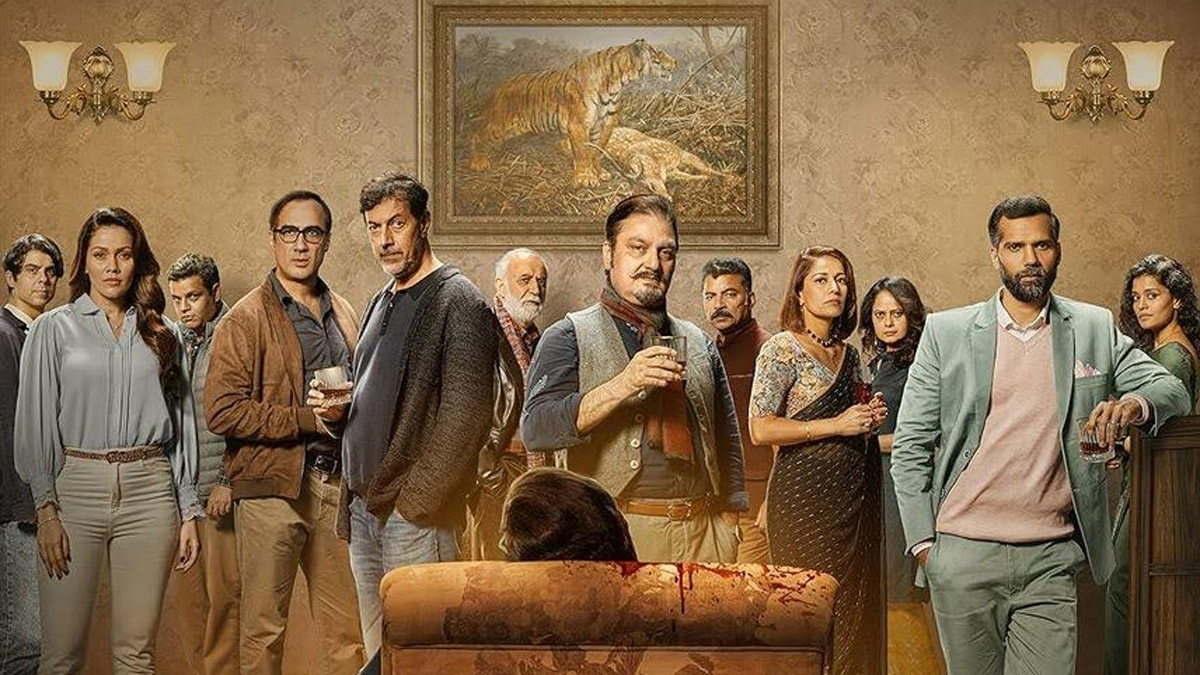
MUMBAI: Zee5 is serving up another killer collaboration and this time, the murder mystery comes with a generous side of dark humour and family dysfunction. The streaming platform has partnered with Applause Entertainment and Mithya Talkies to bring Everybody Loves Sohrab Handa, a fresh, twisted whodunnit written and directed by acclaimed filmmaker and actor Rajat Kapoor. The film will stream exclusively on Hindi Zee5 from 10 April.
The movie reimagines the classic murder mystery genre with a contemporary, darkly comic edge. It revolves around a group of friends and family who smile, drink, and celebrate together until the silence snaps and long-buried secrets spill out. The stellar ensemble cast includes Vinay Pathak, Ranvir Shorey, Waluscha De Sousa, Saurabh Shukla, Chandrachoor Rai, Neil Bhoopalam, Koel Purie, Palomi Ghosh, and Rajat Kapoor himself.
This latest offering continues the successful partnership between Zee5 and Applause Entertainment, which has previously delivered diverse hits such as Mithya, Bloody Brothers, and Jab Khuli Kitaab.
&TV Business Head of hindi Zee5 and chief channel officer Kaveri Das said, “Our collaboration with Applause Entertainment has consistently delivered distinct, high-impact storytelling. Everybody Loves Sohrab Handa is a natural progression, reinforcing our focus on genre-led content with a compelling whodunnit premise and a strong ensemble cast.”
Applause Entertainment business head for movies Sunil Chainani added, “This film adds yet another compelling layer to our slate with Rajat Kapoor’s unmistakable voice.”
Rajat Kapoor shared, “What interested me was not just the mechanics of a whodunnit, but the emotional violence that precedes physical violence. These are people who smile at each other, but there’s so much that is not said.”
The film promises razor-sharp writing, layered performances, and simmering tension, inviting viewers not just to solve the crime but to unravel the complex relationships at its heart.
If you love a good murder mystery served with wit and emotional depth, Everybody Loves Sohrab Handa looks set to be your next addictive watch. Mark your calendars, the whodunnit drops on Hindi Zee5 from 10 April.






