News Broadcasting
‘CAS’e closed – Prasad allays Sena Supremo’s fears

MUMBAI: “The post-CAS scenario – good interplay of market forces; healthy intervention of the government!” These were the words with which information and broadcasting minister Ravi Shankar Prasad signed off at a press conference held in Doordarshan Kendra in Mumbai this afternoon.
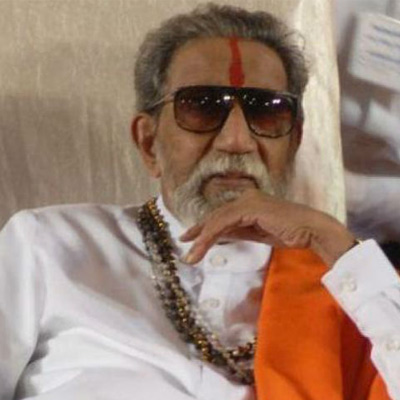
The minister addressed a packed media conference after a delay of nearly two hours – he met Shiv Sena supremo Balasaheb Thackeray (at his Bandra residence). Prior to that, he attended an Indian Merchants Chamber- organised seminar on the conditional access system (CAS) earlier in the day.
Speaking about his meeting with Thackeray, Prasad said the Sena chief’s concerns were justified and shouldn’t be seen as “opposition”. It may be recalled that on 5 June Thackeray, an ally of the BJP-led coalition government, had warned that the decision to go ahead with CAS would prove an “expensive one”.
Prasad said that Thackeray’s reservations about CAS revolved around two key issues:
a) consumers interests must be safe-guarded and
b) the interests of cable operators must be taken care of because the cable operators had spearheaded the cable revolution in India through their enterprise
(entrepreneurial spirit).

Prasad said Thackeray had asked him to focus on these two aspects while implementing CAS.
Prasad said he had given assurances to Thackeray and his son Uddhav Thackeray on the matter. He also added that he had informed the Sena leaders that the monthly rental cost of the set-top-boxes (STBs) would be as low as Rs 30; as against the initial apprehensions that consumers would have to shell out up to Rs 7,000 for buying STBs outright. Prasad added that he would continue to have further interactions with the Thackerays and would keep them abreast of developments.
Prasad added that as a step in this direction, he was appointing Shekhar Joshi of Cablevision on the CAS task force. Prasad said that this move would allay the fears of the Mumbai cable trade, which didn’t have any representation on the government appointed CAS task force.
While reiterating that CAS would soon be a reality, Prasad noted that he was happy with the latest developments wherein MSOs (multi system operators) were willing to offer 70 plus free-to-air (FTA) channels at a monthly price of Rs 72. “I have got confirmation from the MSOs and cable operators that the channels in the FTA bouquet include 25 entertainment channels, 10 news channels, all the Doordarshan and it’s affiliate channels, several film/movie channels, music channels such as Balle Balle, regional channels such as Lashkara amongst others. Consumers will get choice,” Prasad added.
While talking about pay channels, Prasad said he didn’t foresee any problems in the non-declaration of individual channel rates by several broadcasters as yet. “The broadcasters have asked for some extra time as they need to address several issues and I don’t see any problem or resistance. In the near future, every cable operator will have to display a list of all the pay and FTA channels outside his premises – akin to that of a ration shop,” said Prasad, while expressing the hope that all the constituents of the trade would work unitedly to make CAS a resounding success.
Prasad expressed confidence that the monthly outgo for consumers wouldn’t exceed Rs 200. He also said that MSOs had given assurances that they would make things convenient for the consumers by giving quality after-sales service – such as warranty; buy back schemes; replacements; receipts amongst others. He envisaged that the post-CAS scenario would entail practicality and scientifically oriented practices into the earlier disorganised nature of the cable business.
Prasad was optimistic that CAS would go through primarily because the government and ministry had taken care of two important aspects —
* Choice of platform – in terms of CAS, DTH, HITS
* Choice of content – choice in the FTA as well as pay bouquet
While answering queries about the need for a regulatory body, Prasad said that he was open to suggestions but decried the fact that there were some
vested interests pushing for a regulatory body in an attempt to delay and frustrate CAS. “This kind of manipulation wouldn’t be tolerated, as the
appointment of a regulatory body would be juxtaposed with the wider context of the Convergence Bill,” Prasad said.
Referring to the process of educating the consumer, Prasad said several activities had been initiated and more would come. He added that the MSOs would start their helpline (call centres) by mid-June. He also requested the media to avoid creating confusion in the minds of the consumer.
While answering a query on the issue of licences or monopoly of the cable operator in any given region post-CAS, Prasad said: “Our primary concern is to
ensure quality of service, choice of content and platform. We feel that the industry constituents will not disappoint the consumer – and the policy makers.
If a consumer is disillusioned, he can opt for DTH. Even in DTH, we have taken steps to ensure that there is no private monopoly. The national broadcaster
Doordarshan has been encouraged to start DTH services and attain a big degree of professionalism.”
Prasad might have inherited CAS from his predecessor but the I&B minister is leaving no stone unturned to ensure that the CAS “project” becomes
successful.
Also present at the briefing were several MSO representatives including Ashok Mansukhani (Hinduja TMT), Jagjit Singh Kohli (Win Cable) and others from the Star India-backed Hathway Cable and Datacom.




News Broadcasting
CNN-News18 to host Fury in the Gulf conclave on West Asia crisis
Three-hour summit to unpack geopolitical fallout and impact on India
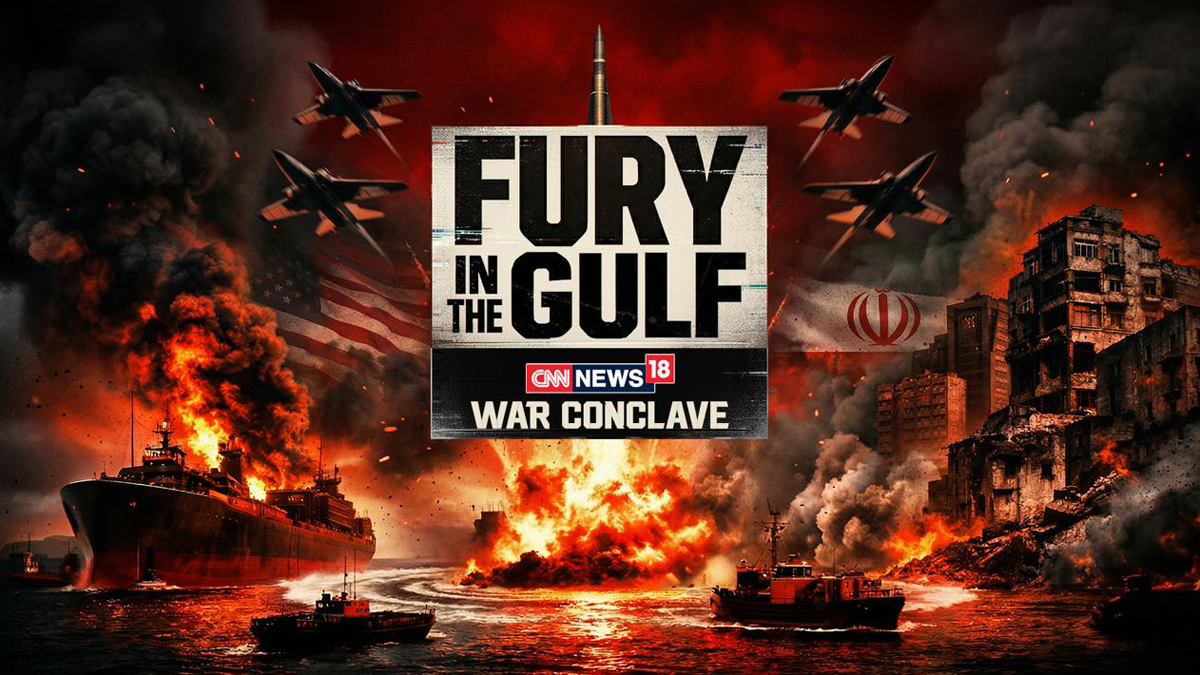
MUMBAI: CNN-News18 is set to host a special three-hour broadcast, Fury in the Gulf – War Conclave, on April 7, aiming to decode the escalating West Asia crisis and its far-reaching implications for India.
Scheduled from 4:00 PM to 7:00 PM, the conclave comes at a time when tensions between Iran and the United States are reshaping global geopolitics and triggering economic uncertainty. With India’s deep energy ties, trade links and large diaspora in the Gulf, the developments carry significant domestic relevance.
Built around the theme ‘Conflict, Consequences, and The Future,’ the programme will feature six curated sessions combining one-on-one interviews and panel discussions. The focus is to cut through the clutter and offer viewers a clearer understanding of the fast-evolving situation.
Key sessions include ‘Diplomacy in Times of War’ featuring Shashi Tharoor, and ‘World After the Iran Conflict’ with voices such as Ram Madhav, Reuven Azar, representatives from the European Union and the Iranian Deputy Envoy. Another session titled ‘Another Dunkirk?’ will bring together K. J. S. Dhillon and Jitin Prasada among others.
CNN-News18 editorial affairs director Rahul Shivshankar said, “In times of war, clarity becomes the most powerful tool. Fury in the Gulf – War Conclave brings together credible voices to address the questions and confusion that arise amid an overwhelming influx of information.”
He added that the initiative is aimed at delivering “facts, perspective, and insight” at a time when misinformation can easily cloud public understanding.
Echoing the sentiment, CNN-News18 CEO– English and business news Smriti Mehra said the conflict marks a defining global moment, with consequences that extend well beyond the region. She noted that the conclave seeks to present the crisis with “depth, nuance and responsibility” so audiences can better grasp its real-world impact.
As geopolitical tensions continue to dominate headlines, the conclave positions itself as an attempt to bring order to the noise, offering viewers a structured, insight-led look at a complex and rapidly shifting global situation.






