Cable TV
Casbaa seeks crackdown on ad masking in Taiwan


The Cable & Satellite Broadcasting Association of Asia (Casbaa), a regional trade group, has met Taiwanese pay-TV regulators the Government Information Office (GIO) and the Fair Trade Commission (FTC) to register its strong concern over the masking of international cable TV advertising (or “clipping”) by “last mile” cable system operators in Taiwan.
“This is a very serious problem costing our industry millions of dollars in lost revenues,” said Simon Twiston Davies, CEO of Casbaa, according to an official release.
“These violations are having a serious economic impact on the regional broadcasters who do so much to provide market drivers for Taiwan’s domestic cable industry,” said Twiston Davies. “Another issue is the impact this kind of environment can have on further investment by the networks and other foreign and domestic players.”

Casbaa represents 120 pay-TV companies across Asia, including those operating in Taiwan. Members are drawn from cable systems, cable channels, satellite operators and equipment suppliers of all kinds. Casbaa notes that major Taiwan advertising agencies are creating “blacklists” of channels so sharply affected by the illegal masking activities. Some of the agencies say they can no longer recommend the channels as an advertising “buy” thanks to their inability to guarantee delivery of the messages.
Taiwan has almost 5 million cable-TV subscribers, providing a penetration rate of all TV homes of about 80 per cent, making it one of the most mature cable TV advertising markets in Asia.
Among those attending the Casbaa meetings with the GIO and the FTC were senior executives representing Sony’s Columbia Tristar, the Star Group, Walt Disney Television, National Geographic, AOL Time Warner, ESPN Star Sports and Discovery Communications. Also attending were officials from the American Institute in Taiwan and the head of the Asian division of the Motion Picture Association, representing the interests of the major Hollywood studios.
“We do recognise previous efforts by the GIO and FTC with regards to their support in this matter but urge them to take an even more proactive role in enforcing the present laws at a time when Taiwan will soon have to accede to the internationally binding WTO and World Intellectual Property Organisation treaties,” said Twiston Davies.
Casbaa has requested the following actions by the Taiwan authorities to address the ongoing problems with ad masking by the end of 2001:
(a) Enforcement of existing regulations by the central government rather than the local governments. (b) Heavy fines for system operators engaging in ad masking. (c) Ensure that compliance with the law is integral to the issuance, maintenance and renewal of pay-TV licenses.
Casbaa will be highlighting piracy and other regulatory issues during the upcoming Casbaa 2001 Convention in Hong Kong, 28-30 November.





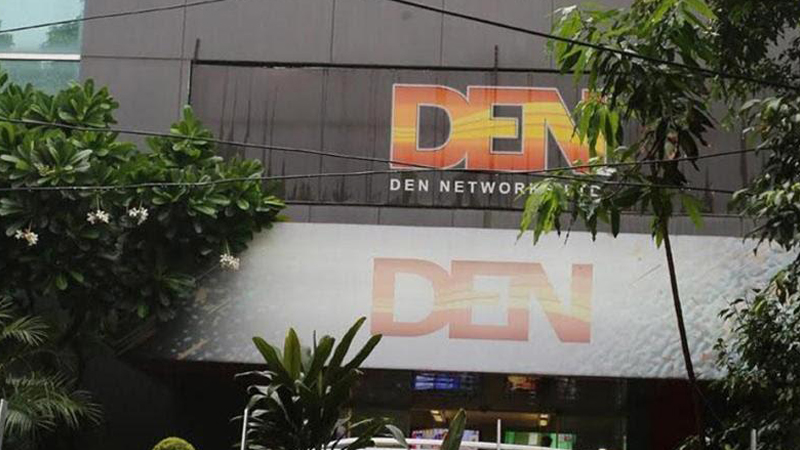
MUMBAI: When margins wobble, liquidity talks and in Q3 FY25-26, cash did most of the talking. Den Networks Limited closed the December quarter with consolidated revenue of Rs.251 crore, marginally higher than the previous quarter but down 4 per cent year-on-year, even as profitability stayed resilient on the back of strong cash reserves and disciplined cost control.
Subscription income softened to Rs.98 crore, slipping 3 per cent sequentially and 14 per cent from last year, while placement and marketing income offered some cheer, rising 15 per cent quarter-on-quarter to Rs.148 crore. Total costs climbed faster than revenue, up 7 per cent QoQ to Rs.238 crore, driven largely by higher content costs and operating expenses. As a result, EBITDA dropped sharply to Rs.13 crore from Rs.19 crore in Q2 and Rs.28 crore a year ago, pulling margins down to 5 per cent.
Yet, the bottom line refused to blink. Profit after tax stood at Rs.40 crore, up 15 per cent sequentially and only marginally lower than last year’s Rs.42 crore. A healthy Rs.57 crore in other income helped cushion operating pressure, keeping profit before tax at Rs.48 crore, broadly stable quarter-on-quarter despite the tougher cost environment.
The real headline-grabber, however, sits on the balance sheet. The company remains debt-free, with cash and cash equivalents swelling to Rs.3,279 crore as of December 31, 2025. Net worth rose to Rs.3,748 crore, while online collections accounted for 97 per cent of total receipts, underscoring strong cash discipline across operations, including subsidiaries.
In short, while Q3 showed signs of operating strain, the financial backbone remains solid. With zero gross debt, steady profits and a formidable cash war chest, the company enters the next quarter with flexibility firmly on its side proving that in uncertain markets, balance sheet strength can be the best growth strategy.






