News Broadcasting
CAS – medicine worse than disease: Uddhav Thackeray

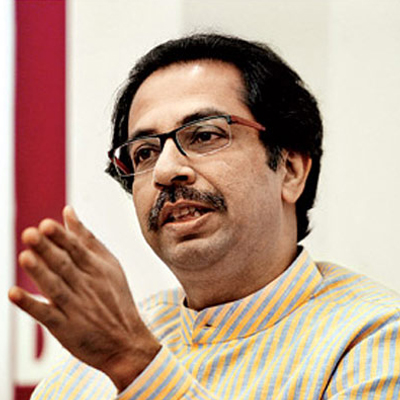
MUMBAI: Hindu Hridaysamrat (emperor of Hindu hearts) Shiv Sena chief Balasaheb Thackeray might not have been able to make it to the CODA (Cable Operators and Distributors Association) meeting in Mumbai but his son and anointed heir Sena president Uddhav Thackeray did come and make his mark. The younger Thackeray played to the gallery (and yes there were claps galore) when he said that the conditional access system (CAS) is a medicine worse than the disease.
While addressing nearly 1,500 Mumbai-based cable operators at the Rang Sharda Auditorium in Bandra (a Mumbai suburb), the younger Thackeray asserted that the I&B ministry has erred in the implementation of the conditional access system (CAS). He congratulated the assembled cable operators and sought a pledge from them – “Promise me that you will remain united and fight against the efforts of multi-system operators (MSOs) and broadcasters who try to divide and rule you. Remember, Balasaheb Thackeray and the Sena might is behind you!”
Earlier in his speech, Uddhav Thackeray apologised for the absence of Balasaheb Thackeray but reiterated: “The very fact that I am here proves that Balasaheb is backing you wholeheartedly. Balasaheb is a brahmashtra (powerful weapon used by Hindu gods in Indian mythology) and used be unleashed only if all other tools are rendered useless,” he added vehemently.

While claiming that the Central government is part and parcel of the coalition BJP-led government, Uddhav Thackeray said that the information and broadcasting ministry (I&B) has erred in the implementation of CAS in its current form. “Clearly, someone has wrongly advised them. Otherwise why should the government act if as someone is giving them supari (bribe money) for implementing CAS in this form?” he questioned and added, “The government should act like a facilitator overseeing things with authority; and a regulator – rather than doing vasuli (collections).”
But Thackeray stated that it was unfair that the I&B minister RS Prasad hadn’t provided answers to Balasaheb despite assuring him that he would allay all the concerns about CAS not being consumer friendly. Thackeray referred to the meeting earlier this year when Prasad visited Thackeray’s residence Matoshree (in Mumbai) with members of Parliament Pritish Nandy and Sanjay Nirupam.
When asked by indiantelevision.com whether the government should pass a notification clarifying things in lieu of the current situation, Thackeray refused to be drawn into controversies about technical matters. “According to the government, CAS is already on in Mumbai from 1 September – but this is only on paper.” While referring to CAS rollout in Chennai, Thackeray said: I have got reports that those Chennai residents who have invested in a set top box don’t seem to get pay channels whereas non STB homes seem to be getting all the channels. Anyway, Chennai residents seem to hate Hindi and therefore, the non-availablity of Hindi entertainment channels hardly bothers them.”
Talking about Delhi, Thackeray referred to the fact that Delhi’s Congress chief minister Sheila Dixit had clearly said that CAS was not consumer friendly and the fact that the I&B ministry decided to postpone CAS in Delhi citing the excuse of elections proves that the ministry knew that CAS would rub consumers the wrong way. “They postponed CAS in Delhi due to chunaav (elections); then why are they planning to put “chunna” (a colloquial slang phrase for conning someone) on Mumbai residents?” he thundered.
Appreciating the efforts of Shiva Sena Vibhag Pramukh and CODA president Anil Parab (who is also a CAS implementation panel member), Thackeray said: “I must specially congratulate Parab for taking Balasaheb’s cue and making efforts to bring all the cable operators under a single fold. He is a true Sena worker.”
Referring to the millions of slum dwellers in Mumbai, Thackeray said: “Watching these channels is the only source of entertainment for those residing in slums. As is it, Doordarshan has become Dukhdarshan (sad state of affairs) and these people cannot be forced to watch the pathetic free to air terrestrial channel. What would happen to these people if they were asked to pay in excess of Rs 400 per month for watching popular entertainment channels?” he questioned.
Emphatically stating that the Sena isn’t against technology, Thackeray said: “We never opposed the telecom revolution because the government didn’t prohibit consumers from having fixed phone lines in their houses. It opened doors for those who had the propensity to buy mobile phones; but now mobile phone airtime costs have reduced; wireless in local loop (WPP) technology has come in so on and so forth. This is really a revolution in the true sense,” he added.
Clearly stating that the dadagiri (rogue like attitude) of pay channels will not work in Mumbai, Thackeray urged the cable fraternity to remain united and fight the vested interests. He told the assembled gathering that the cable operator is the most important medium between the broadcasters and the consumers; no one can undermine their strength and push them to the background. “And we are with you!” he said while being cheered by the last mile operators.




News Broadcasting
CNN-News18 to host Fury in the Gulf conclave on West Asia crisis
Three-hour summit to unpack geopolitical fallout and impact on India
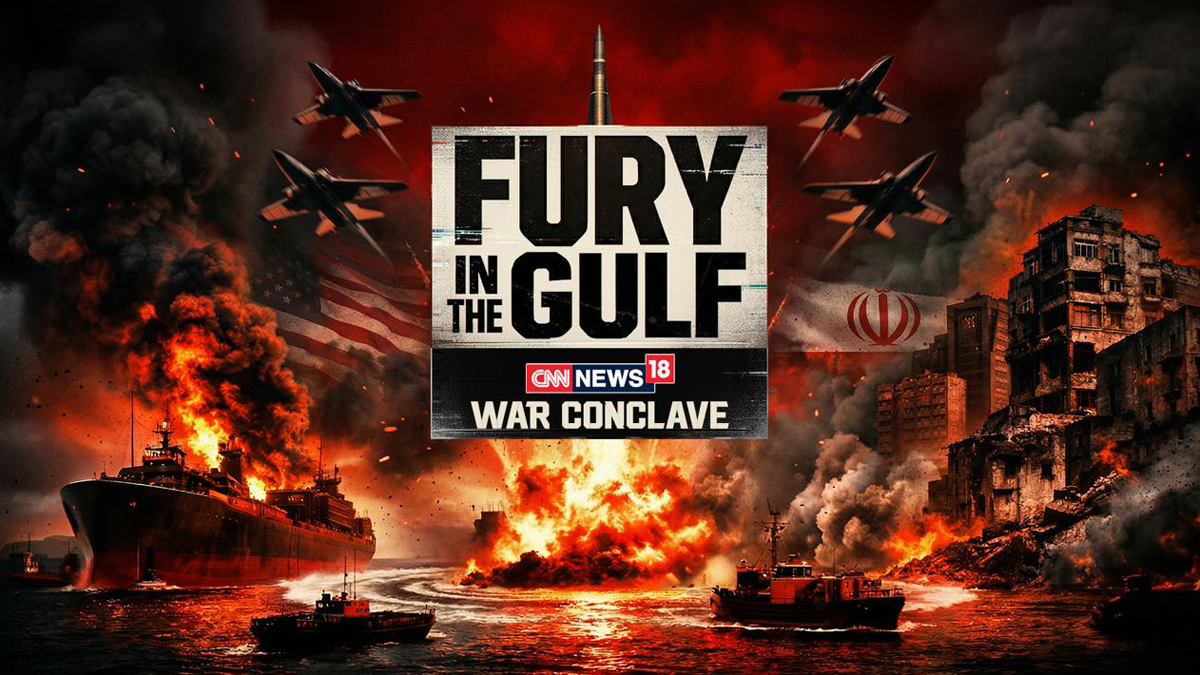
MUMBAI: CNN-News18 is set to host a special three-hour broadcast, Fury in the Gulf – War Conclave, on April 7, aiming to decode the escalating West Asia crisis and its far-reaching implications for India.
Scheduled from 4:00 PM to 7:00 PM, the conclave comes at a time when tensions between Iran and the United States are reshaping global geopolitics and triggering economic uncertainty. With India’s deep energy ties, trade links and large diaspora in the Gulf, the developments carry significant domestic relevance.
Built around the theme ‘Conflict, Consequences, and The Future,’ the programme will feature six curated sessions combining one-on-one interviews and panel discussions. The focus is to cut through the clutter and offer viewers a clearer understanding of the fast-evolving situation.
Key sessions include ‘Diplomacy in Times of War’ featuring Shashi Tharoor, and ‘World After the Iran Conflict’ with voices such as Ram Madhav, Reuven Azar, representatives from the European Union and the Iranian Deputy Envoy. Another session titled ‘Another Dunkirk?’ will bring together K. J. S. Dhillon and Jitin Prasada among others.
CNN-News18 editorial affairs director Rahul Shivshankar said, “In times of war, clarity becomes the most powerful tool. Fury in the Gulf – War Conclave brings together credible voices to address the questions and confusion that arise amid an overwhelming influx of information.”
He added that the initiative is aimed at delivering “facts, perspective, and insight” at a time when misinformation can easily cloud public understanding.
Echoing the sentiment, CNN-News18 CEO– English and business news Smriti Mehra said the conflict marks a defining global moment, with consequences that extend well beyond the region. She noted that the conclave seeks to present the crisis with “depth, nuance and responsibility” so audiences can better grasp its real-world impact.
As geopolitical tensions continue to dominate headlines, the conclave positions itself as an attempt to bring order to the noise, offering viewers a structured, insight-led look at a complex and rapidly shifting global situation.






