Cable TV
CAS market may reach $ 4.7 bn by ’22, highest growth in A-Pac


MUMBAI: Conditional access systems (CAS) refer to content security solutions used to restrict unauthorized subscribers from accessing paid digital broadcast services. The Conditional Access Systems (CAS) market is expected to reach US$ 4.73 billion by 2022, a TMR study found.
Content security using CAS is achieved by encrypting/scrambling digital signals while broadcasting and then decrypting them at the user’s (authorized) end. Conditional access systems, also referred to as revenue security solutions, are mounted on set-top boxes or other receiving devices at the subscribers’ end. Conditional access systems are the most significant components used by service providers for protection against revenue loss.
The most significant factor responsible for conditional access systems market growth is the rising penetration of digital/pay television, globally. Apart from pay televisions, CAS are also used for content protection in digital radio broadcast, internet protocol television (IPTV), and other internet-based subscription services.

The market for conditional access systems is segmented, based on the type of solutions, into smartcard-based CAS and card-less CAS. Smartcard-based CAS are the traditional systems that include additional hardware such as chip/smartcard with embedded conditional access software. This hardware is mounted on the set-top box in order to enable content security by providing access to authorized users. Due to the prolonged existence of smartcard-based CAS, this type of CAS currently has the highest penetration in global conditional access systems market. Card-less CAS, also called as software-based conditional access system, requires no hardware and the software is embedded directly onto the set-top box. The most significant advantage of card-less CAS is their low operating and upgrading costs as compared to smartcard-based CAS. In addition, software-based CAS offer better security against hacking than smartcard-based CAS.
The global conditional access systems market is also driven by the growing penetration of internet-based services such as internet protocol television (IPTV), on-demand video and others in different geographic regions. The demand for conditional access solutions in these applications is mainly fueled from the developed regions having large penetration of IPTV and on-demand video services. Further, the global conditional access systems market is predicted to witness strong growth due to various advancements in the conditional access solutions. Most of the companies are now focusing on development of advanced solutions such as cloud-based conditional access systems, multi-screen CAS and others.
The global conditional access systems market is segmented into type of solutions, application and geographic regions. On the basis of solution type, the market is segmented into smartcard-based CAS and card-less CAS. In 2014, the smartcard-based CAS segment accounted for the largest share, in terms of revenue and adoption, in the global conditional access systems market. This was majorly due to the prolonged existence of these solutions in the market. However, the card-less CAS segment is estimated to witness the highest demand during the forecast period.
This is attributed to high advantages such as low costs, easy upgrading and maintenance offered by these solutions over smartcard-based CAS. Another factor driving the growth of card-less CAS segment is its less susceptibility towards hacking. Furthermore, on the basis of applications, the global conditional access systems market is segmented into television, internet services and digital radio. The global market for conditional access systems was dominated by the television segment in 2014. The highest market share of television segment is attributed to the rapidly growing penetration of digital television worldwide. In addition, the television segment is predicted to hold its dominant position throughout the forecast period due to ongoing digital television transition in countries such as China, India, Brazil, Argentina, Mexico and others.
In 2014, North America accounted for the largest share of over 31 per cent, in terms of revenue, in the global conditional access systems market. This is due to the high penetration of advanced digital television services such as high definition (HD) television and substantially growing adoption of Ultra HD (UHD) television. However, the global conditional access systems market is estimated to witness the highest growth in Asia Pacific during the forecast period. This is due to the rapidly increasing adoption of digital television in China and South Asia.
The major companies in the global conditional access systems market include Cisco Systems, Inc., Nagravision SA (Kudelski Group), China Digital TV Co., Ltd., Verimatrix, Inc., Irdeto, Inc., Austrian Broadcasting Services GmbH & Co. KG (ORS Group), Viaccess-Orca (Orange Group), Coretrust, Inc., Latens Systems Ltd., Wellav Technologies Ltd. and Alticast Corporation. The global conditional access systems market is highly consolidated in nature with top three players namely Nagravision SA, Cisco Systems, Inc. and China Digital TV Holding Co., Ltd. accounting for over 70% of the market share. Other important players in this market include Irdeto, Inc., Viaccess-Orca and Verimatrix, Inc.







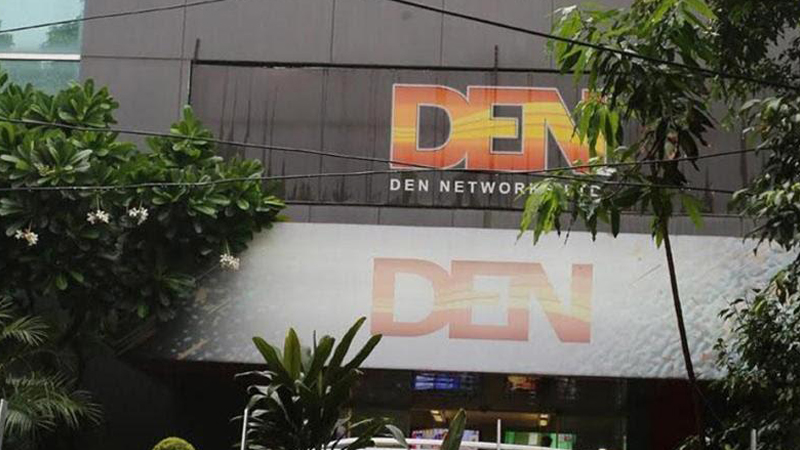
MUMBAI: When margins wobble, liquidity talks and in Q3 FY25-26, cash did most of the talking. Den Networks Limited closed the December quarter with consolidated revenue of Rs.251 crore, marginally higher than the previous quarter but down 4 per cent year-on-year, even as profitability stayed resilient on the back of strong cash reserves and disciplined cost control.
Subscription income softened to Rs.98 crore, slipping 3 per cent sequentially and 14 per cent from last year, while placement and marketing income offered some cheer, rising 15 per cent quarter-on-quarter to Rs.148 crore. Total costs climbed faster than revenue, up 7 per cent QoQ to Rs.238 crore, driven largely by higher content costs and operating expenses. As a result, EBITDA dropped sharply to Rs.13 crore from Rs.19 crore in Q2 and Rs.28 crore a year ago, pulling margins down to 5 per cent.
Yet, the bottom line refused to blink. Profit after tax stood at Rs.40 crore, up 15 per cent sequentially and only marginally lower than last year’s Rs.42 crore. A healthy Rs.57 crore in other income helped cushion operating pressure, keeping profit before tax at Rs.48 crore, broadly stable quarter-on-quarter despite the tougher cost environment.
The real headline-grabber, however, sits on the balance sheet. The company remains debt-free, with cash and cash equivalents swelling to Rs.3,279 crore as of December 31, 2025. Net worth rose to Rs.3,748 crore, while online collections accounted for 97 per cent of total receipts, underscoring strong cash discipline across operations, including subsidiaries.
In short, while Q3 showed signs of operating strain, the financial backbone remains solid. With zero gross debt, steady profits and a formidable cash war chest, the company enters the next quarter with flexibility firmly on its side proving that in uncertain markets, balance sheet strength can be the best growth strategy.






