GECs
CAS: IBF to push for level playing field

NEW DELHI: The Indian Broadcasting Foundation (IBF) has decided to exhort the government to mandate all other addressable systems in the country like DTH and IPTV, for example, as was being done with CAS or conditional access system.
This suggestion was one of the many that were discussed today by the board of IBF, an apex body of broadcasting companies operating in India, during a debate to help formulate a stand on the issue of CAS, which can be taken to the government by 7 April.
Another issue that the IBF would note down in a communication to the information and broadcasting ministry, which is holding meetings with industry stakeholders to finalise a rollout plan for CAS, is the pricing of such addressable services.
Though the exact words are still to be formalized, IBF sources told Indiantelevision.com it was suggested that the government should be petitioned to follow a recommendation of the sector regulator on the pricing mechanism of addressable systems like CAS, DTH and IPTV with an aim to provide a level playing field to broadcasters vis-à-vis the cable fraternity.
In a set of recommendations on addressable systems made in 2004, Telecom Regulatory Authority of India (Trai) had suggested that since addressable services depend on offering a choice to consumers, unlike non-addressable system like present-day cable TV services, pricing should be allowed to be formulated by market forces and not mandated.

Another issue that is likely to find its way in the letter for the government involves the free-to-air bouquet of channels and its pricing.
The IBF board feels that since the scenario has undergone a change from the time CAS was mooted in 2003 when the free-to-air (FTA )bouquet was to comprise 30 channels and priced at Rs. 72 (exclusive of taxes), more channels should now be added to the FTA package for consumers in a CAS-enabled regime.
The argument in favour of increasing the number of channels to at least 50 is backed by the fact that the subscription-free DTH service of Doordarshan will also carry more than 50 FTA channels from May. This was announced by DD today at a press conference.
The IBF board is also likely to express its reservation against providing a la carte pricing of channels as it might be against consumer interest.
Though such a line of thought had been forwarded by the broadcasting industry in the US to the American regulator, the Federal Communications Commission recently put out a statement saying that the earlier report on a la carte pricing was lopsided and individual pricing of TV channels actually works to the benefit of consumers. This too is being contested by broadcasters in the US.







GECs
Samsung TV Plus launches Kings of Comedy channel
New free FAST channel brings iconic Hindi comedy shows to millions of Samsung Smart TV owners.
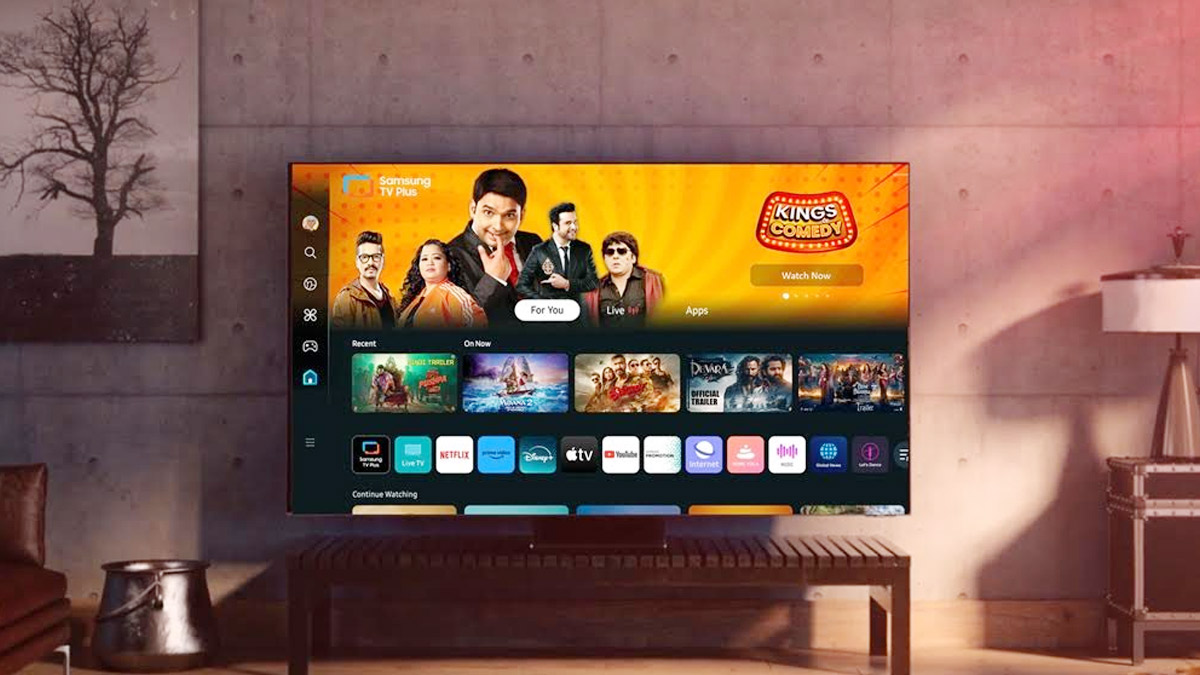
MUMBAI: Samsung TV Plus has just turned up the laughter volume and it’s completely free. The leading free ad-supported streaming television (FAST) service in India has launched Kings of Comedy, a premium comedy channel featuring some of the country’s most beloved primetime shows. Available exclusively on Samsung TV Plus, the channel delivers back-to-back hits including Comedy Nights with Kapil, Khatra Khatra Khatra, and Comedy Nights Bachao, with no login or subscription required.
The launch marks a milestone for free streaming in India, offering audiences a dedicated comedy destination directly from their Samsung TV home screen. It arrives as Samsung TV Plus India celebrates its 5th anniversary, during which the service has grown its monthly active users by 42 per cent and more than doubled its total viewing hours. The platform now offers over 180 free channels across 14 languages.
Samsung TV Plus India general manager and head of business development Kunal Mehta said, “Comedy is the heartbeat of Hindi entertainment, and Kings of Comedy brings together the shows Indians already love, completely free on their Samsung TV. Our focus remains the same take the content people know and make it effortless to access.”
Globally, Samsung TV Plus has surpassed 100 million monthly active users across more than 4,500 channels, solidifying its position as one of the world’s leading free streaming services.
Kings of Comedy is now available on all compatible Samsung Smart TVs. For viewers seeking non-stop laughter without any cost, this new channel delivers a royal treat proving that sometimes the best entertainment really does come with no strings (or subscriptions) attached.







