News Headline
Cartoonist & ‘Common Man’ creator RK Laxman passes away

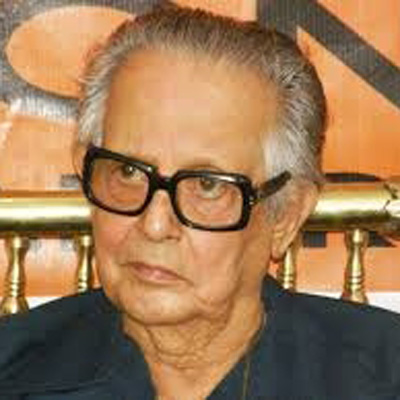
NEW DELHI: Eminent cartoonist R K Laxman, who highlighted the woes of society through his cartoons featuring the Common Man, died of multi-organ failure. He was 93.
A recipient of both the Padma Bhushan and the Padma Vibhushan, Laxman was spending a retired life in Pune, away from the hustle and bustle of Mumbai where he had for almost fifty years in ‘The Times of India’ ‘lived’ through his cartoons the woes of the common man in the cartoon series ‘You said it’.

He had commenced the daily cartoon strip, in 1951 and was forced to stop it only after a partial paralysis just over a decade earlier.
Laxman started his career as a part-time cartoonist, working mostly for local newspapers and magazines. While a college student, he illustrated his elder brother RK Narayan’s stories in The Hindu. His first full-time job was as a political cartoonist for the The Free Press Journal in Mumbai. Later, he joined The Times of India, and became famous for the Common Man character.
Laxman was born in Mysore on 15 August, 1921. His father was a headmaster and Laxman was the youngest of six sons; Laxman was engrossed by the illustrations in magazines such as The Strand Magazine, Punch, Bystander, Wide World and Tit-Bits, even before he could read. Another early influence on Laxman were the cartoons of the world-renowned British cartoonist, Sir David Low (whose signature he misread as “cow” for a long time) that appeared now and then in The Hindu.
Laxman was the captain of his local “Rough and Tough and Jolly” cricket team and his antics inspired the stories “Dodu the money maker” and “The Regal Cricket Club” written by his brother, Narayan. Laxman’s idyllic childhood was shaken for a while when his father suffered a paralytic stroke and died around a year later, but the elders at home bore most of the increased responsibility, while Laxman continued with his schooling.
After high school, Laxman applied to the J. J. School of Art, Bombay hoping to concentrate on his lifelong interests of drawing and painting, but was rejected. He finally graduated with a Bachelor of Arts from the University of Mysore. In the meantime he continued his freelance artistic activities and contributed cartoons to Swarajyaand an animated film based on the mythological character, Narada.
Laxman’s earliest work was for newspapers and magazines such as Swarajya and Blitz. While still at the Maharaja College of Mysore, he began to illustrate his elder brother RK Narayan’s stories in The Hindu, and he drew political cartoons for the local newspapers and for the Swatantra. Laxman also drew cartoons, for the Kannada humour magazine, Koravanji, founded by Dr M Shivaram, who himself was an eminent humourist in Kannada. He encouraged Laxman quite a lot. His “common man” character featured in his pocket cartoons is portrayed as a witness to the making of democracy.
He also created a popular mascot for the Asian Paints group called Gattu in 1954 Laxman has also penned a few novels. His cartoons have appeared in Hindi films such as Mr. & Mrs. 55 and a Tamil film Kamaraj. His creations also include the sketches drawn for the television adaptation of Malgudi Days, which was written by his elder brother and directed by Shankar Nag. Laxman also drew caricatures of friends for private purposes.
Laxman’s Common Man inspired a TV show — RK Laxman Ki Duniya with comedian Atul Parchure essaying the common man on Sab TV, while Vandana Pathak was seen as his wife.
In September 2003, Laxman suffered a stroke, which left him paralysed on his left side. He partly recovered from its effects.







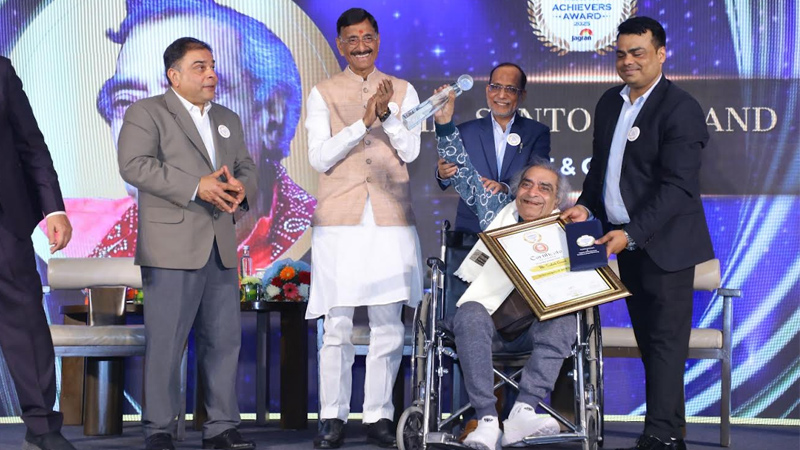
NEW DELHI: Hamdard Laboratories gathered a cross-section of India’s achievers in New Delhi on Friday, handing out the Hakeem Abdul Hameed Excellence Awards to figures who have left their mark across healthcare, education, sport, public service and the arts.
The ceremony, attended by minister of state for defence Sanjay Seth and senior officials from the ministry of Ayush, celebrated individuals whose work blends professional success with a sense of public purpose. It was as much a roll call of achievement as it was a reminder that influence is not measured only in profits or podiums, but in people reached and lives improved.
Among the headline awardees was Alakh Pandey, founder and chief executive of PhysicsWallah, recognised for turning affordable digital learning into a mass movement. On the sporting front, Arjuna Awardee and kabaddi player Sakshi Puniya was honoured for her contribution to the game and for pushing women’s participation onto bigger stages.
The cultural spotlight fell on veteran lyricist and poet Santosh Anand, whose songs have echoed across generations of Hindi cinema. At 97, Anand accepted the honour with characteristic humility, reflecting on a life shaped by perseverance and hope.
Healthcare honours spanned both modern and traditional systems. Manoj N. Nesari was recognised for strengthening Ayurveda’s place in national and global health frameworks. Padma shri Mohammed Abdul Waheed was honoured for his research-backed work in Unani medicine, while padma shri Mohsin Wali received recognition for his long-standing contribution to patient-centred care.
Education and social development also featured prominently. Padma shri Zahir Ishaq Kazi was honoured for decades of work in education, while former Meghalaya superintendent of Police T. C. Chacko was recognised for public service. Goonj founder Anshu Gupta received an award for his dignity-centred rural development initiatives, and the Hunar Shakti Foundation was honoured for empowering women and young girls through skill development.
The Lifetime Achievement Award went to former IAS officer Shailaja Chandra for her long career in public healthcare and governance, particularly in the traditional systems under Ayush.
Speaking at the event, Hamdard chairman Abdul Majeed said the awards were a tribute to those who combine excellence with empathy. “These awardees reflect Hakeem Sahib’s belief that healthcare, education and public service must ultimately serve humanity,” he said.
Minister Seth struck a forward-looking note, saying India’s young population gives the country a unique opportunity to become a global destination for learning, health and wellness by 2047.
The ceremony also featured the trailer launch of Unani Ki Kahaani, an upcoming documentary starring actor Jim Sarbh, set to premiere on Discovery on 11 February.
Instituted in memory of Unani scholar and educationist Hakeem Abdul Hameed, the awards have grown into a national platform that celebrates those building a more inclusive and resilient India. For one evening at least, the spotlight was not just on success, but on service with substance.






