Cable TV
CableLabs’ PacketCable Qualification process to roll out next year


Cable Television Laboratories has announced that its PacketCable test programme will be ready to qualify vendors’ products by next year.
This will allow the cable industry to deploy PacketCable-based multimedia services such as Voice-over-Internet Protocol without delay. More than 40 PacketCable vendors have reportedly brought their products to CableLabs for experimentation and assessment. The project is updating test plans and procedures at present.

CableLabs, which comprises cable television operators from North and South America, engages in extensive R & D, helping companies tackle challenges and explore further avenues for growth. The company claims to have made great progress in demonstrating product inter-operability. The PacketCable programme is a company initiative aimed at developing inter-operable interface specifications for delivering advanced, real-time multimedia services over two-way cable plant. Built on top of the DOCSIS 1.1 cable modem infrastructure, PacketCable networks will use Internet Protocol technology to deliver multimedia services to the consumer such as IP telephony, multimedia conferencing, interactive gaming and general multimedia applications.
Next year, there will be four PacketCable certification waves, officials said. CableLabs is currently establishing a working prototype of the PacketCable architecture in the Louisville labs. Vendors who want their products to participate in the PacketCable Network have to submit a checklist of their implemented functionality for assessment by PacketCable.


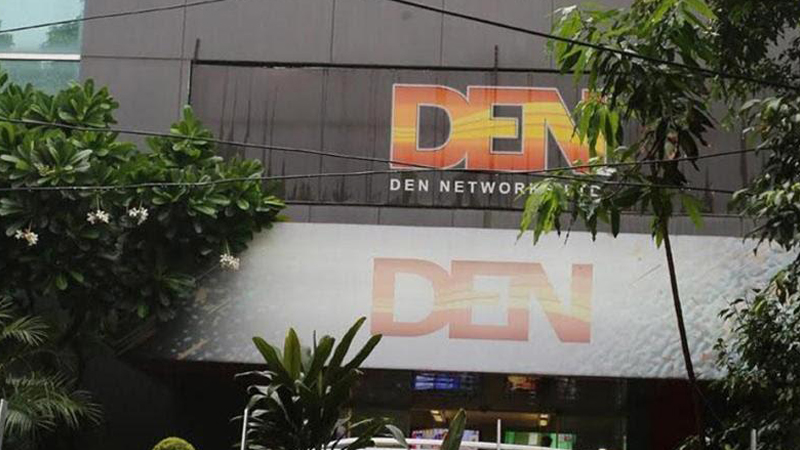
MUMBAI: When margins wobble, liquidity talks and in Q3 FY25-26, cash did most of the talking. Den Networks Limited closed the December quarter with consolidated revenue of Rs.251 crore, marginally higher than the previous quarter but down 4 per cent year-on-year, even as profitability stayed resilient on the back of strong cash reserves and disciplined cost control.
Subscription income softened to Rs.98 crore, slipping 3 per cent sequentially and 14 per cent from last year, while placement and marketing income offered some cheer, rising 15 per cent quarter-on-quarter to Rs.148 crore. Total costs climbed faster than revenue, up 7 per cent QoQ to Rs.238 crore, driven largely by higher content costs and operating expenses. As a result, EBITDA dropped sharply to Rs.13 crore from Rs.19 crore in Q2 and Rs.28 crore a year ago, pulling margins down to 5 per cent.
Yet, the bottom line refused to blink. Profit after tax stood at Rs.40 crore, up 15 per cent sequentially and only marginally lower than last year’s Rs.42 crore. A healthy Rs.57 crore in other income helped cushion operating pressure, keeping profit before tax at Rs.48 crore, broadly stable quarter-on-quarter despite the tougher cost environment.
The real headline-grabber, however, sits on the balance sheet. The company remains debt-free, with cash and cash equivalents swelling to Rs.3,279 crore as of December 31, 2025. Net worth rose to Rs.3,748 crore, while online collections accounted for 97 per cent of total receipts, underscoring strong cash discipline across operations, including subsidiaries.
In short, while Q3 showed signs of operating strain, the financial backbone remains solid. With zero gross debt, steady profits and a formidable cash war chest, the company enters the next quarter with flexibility firmly on its side proving that in uncertain markets, balance sheet strength can be the best growth strategy.






