News Broadcasting
Cable TV Show kicks off in Kolkata; Pakistan special invitee

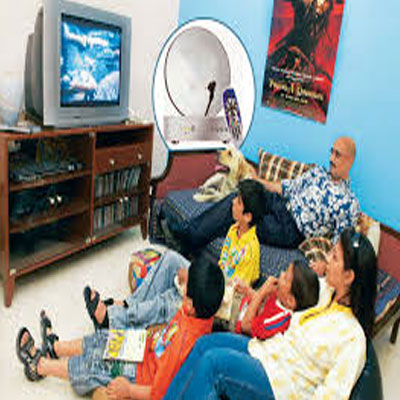
MUMBAI: The Cable TV Show 2005, organised by the Kolkata-based Cable TV Equipments Traders & Manufacturers Association (CTMA), commenced today. The three-day annual event expects participation from cable operators, traders, manufacturers, channel partners, distributors, broadcasters and MSOs from across India, Bangladesh, Bhutan and Nepal.
For the first time, a six-member delegation of the Pakistani Cable TV Association Pakistan Electronic Media Association (PEMA) is participating in the event as a special invitee. “We look forward to establish strong business ties with Pakistan cable industry which is currently dominated by China,” says CTMA secretary Sanjay Mansukhani.
According to an official release, the focus of the show is to expand the business opportunities and links with other Saarc countries especially Pakistan. The show attracts a large number of manufacturers of repute from India and abroad from the field of satellite broadcasting and local hardware manufacturers.

Products and services of over 45 international vendors, representing USA, Europe, Taiwan, China, Hong Kong, Dubai, Korea and Saarc countries, are showcased at the Cable TV Show. Nearly 45 international participants from USA, UK, Canada, Germany, China, Belgium, Hong Kong, Dubai, Taiwan, Spain and Korea, will participate in the show through their dealer networks. Top representatives of some of the leading broadcasting companies, MSOs and cable companies will attend the show, the release states.
CTMA demands industry status for cable sector
“The cable TV industry in India, in terms of annual subscription revenue, is over Rs 120 billion which is much bigger than the film industry that has been granted industry status by the government. We hereby appeal to the government to consider extending `industry status’ to the cable sector,” says CTMA Exhibition Committee chairman Pawan Jajodia.
The cable TV industry is facing many problems due to increased competition and lack of level playing field especially in matters of taxation, adds Mansukhani. “The cable TV sector is facing competition from Direct to Home (DTH) segment which offers limited services while the cable TV sector provides a bouquet of value-added services to the end-users through the last mile link. It is essential that the cable industry gets industry status so that it can be corporatised and remains competitive,” Mansukhani says.
CTMA will appeal to the Government on issues such as, granting of industry status to the cable industry, streamline the existing tax structure, expedite the regulatory mechanism in this sector and facilitate and foster greater business ties with other countries.






News Broadcasting
Network18 channels lead YouTube news viewership in March 2026
CNN-News18, News18 India and CNBC channels top categories with record views
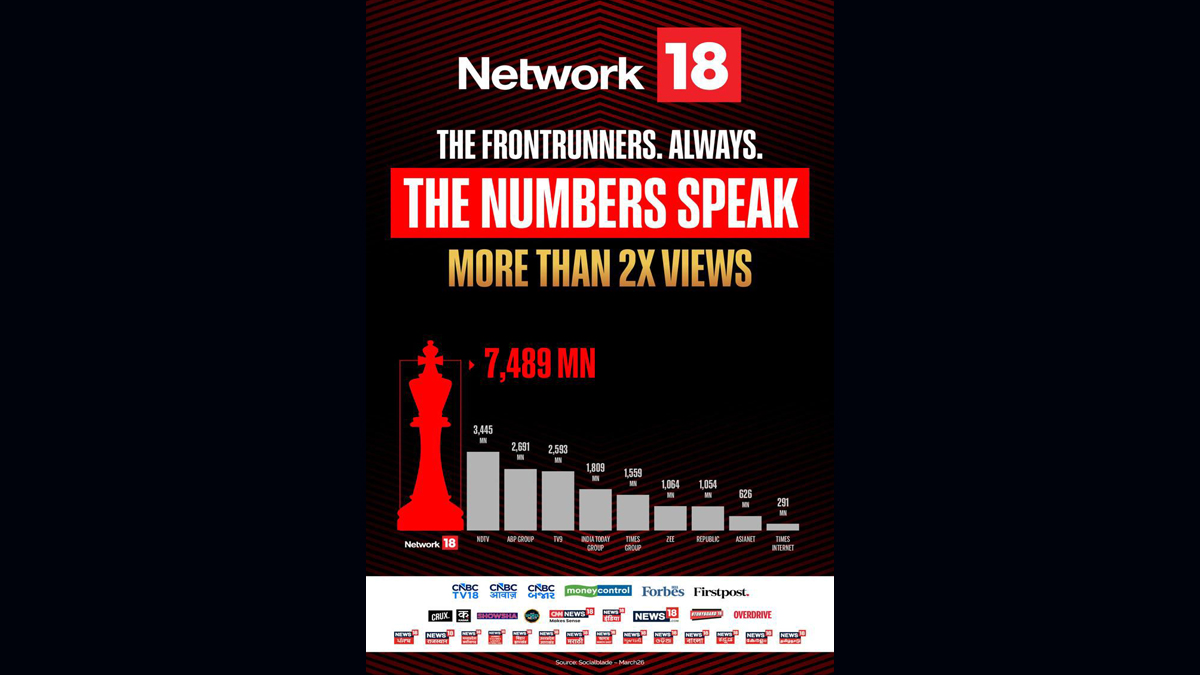
MUMBAI: When the world hit refresh on breaking news, Network18’s channels were already streaming ahead. As geopolitical tensions and war-driven headlines fuelled a surge in global news consumption, the network’s digital playbook delivered big clocking record Youtube viewership across English, Hindi and business news categories in March 2026.
At the forefront was CNN-News18, which emerged as the clear leader in the English news segment with 130 million live and video-on-demand views. The channel edged past competitors such as Times of India (126.5 million), Times Now (101.1 million), India Today (88.2 million) and NDTV (77.5 million), according to Databeings data for March.
In the Hindi news arena, News18 India delivered a commanding performance, racking up a staggering 3,297 million views on YouTube. The channel comfortably outpaced NDTV India, which recorded 3,119 million views, underlining its deep reach and consistent engagement with mass audiences, as per Playboard data.
The network’s dominance wasn’t confined to general news. In the Hindi business segment, CNBC Awaaz topped the charts with 92 million views, narrowly ahead of Zee Business (90 million) and well ahead of ET Now Swadesh (57 million). Meanwhile, its English counterpart CNBC-TV18 posted a strong 58 million views, reinforcing the network’s cross-category strength.
The spike in viewership reflects a broader shift in audience behaviour, with viewers increasingly turning to digital platforms particularly Youtube for real-time updates and in-depth coverage during high-intensity news cycles. For Network18, the numbers signal more than just scale; they underline the effectiveness of a multi-platform strategy that blends speed, credibility and continuous coverage.
In a month where the news never paused, it seems viewers chose to stay tuned where the stream never stopped.






