News Headline
‘Cable TV sector sees rapid consolidation and new competition in 2008’ : Hathway Cable & Datacom MD & CEO K Jayaraman

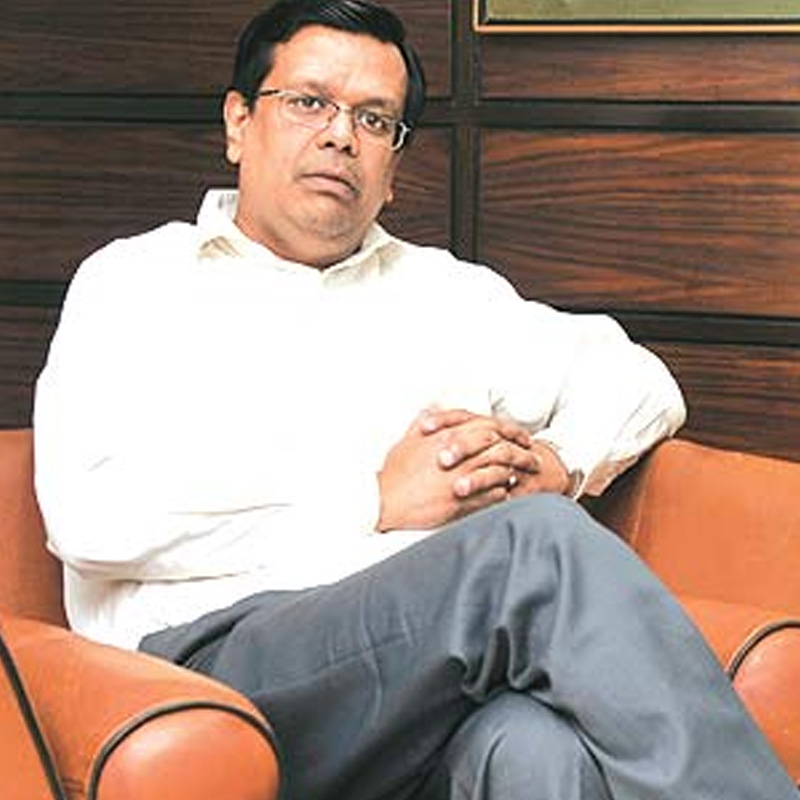
Cable TV companies have attracted private equity funding and used it for consolidation and digitalisation. But tight liquidity credit markets, intense competition to woo local cable operators, and rise in cost structures present a challenging 2009, says Hathway Cable & Datacom MD & CEO K Jayaraman
2008 marked the emergence of new multi-system operators (MSOs) with pan India ambitions. This resulted in intense competition to woo the local cable operators. The year also marked subtantial private equity/mezannine funding to some of the existing and new MSOs. Some estimates say that the combined inflows during the year could have reached about Rs 7 billion.
The substantial equity inflows resulted in furthering rapid consolidation of the industry with the independent cable operators (ICOs) partnering or entering into joint ventures with the larger MSOs. In fact some estimates put that almost 40 per cent of the total C&S (cable & satellite) homes could be the cumulative universe under the umbrella of the larger MSOs.

A welcome fall out of the rapid consolidation and equity flow was the intensive pace of digital cable tv roll out. Incremental voluntary digital cable during the year could have touched one million, based on rough estimates.
But this was again restricted to selective MSOs. Customers who opted for digital cable enjoyed 150 plus channels at the same price as of analogue. The digital boxes were also subsidised deeply by the MSOs. Digital cable was able to effectively combat the competition from satellite despite the latter companies having huge funding and high decibal advertisements. While the fob prices of cable digital boxes fell, the gain was lost due to 20 per cent rupee depreciation during the year.
The year also saw spiraling salary costs in the cable TV companies, with each one outdoing the other, even as subscription income lagged. The raged optimism arising out of projected placement fees and new capital infusion fuelled the salary costs and other overheads too.
Sadly towards the last quarter of the calendar year due to a combination of global meltdown and zero liquidity in the Indian banking system, the companies were sent scurrying for cover and control over these costs. While it may not be easy to cut these fixed costs, the situation can result in further profitability pressure for unorthodox business models in the year 2009.
The intense competition to woo the local cable operators (LCOs) sucked a lot of funding and, therefore, the roll out of value added services like broadband through cable etc suffered, barring a few whose inherent business model comprise these services too.
While the year saw rapid consolidation and new competition, sadly the core subscription business was forgotten. Subscription income from LCOs have dipped for the industry as a whole, except for business model where last mile also co-existed, as the chase for territory and placement fees gained predominance. Business models and enterprise valuations were being built around these non-conventional parameters. Cost structures increased rapidly including pay channel costs even as the LCOs dodged the MSOs.
The last quarter meltdown and liquidity crisis, coupled with slowing down of advertisement income for the channels, did send ominous signals to the MSOs with non conventional parameters. Pressure had started building rather quickly, but the difficult signs are being ignored.
Overall, the year ended on a sombre mood with a more challenging year 2009 in the offing.




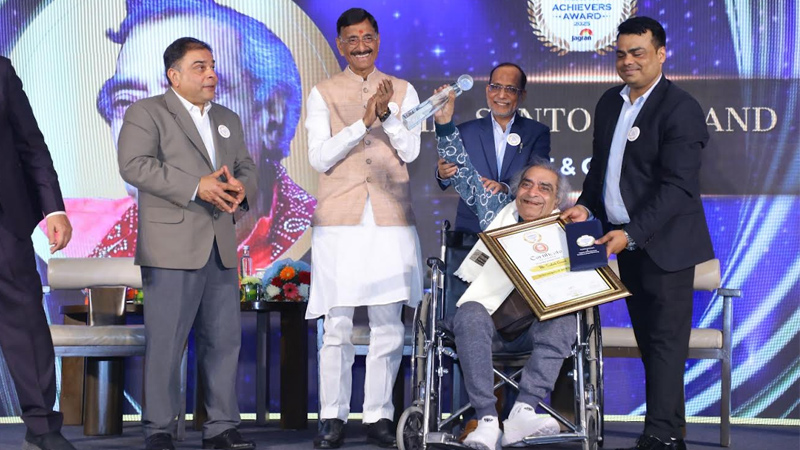
NEW DELHI: Hamdard Laboratories gathered a cross-section of India’s achievers in New Delhi on Friday, handing out the Hakeem Abdul Hameed Excellence Awards to figures who have left their mark across healthcare, education, sport, public service and the arts.
The ceremony, attended by minister of state for defence Sanjay Seth and senior officials from the ministry of Ayush, celebrated individuals whose work blends professional success with a sense of public purpose. It was as much a roll call of achievement as it was a reminder that influence is not measured only in profits or podiums, but in people reached and lives improved.
Among the headline awardees was Alakh Pandey, founder and chief executive of PhysicsWallah, recognised for turning affordable digital learning into a mass movement. On the sporting front, Arjuna Awardee and kabaddi player Sakshi Puniya was honoured for her contribution to the game and for pushing women’s participation onto bigger stages.
The cultural spotlight fell on veteran lyricist and poet Santosh Anand, whose songs have echoed across generations of Hindi cinema. At 97, Anand accepted the honour with characteristic humility, reflecting on a life shaped by perseverance and hope.
Healthcare honours spanned both modern and traditional systems. Manoj N. Nesari was recognised for strengthening Ayurveda’s place in national and global health frameworks. Padma shri Mohammed Abdul Waheed was honoured for his research-backed work in Unani medicine, while padma shri Mohsin Wali received recognition for his long-standing contribution to patient-centred care.
Education and social development also featured prominently. Padma shri Zahir Ishaq Kazi was honoured for decades of work in education, while former Meghalaya superintendent of Police T. C. Chacko was recognised for public service. Goonj founder Anshu Gupta received an award for his dignity-centred rural development initiatives, and the Hunar Shakti Foundation was honoured for empowering women and young girls through skill development.
The Lifetime Achievement Award went to former IAS officer Shailaja Chandra for her long career in public healthcare and governance, particularly in the traditional systems under Ayush.
Speaking at the event, Hamdard chairman Abdul Majeed said the awards were a tribute to those who combine excellence with empathy. “These awardees reflect Hakeem Sahib’s belief that healthcare, education and public service must ultimately serve humanity,” he said.
Minister Seth struck a forward-looking note, saying India’s young population gives the country a unique opportunity to become a global destination for learning, health and wellness by 2047.
The ceremony also featured the trailer launch of Unani Ki Kahaani, an upcoming documentary starring actor Jim Sarbh, set to premiere on Discovery on 11 February.
Instituted in memory of Unani scholar and educationist Hakeem Abdul Hameed, the awards have grown into a national platform that celebrates those building a more inclusive and resilient India. For one evening at least, the spotlight was not just on success, but on service with substance.