DTH
Cable TV, broadband services impacted, as Cyclone Tauktae slams into west coast

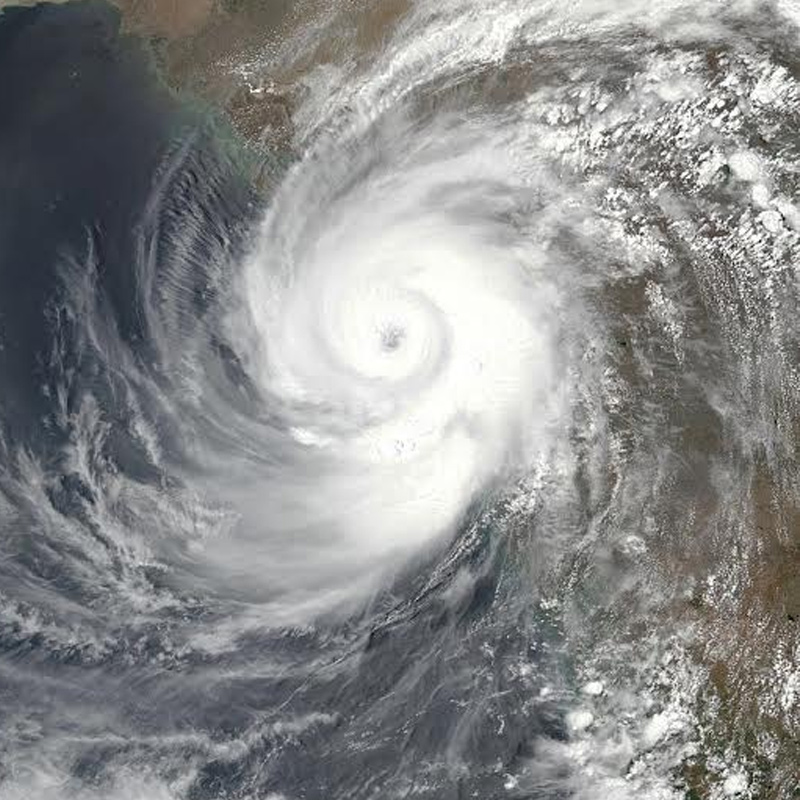
KOLKATA: Cable TV services and broadband services were impacted across various places in Maharashtra and Gujarat, as Cyclone Tauktae left a trail of destruction along the west coast. Many users took to Twitter complaining about the long hours of network outage. However, both video and broadband services were restored within 12 hours, say cable operators
NXTDigital MD & CEO Vynsley Fernandes said there were evident impacts on services especially in areas with overhead fibres and overhead wires. But timely weather warnings helped in making arrangements in advance. MSOs had placed teams in strategic locations to address issues and respond. “In most places, the network was restored in the shortest possible time. It did not take more than 12-14 hours,” Fernandes said.
“There were damages but we were able to mobilise the staff and the workforce immediately. Major lines both for cable and broadband were down,” said Maharashtra Cable Operators Foundation (MCOF) president Arvind Prabhu. “There may still be some minor problems in certain households and we are in the process of addressing those as well.”

The Konkan region was among the most-affected, as it witnessed the devastating impact of one of the most intense storms to hit the west coast. “Some independent control rooms reported problems in the Konkan region. In Mumbai city, there were issues mostly with fibre cables and overhead cables,” Prabhu added.
GTPL Hathway cable TV head and chief strategy officer Piyush Pankaj said, the services were disrupted for around 3-4 hours in most areas. “But we were well-prepared this time. Even materials like wires were ready in advance to immediately address damages like a wire being cut or washed up,” he added.
According to MSOs, cable TV was less impacted than broadband services as the latter not only faced connectivity issues but stress on speed as well. The impact on speed persisted for a longer time.
Most importantly, the operators say, they learnt from two cyclones of 2020- Nisarg and Amphan after which they incurred huge infrastructural losses, especially in West Bengal. The staff had to invest more than a month to normalise the connections with damage of lakhs of set-top boxes, fibres of few crores.






DTH
Prasar Bharati’s WAVES earns Rs 2.9 crore in first year
Platform scales content, users but monetisation gaps limit revenue growth.
MUMBAI: Big waves, small ripples at least for now. When Prasar Bharati launched its OTT platform WAVES at the 55th International Film Festival of India in November 2024, it pitched a bold vision: a homegrown rival to global and domestic streaming giants, blending video, audio, gaming and commerce into a single digital ecosystem. Five months into FY2024–25, however, the platform’s revenue stands at just Rs 2.90 crore, a figure that underscores the gap between ambition and monetisation.
On paper, WAVES looks anything but modest. The platform has ingested 13,608 titles, totalling 9,495 hours of content, with over 13,000 titles already live. It has streamed more than 575 live events from the Mahakumbh Amrit Snan and the 76th Republic Day parade to the Hockey India League, Kabaddi World Cup and Mann Ki Baat while offering 74 live TV channels and 12 radio channels. With over 10 lakh registered users and more than 200 content partners onboarded, the scale resembles that of a fully operational streaming service rather than a pilot project.
The architecture supporting this scale is equally robust. Built under Prasar Bharati’s Central Archives vertical, WAVES runs on a cloud-based infrastructure with DRM, encryption and an integrated analytics dashboard. It includes dedicated units for content ingestion, quality control, publishing, graphics, marketing and billing, and is distributed across platforms such as OTTplay, Tata Play and BSNL. The offering extends beyond video to include audio-on-demand, e-games and even e-commerce via ONDC integration.
Yet, the numbers reveal a core disconnect. Despite its scale, WAVES generated just Rs 2.90 crore in a market where India’s OTT industry crossed Rs 23,000 crore in 2024. A key bottleneck lies in monetisation infrastructure: subscriptions cannot currently be purchased within the app and must be completed via an external website. In a mobile-first country where over 95 per cent of OTT consumption happens on smartphones, this extra step creates friction that most users are unlikely to overcome.
Ironically, content is not the problem, it is the platform’s biggest strength. Prasar Bharati holds one of the world’s richest broadcast archives, including 45,154 hours of digitised Akashvani programming and 35,723 hours from Doordarshan. For WAVES alone, over 3,800 hours of archival content have been made OTT-ready, including classics such as Ramayan and Shaktimaan, alongside rare cultural recordings and historical broadcasts.
There are early signs that this library holds commercial potential. Revenue from archival content licensing rose sharply to Rs 3.38 crore in FY24, up from Rs 67 lakh the previous year. Meanwhile, free digital platforms continue to drive massive reach, the PB Archives Youtube channel clocked 119.78 million views and added 4,02,000 subscribers in FY2024–25, crossing 1.7 million in total, while DD News has over 5.84 million subscribers.
That, however, presents a strategic dilemma. While free distribution builds scale, it also conditions audiences to expect content at zero cost making it harder to transition to paid models. WAVES, designed as a hybrid AVOD-SVOD platform with advertising and subscription layers, is yet to fully crack this balance.
The broader challenge is not technological but strategic. In an ecosystem dominated by platforms offering seamless payments, aggressive pricing and high-budget originals, WAVES is still bridging the gap between being a content repository and a commercially viable product.
For now, the platform reflects both promise and paradox. It has the scale, the content and the infrastructure but until monetisation catches up, WAVES remains less a revenue engine and more a digital showcase of what India’s public broadcaster could become.






