Cable TV
Cable ops push Star One out of prime band

MUMBAI: Cable operators in Mumbai have pushed Star One into a higher frequency, forcing the channel to move out of its prime band location in all networks across the city.
The reason on offer: Star India has been forcing the second bouquet on cable operators. Also, Tata Sky, in which Star is a 20 per cent joint venture partner, is approaching housing societies with the proposal of offering residents a central dish antenna through which it can connect individual installations and offer direct-to-home (DTH) service.
The decision was taken by Cable Operators and Distributors Association (CODA). “Star has been bundling channels and forcing the second bouquet on us. Besides, through Tata Sky it is taking a direct-to-society approach to harm the interest of cable TV operators. We should be offered standalone channels,” says CODA president Ganesh Naidu.
Star India distribution head Tony D’Silva rubbishes such arguments. “We haven’t been given any reasons. And why are we singled out? Besides, Tata Sky is an independent company. Such actions can harass consumers. If they had grievances, they could have taken methods like approaching the regulatory body,” he says.
CODA, which met on 27 January, is particularly concerned about the threat that DTH could pose after Tata Sky launches its service. Cable operators do not want pay TV broadcasters to put pressure on rates. “We are against bundling of channels, particularly the second bouquet which consumers don’t want to pay for. We have started with Star One. We may take similar action against the other bouquets,” says Anil Parab of CODA.






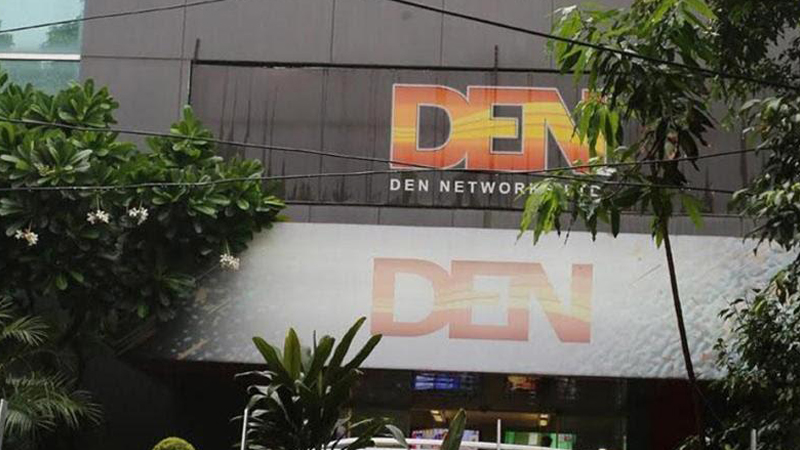
MUMBAI: When margins wobble, liquidity talks and in Q3 FY25-26, cash did most of the talking. Den Networks Limited closed the December quarter with consolidated revenue of Rs.251 crore, marginally higher than the previous quarter but down 4 per cent year-on-year, even as profitability stayed resilient on the back of strong cash reserves and disciplined cost control.
Subscription income softened to Rs.98 crore, slipping 3 per cent sequentially and 14 per cent from last year, while placement and marketing income offered some cheer, rising 15 per cent quarter-on-quarter to Rs.148 crore. Total costs climbed faster than revenue, up 7 per cent QoQ to Rs.238 crore, driven largely by higher content costs and operating expenses. As a result, EBITDA dropped sharply to Rs.13 crore from Rs.19 crore in Q2 and Rs.28 crore a year ago, pulling margins down to 5 per cent.
Yet, the bottom line refused to blink. Profit after tax stood at Rs.40 crore, up 15 per cent sequentially and only marginally lower than last year’s Rs.42 crore. A healthy Rs.57 crore in other income helped cushion operating pressure, keeping profit before tax at Rs.48 crore, broadly stable quarter-on-quarter despite the tougher cost environment.

The real headline-grabber, however, sits on the balance sheet. The company remains debt-free, with cash and cash equivalents swelling to Rs.3,279 crore as of December 31, 2025. Net worth rose to Rs.3,748 crore, while online collections accounted for 97 per cent of total receipts, underscoring strong cash discipline across operations, including subsidiaries.
In short, while Q3 showed signs of operating strain, the financial backbone remains solid. With zero gross debt, steady profits and a formidable cash war chest, the company enters the next quarter with flexibility firmly on its side proving that in uncertain markets, balance sheet strength can be the best growth strategy.






