Cable TV
Cable fees for August unlikely to come down

NEW DELHI: The honeymoon is over even before the foreplay if officials from India’s Information and Broadcasting ministry are to be believed.
In the absence of any written agreement amongst the various stakeholders of the industry, the monthly cable subscription fee is unlikely to come down to around Rs 100 from the present level during the transition phase of conditional access rollout or the honeymoon period, contrary to what was being said earlier.
Admitting very much to such a scenario, an Information and Broadcasting ministry official said today, “Since there is no written agreement on reduced rates (from 1 August), it’s assumed people would pay what they are paying now.”
Sometime back when the Prime Minister’s Office (PMO) had to step in to sort out the knotty issue of CAS implementation, it was being said – even alluded to by I & B minister Ravi Shankar Prasad then – that from 1 September, CAS would be rolled out in the South zones of the four metros of Kolkata, Mumbai, Delhi and Chennai. In the interim, the government had pointed out that from 1 August, all cable homes in the four metros would pay the basic tier rate for the service including pay channels till the time addressability was successfully rolled out in all the four zones of the metros. The reason being given for this was that the broadcasters would not charge subscription money from the cable fraternity.
The dispute arose when broadcasters said they would waive the subscription revenue only for the month of August and that too if the cable operators cleared all pending dues by July-end. The cable operators have not acted on this front, it seems, while the government had earlier insisted the honeymoon period would last till December, the period for completing the rollout.
“There were some conditions that the broadcasters had put forward that don’t seem to be happening,” the official said.
Both the broadcasters and the cable fraternity had their own points of view. While the former insisted it would take a hit amounting to millions of rupees by waiving subscription money during the honeymoon period, the cable operators too claimed that they would be financially hit by giving the service at such rock bottom price.







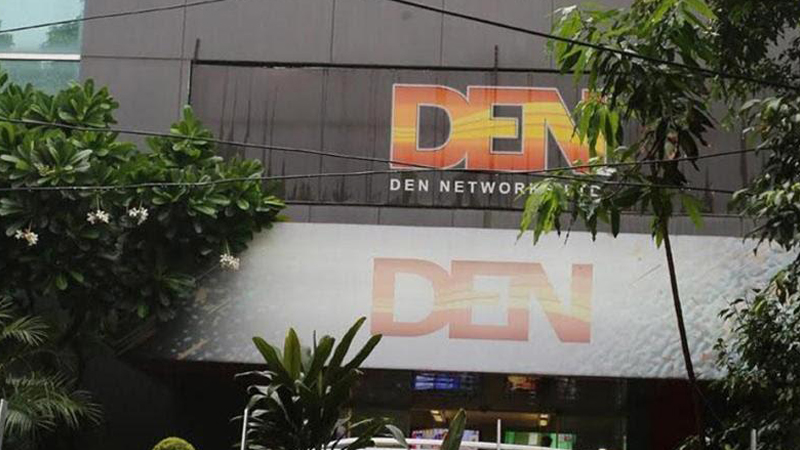
MUMBAI: When margins wobble, liquidity talks and in Q3 FY25-26, cash did most of the talking. Den Networks Limited closed the December quarter with consolidated revenue of Rs.251 crore, marginally higher than the previous quarter but down 4 per cent year-on-year, even as profitability stayed resilient on the back of strong cash reserves and disciplined cost control.
Subscription income softened to Rs.98 crore, slipping 3 per cent sequentially and 14 per cent from last year, while placement and marketing income offered some cheer, rising 15 per cent quarter-on-quarter to Rs.148 crore. Total costs climbed faster than revenue, up 7 per cent QoQ to Rs.238 crore, driven largely by higher content costs and operating expenses. As a result, EBITDA dropped sharply to Rs.13 crore from Rs.19 crore in Q2 and Rs.28 crore a year ago, pulling margins down to 5 per cent.
Yet, the bottom line refused to blink. Profit after tax stood at Rs.40 crore, up 15 per cent sequentially and only marginally lower than last year’s Rs.42 crore. A healthy Rs.57 crore in other income helped cushion operating pressure, keeping profit before tax at Rs.48 crore, broadly stable quarter-on-quarter despite the tougher cost environment.

The real headline-grabber, however, sits on the balance sheet. The company remains debt-free, with cash and cash equivalents swelling to Rs.3,279 crore as of December 31, 2025. Net worth rose to Rs.3,748 crore, while online collections accounted for 97 per cent of total receipts, underscoring strong cash discipline across operations, including subsidiaries.
In short, while Q3 showed signs of operating strain, the financial backbone remains solid. With zero gross debt, steady profits and a formidable cash war chest, the company enters the next quarter with flexibility firmly on its side proving that in uncertain markets, balance sheet strength can be the best growth strategy.






