I&B Ministry
Cabinet approves MoU cooperation between Prasar Bharati and Radio Television Malaysia

Mumbai: The Union Cabinet chaired by the Prime Minister, Narendra Modi was apprised of the MoU/Agreement signed on 7 November, 2023 which has an immense potential to strengthen the cooperation in the field of broadcasting, exchange of news, and audio-visual programmes as well as significantly augment India’s friendly relations with the country. With this, the total number of MoUs signed by Prasar Bharati with different countries has increased to 46.
Prasar Bharati plays a crucial role in nation building and lays continuous focus on providing meaningful and accurate content to one and all, both within the country and abroad. These MoUs are going to be crucial in distribution of content in other countries, in developing partnerships with international broadcasters and exploring new strategies to address the demands of new technologies.
The major benefit arising out of signing of MoUs are exchange of programmes in the areas of Culture, Education, Science, Technology, Sports, News and other fields on gratis/non-gratis basis.

India’s Public Service Broadcaster, Prasar Bharati has entered into a Memorandum of Understanding with Radio Televisyen Malaysia, the Public Service Broadcaster of Malaysia in order to promote cooperation in public broadcasting in the field of radio and television.






I&B Ministry
Doordarshan, ICCR sign MoU to boost global reach of Indian culture
Pact taps TV, radio and digital platforms to take cultural content worldwide
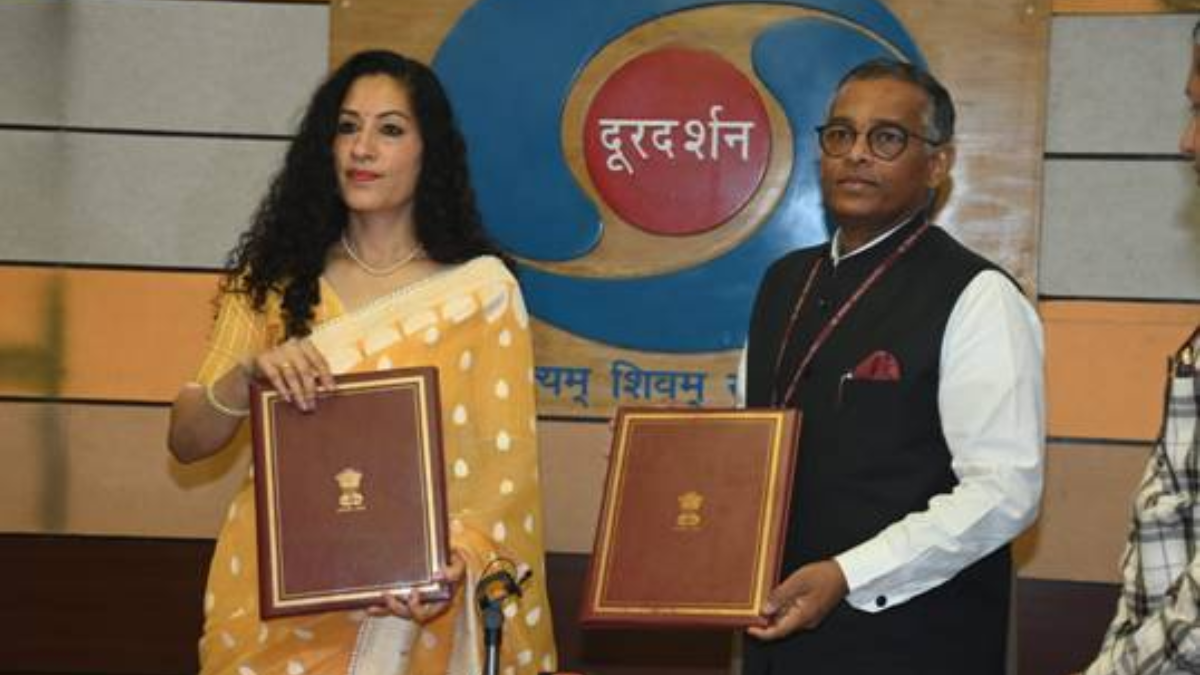
NEW DELHI: In a move aimed at taking India’s cultural story further across borders, Doordarshan under Prasar Bharati has signed a memorandum of understanding with the Indian Council for Cultural Relations to expand the global reach of Indian cultural content.
The agreement, signed on April 7 at Doordarshan Bhawan, brings together the content strength of ICCR and the wide broadcast network of Doordarshan, spanning television, radio and digital platforms.
Under the partnership, ICCR will provide a steady stream of cultural programming, including performances and events organised by Indian missions abroad such as embassies, consulates and cultural centres. Doordarshan will handle production, coverage and distribution, ensuring that these programmes find audiences not just in India but across the world.
The collaboration also opens the door for recorded cultural content from overseas missions to be aired across multiple platforms, including OTT and social media, making Indian art, music and heritage more accessible to global viewers.
A notable feature of the MoU is joint ownership of content rights in perpetuity, including digital rights. This allows both organisations to archive and reuse material over time, building a long-term cultural repository while maximising reach. Doordarshan will also support pre-event promotion and cross-platform visibility to drive engagement.
Speaking at the signing, Doordarshan director general K. Satish Nambudiripad and Indian Council for Cultural Relations director general K. Nandini Singla highlighted the potential of the partnership to strengthen India’s cultural diplomacy through modern media channels.
The agreement, initially valid for three years, also allows Doordarshan to explore monetisation opportunities from the content generated, adding a commercial layer to cultural broadcasting.
As India looks to blend tradition with technology, this partnership signals a clear intent to make its cultural voice not just heard, but seen and streamed across the globe.







