News Broadcasting
Buena Vista Games to create and publish video game property Spectrobes

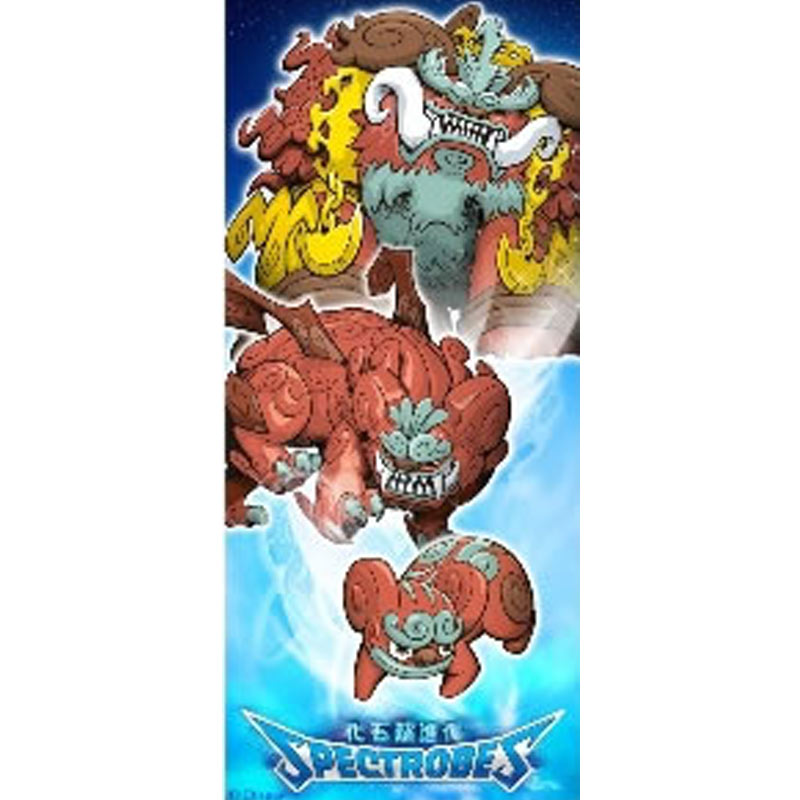
MUMBAI: Buena Vista Games, Inc. (BVG), the interactive entertainment arm of The Walt Disney Company has announced that it is creating and publishing the company’s first video game based on an original property, Spectrobes.
Set to release exclusively for the Nintendo DS, Spectrobes is an anime-inspired action/role playing game that is being developed by Jupiter Corporation in Kyoto. The announcement was made this morning from BVG’s local offices in Tokyo.
Spectrobes is an anime-inspired action/role playing game created by Japanese developer Jupiter and published by Buena Vista Games.

“We’ve experienced tremendous success developing new intellectual properties such as Kingdome Hearts in Japan, and the innovation and style of Spectrobes are a perfect fit for the expertise of renowned developer Jupiter Corporation,” said Buena Vista Games senior VP and GM Graham Hopper.
“Spectrobes is a new and unique property with endless potential for a dynamic entertainment company such as The Walt Disney Company. There is tremendous interest in this franchise from other divisions such as media networks, online and consumer products.”
“Based on BVG’s original concept and utilizing the creative style of Japanese anime, manga and traditional Japanese art, Spectrobes is an innovative game developed by the outstanding team at Jupiter,” said BVG Japan producer Kentaro Hisai. “The game’s intense real-time battle and unique excavation features should enthrall gamers throughout the world.”
Spectrobes introduces two junior Interplanetary Patrol officers named Rallen and Jeena who learn of strange, prehistoric creatures called Spectrobes that possess special powers. These fossilized Spectrobes hold the key to defeating a vicious and merciless force, known only as the Krawl that threatens to destroy the galaxy. The two heroes embark on a mission to save their galaxy – to do so they must excavate, awaken, train and collect all the Spectrobes they can and battle to defeat the Krawl, informs an official release.
Spectrobes is infused with the edgy, highly stylized look and feel of Japanese anime and manga, and uniquely combines original characters, a compelling story and breakthrough gameplay. Spectrobes allows players to excavate, train and battle with nearly 500 unique creatures, utilizing every interactive feature of the Nintendo DS.
Once the creature is excavated using the touch screen portion of the Nintendo DS, the Spectrobe is then awakened and can be utilized in real-time battles with enemies. Players must collect, train and help their Spectrobes evolve in order to progress and succeed in the game. With highly customizable elements and powers, each Spectrobe is unique to individual game players.
The release date for Spectrobes will be announced later.



News Broadcasting
CNN-News18 to host Fury in the Gulf conclave on West Asia crisis
Three-hour summit to unpack geopolitical fallout and impact on India

MUMBAI: CNN-News18 is set to host a special three-hour broadcast, Fury in the Gulf – War Conclave, on April 7, aiming to decode the escalating West Asia crisis and its far-reaching implications for India.
Scheduled from 4:00 PM to 7:00 PM, the conclave comes at a time when tensions between Iran and the United States are reshaping global geopolitics and triggering economic uncertainty. With India’s deep energy ties, trade links and large diaspora in the Gulf, the developments carry significant domestic relevance.
Built around the theme ‘Conflict, Consequences, and The Future,’ the programme will feature six curated sessions combining one-on-one interviews and panel discussions. The focus is to cut through the clutter and offer viewers a clearer understanding of the fast-evolving situation.
Key sessions include ‘Diplomacy in Times of War’ featuring Shashi Tharoor, and ‘World After the Iran Conflict’ with voices such as Ram Madhav, Reuven Azar, representatives from the European Union and the Iranian Deputy Envoy. Another session titled ‘Another Dunkirk?’ will bring together K. J. S. Dhillon and Jitin Prasada among others.
CNN-News18 editorial affairs director Rahul Shivshankar said, “In times of war, clarity becomes the most powerful tool. Fury in the Gulf – War Conclave brings together credible voices to address the questions and confusion that arise amid an overwhelming influx of information.”
He added that the initiative is aimed at delivering “facts, perspective, and insight” at a time when misinformation can easily cloud public understanding.
Echoing the sentiment, CNN-News18 CEO– English and business news Smriti Mehra said the conflict marks a defining global moment, with consequences that extend well beyond the region. She noted that the conclave seeks to present the crisis with “depth, nuance and responsibility” so audiences can better grasp its real-world impact.
As geopolitical tensions continue to dominate headlines, the conclave positions itself as an attempt to bring order to the noise, offering viewers a structured, insight-led look at a complex and rapidly shifting global situation.






