e-commerce
Budget Buzz: E-commerce stakeholders share their reactions

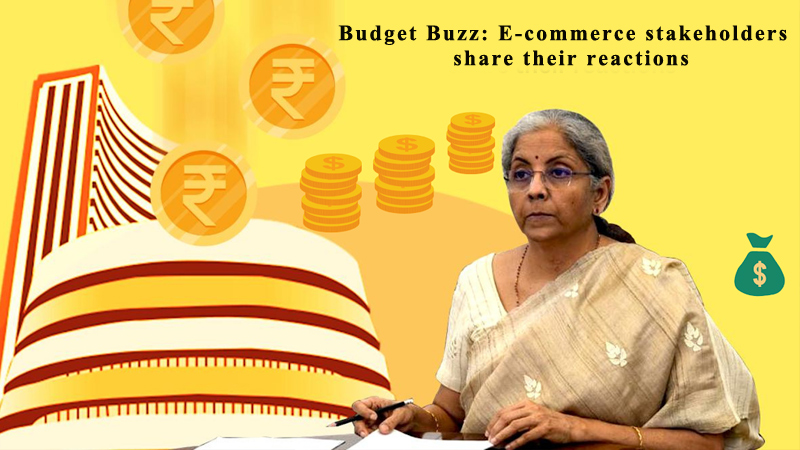
Mumbai: The unveiling of the Union Budget 2024 offers a sneak peek into India’s financial trajectory. Acting as an interim measure leading up to the general elections, this budget provides significant insights into the government’s priorities and expenditure strategies, offering a snapshot of the nation’s fiscal future.
Here are reactions from stakeholders in the e-commerce and e-retail sectors that reflect a spectrum of perspectives on the recent interim budget presented by minister of finance of India Nirmala Sitharaman. Overall, there is a sense of optimism and anticipation regarding the implications of the budget on business environments, innovation, and growth prospects.
Recode Studios co-founder Dheeraj Bansal

We find great optimism in the recent interim budget presented by Nirmala Sitharaman. The budget not only underscores India’s ambitious growth vision but also strongly emphasises inclusive growth and sustainable development, acknowledging our country’s position as a global economy. The Finance Minister’s statement regarding the significant improvement in the Indian economy over the past ten years strikes a deep connection with the spirit of entrepreneurship that propels the retail, MSME, and startup industries. The decision to maintain existing tax rates for both direct and indirect taxes in the retail sector is a welcome move, providing stability and predictability to businesses. This not only creates a favourable atmosphere for new businesses but also stimulates the expansion of essential elements of our economy. With revised estimates at 5.8 per cent of GDP, this budget sets the stage for a collaborative and thriving ecosystem. As we navigate these dynamic times, I believe that this budget will fuel the entrepreneurial spirit, driving our industries towards unprecedented growth and success. While the interim budget provided a broad overview, we eagerly anticipate the detailed budget’s insights into specific measures for the retail sectors.
The Love co, founder & director Hemang Jain
The recent budget announcement has ignited a wave of excitement and optimism within the startup community. Enhanced tax benefits, increased funding, and a deep focus on research and development are fueling entrepreneurial spirits. These measures are seen by startups as pivotal drivers for innovation and expansion, providing the essential financial backing and nurturing environment they need to flourish. The commitment to skill enhancement aligns perfectly with the demands of the startup landscape, heralding a future with a more capable and proficient workforce. As this budget unfolds, businesses are gearing up to seize these new prospects, paving the way for a vibrant and robust entrepreneurial ecosystem.
MARS Cosmetics director Rishabh Sethia
The budget serves as a strategic Guideline for both the retail and startup industries, presenting a dual narrative of obstacles and opportunities. Retailers welcome the GST amendments as a possibility for higher consumer spending, while they navigate customs tariff modifications that may affect their global supply chains. Simultaneously, entrepreneurs are encouraged by longer tax breaks and expanded funding allocations, which align with a larger aim of supporting innovation and growth. The e-commerce business is at a crossroads, with new laws prompting online platforms to rethink their tactics, while traditional shops welcome the possibility of a more fair playing field. As these industries navigate the fiscal landscape, flexibility and strategic agility emerge as critical to thriving in a changing economic paradigm.
French Essence founder & CMO Nidhi Gupta
As a woman entrepreneur, the current budget reflects a genuine recognition of the critical role women play in both the startup and retail industries. Extended tax breaks and higher financial allocations not only encourage innovation but also pave the path for more diverse and inclusive business operations. The emphasis on skill development is especially empowering since it provides a platform for women to improve their capabilities and make important contributions to these dynamic industries. The budget’s regulatory focus on e-commerce is an important step toward building a more equitable and competitive environment for women-led enterprises in both traditional and online retail.
This budget acts as a beacon, ushering in a transformative era for women entrepreneurs by creating an environment in which their abilities and efforts are recognised and promoted.”
Winston India co-founder Himanshu Adlakha
Since this was an interim budget, there was not much regarding the e-retail sector, we anticipate much more in the upcoming budget in July. This budget reinforces India’s commitment to inclusive growth and sustainable development, establishing our country as a major player in the world economy. The prospect of monetary support for the Open Network for Digital Commerce (ONDC) program is particularly encouraging. This groundbreaking initiative can potentially revolutionise the landscape for micro, small, and medium-sized businesses (MSMEs) in the e-retail sector. The focus on standardizing data and processes through ONDC is a significant stride towards empowering e-retail entrepreneurs. This will not only enhance productivity but also foster a vibrant ecosystem for MSMEs to thrive on various e-retail platforms. In an era of technological advancement, a budget that supports online businesses reduces regulatory processes and provides financial incentives is instrumental in driving our ambitions and contributing to the expansion of the e-commerce industry. This budget lays the groundwork for a positive transformation in the Indian economy with revised estimates at 5.8 per cent of GDP.







e-commerce
Flipkart rolls out 105 per cent bonus for 20,000 employees
Strong FY25 performance drives payouts even as layoffs and shifts unfold.

MUMBAI: In a year where belts were tightened and rewards loosened, Flipkart seems to be playing both offence and defence trimming roles on one hand while handing out a generous 105 per cent bonus on the other. The Walmart owned e commerce major has rolled out a 105 per cent bonus payout for 2025, covering nearly 20,000 employees, signalling a year of steady operational momentum even as the company navigates restructuring pressures. The payout, communicated internally by chief human resources officer Seema Nair, is tied to performance across key metrics including growth, operational efficiency, financial outcomes and people indicators, a combination that suggests the company is inching closer to its long stated goal of sustainable profitability.
Employees at SD level and below are set to receive their bonuses in March, while payouts for senior leadership, including vice presidents and senior vice presidents, will follow after the close of the performance cycle. The elevated 105 per cent multiplier stands out in a sector where cautious payouts have increasingly become the norm, pointing to what appears to be a relatively strong internal scorecard for FY25.
Yet, the announcement arrives with a noticeable contrast. Earlier this year, Flipkart reduced its workforce by around 300 roles as part of its annual performance review process. While officially framed as performance driven, the juxtaposition of layoffs alongside above target bonuses reflects a more nuanced balancing act, one that prioritises cost discipline while continuing to reward and retain high performing talent.
This dual approach is becoming increasingly common across the technology and e commerce landscape, where companies are navigating an uneven hiring environment while under pressure to deliver profitability. Rewarding top contributors, even amid selective workforce reductions, allows firms to maintain morale and retain critical talent without losing sight of financial prudence.
At the same time, Flipkart is also undergoing leadership shifts that hint at a broader strategic recalibration. Nishant Verman has been appointed senior vice president for corporate development and partnerships, while group chief financial officer Sriram Venkataraman is set to step down. Ravi Iyer will take on expanded responsibilities within the finance function, marking a reshuffle at the top as the company gears up for its next phase.
These changes come amid reports that Flipkart is planning to shift its holding structure back to India, a move widely interpreted as groundwork for a potential public listing. While timelines remain fluid, the combination of stronger financial discipline, leadership restructuring and employee incentivisation suggests a company preparing itself for greater scrutiny and scale.
For employees, the 105 per cent payout offers a welcome boost in what has otherwise been a period of adjustment. For Flipkart, it is a signal that even as it cuts where necessary, it is willing to spend where it counts. In the high stakes game of growth versus profitability, the company appears to be hedging its bets carefully, rewarding performance while reshaping itself for what could be its most defining chapter yet.









