Budget
Budget 2017: From highway to e-way media sector searches for sops

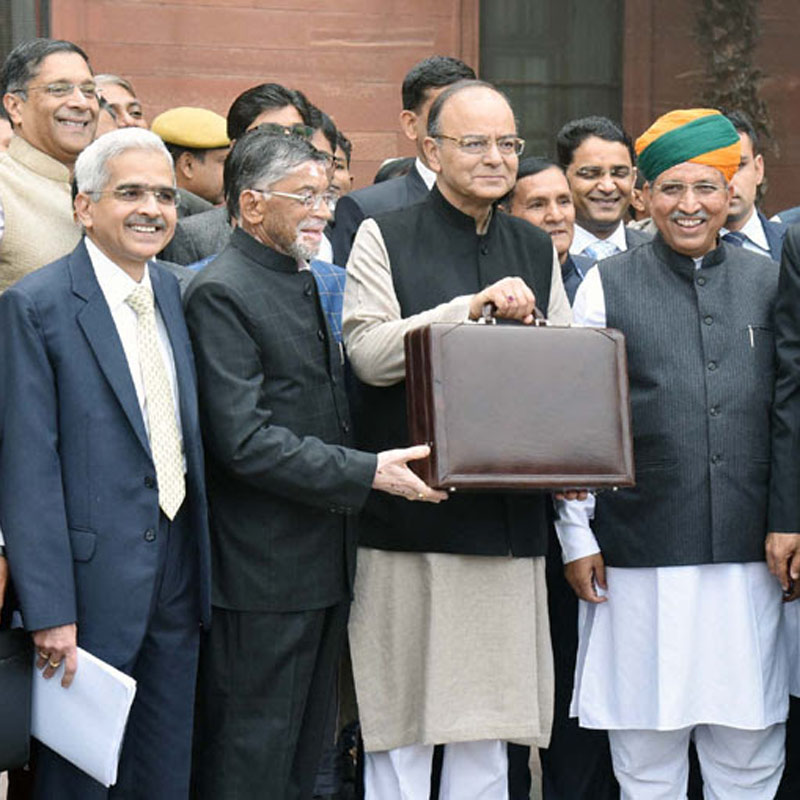
MUMBAI: The Indian government today unveiled a roadmap for financial year 2017-18 that covers areas from “highways to e-ways” (PM Modi’s words while describing the Union Budget 2017) aimed at “strengthening the hands of the poor”, while looking at further easing doing business by abolishing Foreign Investment Promotion Board and hinting at a new FDI policy. However, for India’s media and entertainment sector, especially the broadcast and cable sector looking to reach the $ 100 million turnover mark, there wasn’t much to cheer about — unless an angel is hiding in the fine prints that are still being deciphered.
Finance minister Arun Jaitley, while announcing the Budget, has brought in macro-level major financial reforms by slashing tax rates for middle level income groups and opening the FDI floodgates in favour of a rural economy.
Jaitley’s budget focused on boosting infrastructure and lifting up rural incomes besides bringing in reforms in the financial sector such as the abolition of the FIPB to enable a new policy for FDI. The Indian Railways Catering and Tourism Corporation (IRCTC), one of the world’s biggest e-commerce companies, will be now be listed, Jaitley said, aside from sending out an indirect warning to economic offenders such as Lalit Modi and Vijay Mallya that for for absconders new legislation would be drafted soon.

But a big thumbs up to the government for allocating Rs. 10,000 crore (Rs 100,000 million) to boost rural fibre optics network to give further leg up to all round digitisation.
While the fine prints are still being read, some highlights are as follows:
# The FIPB will be abolished. Further liberalisation in the FDI policy would be done in the next few days. (Star Den, etc to benefit)
# SANKALP – Rs 4000 crore allotted for market-oriented training. (At least 4 million youth will be provided market-relevant training under Sankalp programme)
# Cashback scheme – Petrol pumps card payments, launch two more schemes for use of BHIM app
# In yet another boost for digitisation, the government has removed service tax on e-tickets .
#IRCTC to be listed.
# The government proposes to create a payment regulatory board at RBI. (The proposal assumes significance as there is currently no regulator for FinTech companies such as Paytm in India.)
# Small and Medium enterprises (MSME) to be encouraged. Income tax reduced to 25% from 30% if turnover is up to Rs 50 crore or Rs 500 million.
# Startups to pay tax on profits for three out of seven years, increased from three out of five years.
# Under Bharat Net, optic fibre cable has been laid out In 1,55,000 km. (Recent spectrum auctions have removed spectrum scarcity.) Bharat Net allocation at Rs 10,000 crore.







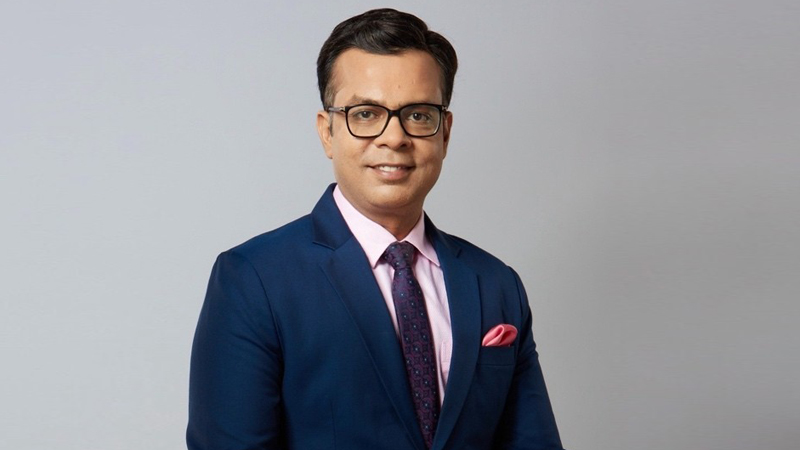
MUMBAI: Anuj Singhal, managing editor at CNBC- AWAAZ and CNBC BAJAR, operates at the sharp end of India’s business news ecosystem. With over two decades in business journalism, he has earned credibility for decoding policy, markets and macro trends for millions of Hindi-speaking investors. Equal parts newsroom leader and market analyst, he shapes editorial direction while anchoring flagship shows that break down the economy, politics and corporate India in real time.
Known for cutting through jargon and hype, Singhal blends data, discipline and clarity — a mix that has made him one of the most trusted voices in Hindi business news.
In this interaction, he discusses the Union Budget, trade deals, newsroom strategy and what truly moves markets and ratings.
• What was the single most market-moving announcement in this Budget, and why?
The most market-moving element was the clear commitment to fiscal consolidation without compromising capex. The glide path on fiscal deficit reassured bond markets and foreign investors, while sustained public investment kept growth expectations intact. That balance removed a big overhang for both equities and debt.
• Do you see this Budget as growth-oriented, fiscally cautious, or politically calibrated?
This Budget is growth-led but fiscally disciplined. It avoids overt populism, stays within macro guardrails, and prioritises medium-term competitiveness over short-term optics. Politically, it is restrained; economically, it is deliberate. The message is clear: stability over spectacle.
• How is CNBC-AWAAZ programming different, especially in decoding trade deal impact?
CNBC-AWAAZ goes beyond headline reaction. We translate policy into portfolio impact — sector by sector, stock by stock.
On trade agreements, our focus is on:
-Earnings visibility
-Export competitiveness
-Currency implications
-Margin sustainability
We don’t treat trade deals as political milestones. We decode them as profit-and-loss events for corporate India and map them to FY earnings trajectories.
• Which sectors look like clear winners and laggards over the next 12–18 months?
The next 12–18 months favour sectors aligned with structural spending and supply-side strengthening.
– Clear beneficiaries:
Capital goods and infrastructure
Manufacturing linked to export chains and PLI ecosystems
Power, defence, and logistics
– Relative laggards:
Consumption segments dependent on immediate demand revival
Businesses facing margin pressure from global volatility or pricing power erosion
This is not a momentum-driven market environment. It is execution-driven. Balance-sheet strength and order visibility will matter more than narrative.
• One headline to sum up this Budget 2026 for India Inc?
“Steady Hands, Long-Term Vision: A Budget That Rewards Discipline Over Drama”.
• What editorial filters do you apply before calling something ‘market-positive’ or ‘negative’?
We apply three structured filters:
– First: Earnings translation — does this materially change earnings visibility or cash flow outlook?
– Second: Time horizon — is the impact immediate, cyclical, or structural?
– Third: Valuation context — good news priced in or not.
If a policy doesn’t move earnings or risk perception, we don’t oversell it.
• How has business news consumption changed around big policy events?**
There has been a clear behavioural shift. They’re less interested in what was said, more in what it means for their money. There’s also a clear shift toward second-screen consumption, with digital platforms complementing live TV. The audience seeks sharper accountability. Viewers no longer accept broad optimism or pessimism — they want frameworks, numbers, and sector mapping.
• CNBC-AWAAZ decisively outperformed on Budget Day. What editorial and distribution choices mattered most?
Three deliberate strategic choices:
– Preparation depth:
We build scenarios months in advance — deficit ranges, sectoral incentives, tax calibrations — so we’re ready with analysis the moment numbers are announced.
– Language of impact:
We translate macro policy into investor-friendly Hindi without diluting complexity. That bridges accessibility and sophistication.
– Integrated distribution:
Television, YouTube, and digital platforms operate as one editorial grid, not parallel silos. This ensures continuity of narrative.We stayed analytical while others stayed reactive.
• How different is your YouTube audience from your TV audience?
The behavioural differences are subtle but important. TV audiences prioritise authority, structured debate, and context. YouTube audiences want speed, clarity, and actionable insights — often sharper, sometimes more opinionated. However, both share one expectation: accuracy. The format evolves; the trust benchmark does not.
• How do you retain viewers after the budget speech ends?
By shifting from announcements to implications.Retention comes from shifting the narrative from announcement to implication. We break down sectoral breakouts, stock-level impact, and what to do next. The speech is just the trigger; analysis is the destination.
• Is Budget Day your biggest traffic day?
It is one of the biggest — but more importantly, it is among the deepest in engagement. Viewers spend longer durations, revisit segments, and seek follow-up programming. That indicates behavioural trust, not just traffic.
• What’s the first thing you personally track on Budget Day — the speech or the markets?
The markets. They’re the fastest truth-teller. The speech explains intent; markets reveal interpretation.
• Your personal Budget-day ritual?
Early morning prep, minimal distractions, and once the speech begins, complete immersion. For me, Budget Day is less about reaction and more about reading between the lines.
• What drove your Budget-day ratings dominance, and how are Budget and trade deals shaping markets now?
Our dominance came from credibility, consistency, and clarity.
As for markets, both the Budget and recent trade deals are reinforcing a narrative of policy stability and global integration, which supports valuations even amid global volatility.
For Singhal, the market is the final judge. Policies can promise and speeches can persuade, but prices reveal what investors truly believe. As India’s investor class grows more informed and more demanding, business journalism is shifting from commentary to calibration. The premium is on clarity, context and credibility. In a landscape flooded with noise, the real edge lies in interpretation. In the end, the markets listen to numbers, not narratives , and Singhal’s craft is helping viewers tell the difference.






