News Headline
Broadcasters, DPOs oppose TV channel auction proposal

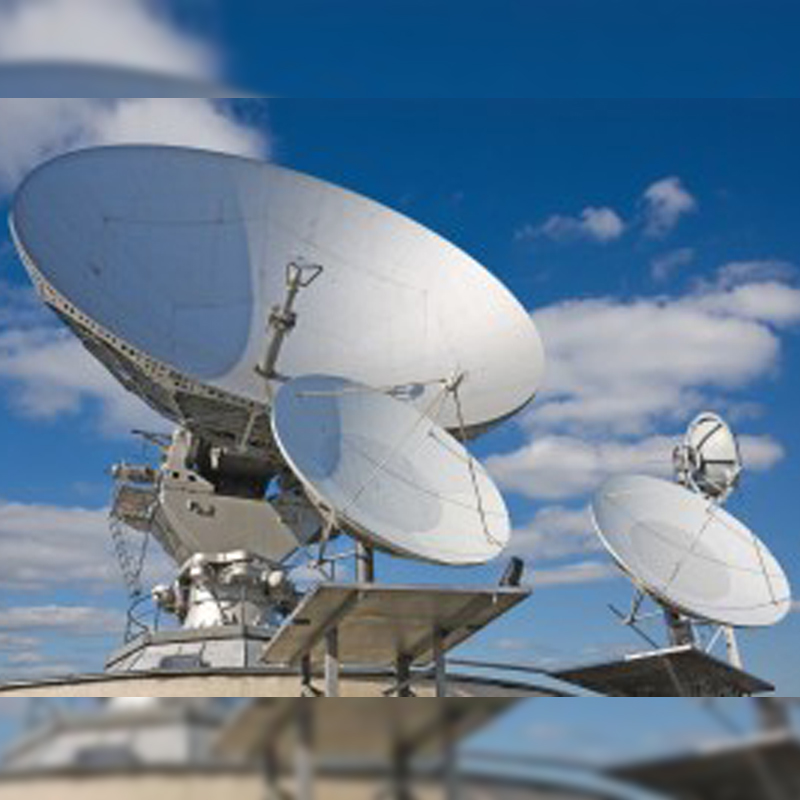
NEW DELHI: Most big and small broadcasting companies owning and operating TV channels in India, along with distribution platforms, have categorically opposed any move by the government to auction satellite TV channels as a complete package similar to FM radio channels.
Leading the opposition charge is the broadcasting sector’s domestic industry body Indian Broadcasting Foundation (IBF). Decrying having similar regulatory approach of auction for radio and satellite TV broadcasting as “completely undesirable,” IBF said auctions would not only breach certain privileges granted under Fundamental Rights by the Indian Constitution but would also go against the ethos of international commitments made by India to organisations such as the ITU.
“Costs are likely to increase manifold [if the government went ahead with auctioning of satellite TV channels] because of lack of supply of ISRO launched geo-stationary satellites. This would squeeze out smaller operators resulting in artificial entry barriers. In fact, the auction of TV licenses will also have a cascading effect on larger corporations, which may also have to rationalise the number of channels that they run as the cost of operating all the channels will spiral, making the business unviable,” IBF highlighted the economic downside of the proposal in its response to a TRAI consultation paper exploring the feasibility—or the non-feasibility—of auction of satellite TV channels and other related issues.

Weighing in with the IBF argument against auctioning of satellite TV channels, Star India, probably India’s biggest broadcasting company in terms of revenue, said successful broadcasting of channels required coordinated use of the uplinking space spectrum, satellite transponder capacity and downlinking space spectrum, which cannot be “auctioned together” as they are not controlled by the same entity or even the Indian government.
Many TV channels targeting India’s 183 million TV universe uplink to ITU-coordinated foreign satellites owing to Indian space agency ISRO’s inability to keep pace with the growing demand for satellite transponder capacity, apart from other commercial considerations.
“The introduction of an auction route for channels would necessarily require the auction of the spectrum bundled with the satellite transponder allocation [and] complexity of [the] process would not justify the negligible revenue that may be anticipated [by the government/Ministry of Information and Broadcasting] from such auction,” Star India said in its submission to TRAI, adding to artificially limit a commodity, satellite spectrum that is not scarce, would be a “brazen attempt at maximising revenue” by the government that would ultimately harm the media and entertainment industry of the country.
According to the Subhash Chandra family-controlled Zee, TRAI was “erroneously” attempting to treat broadcasters such as Zee, Star India, Sony, Viacom18, BBC and Discovery as entities subject to the Indian Telegraph Act [that, incidentally, was drafted sometime in the late 19th century].
“Under the uplinking and downlinking guidelines notified by MIB, an up-linking/downlinking ‘permission’ is granted to a TV channel by MIB and not any ‘licence’ [is given] as sought to be suggested by TRAI in the present CP [consultation paper]. Permission is granted under the executive instructions/guidelines notified by MIB and not under any statute. These executive instructions/guidelines do not have any statutory basis/source. Thus, any attempt to levy revenue-based licence fee on broadcasters on the premise that they are licencee[s] under the Indian Telegraph Act would not only be fallacious, but also without any legal sanction,” Zee noted while punching legal holes in the government thinking.
While Sony Pictures Networks India opined imposition of additional fees for satellite spectrum usage and mandating use of Indian satellites would have “unforeseen outcomes” owing to “economic pressures,” Times Network said the auction model may be suitable for the digital terrestrial TV transmission (DTT) when introduced but not for satellite TV.
Viacom18, operating over a dozen TV channels and also a studio business, felt that the operation of satellites for broadcasting cannot be compared with operations of FM radio channels simply because spectrum for the latter (radio FM) is limited and rare as against satellite spectrum that is in abundance and would continue to increase over a period of time with the increase in the number of satellites.
“Auction is appropriate only for such natural and rare public resources as for FM [radio],” the joint venture between US’ Viacom and Reliance Industries-controlled TV18 Broadcast submitted.
In its independent submission, TV18/Network18 (both entities controlled by Mukesh Ambani’s Reliance Industries), while giving international examples of countries such as Greece and Thailand where auctioning of TV channels had failed to get desired results, said auctioning will have an economic impact on the broadcast business.
Pointing out that an auction would “unduly increase the cost of grant of permissions and the cost of permits”, costs that would have to be passed on to end subscribers/viewers making content expensive all across the distribution chain, TV18 exhorted the government to “focus on increasing the number of satellites,” which will increase competition and not “create entry barriers” that will impede competition.
Comparatively, smaller broadcasters operating on tight budget and limited distribution budgets such as Odisha TV Network said it was “not in favour of auctions.” Global companies such as BBC Global News submitted that TV channels were inherently different from FM radio broadcasting and such a move could “adversely impact small broadcasters” like BBC as it would amount to an anti-competitive move favouring some big players. Channels like News24, too, echoed similar sentiments.
Distribution platform IMCL was of the opinion it was not possible to auction uplink spectrum “like in the case of FM [radio].” DTH player Dish TV added that “discrimination and/or restrictions in the licencing conditions” should be done away with and there should be no differentiation between usage of Indian and foreign satellites. Players should be given the right to choose as to what was best for their services, it added. Similar comments came from other DPOs like DEN.
Some other industry organisations such as Broadband India Forum and Hong Kong-headquartered CASBAA, too, stated that auctioning of satellite TV channels was not feasible.
CASBAA, while supporting an open policy regarding satellite capacity usage for downlink and uplink, said restricting the use of foreign satellites just so an auction can be conducted would be a “most undesirable” outcome.
“The Indian broadcasting sector has flourished in no small part because of the ample and competitive supply of satellite capacity–both foreign and domestic–made available for broadcasting purposes under the existing policy guidelines. Indeed, investments in foreign satellite capacity over India have contributed mightily to the growth in this sector to date. An attempt to restrict use of foreign satellites now would cause immeasurable harm to this currently ‘vibrant’ sector,” the Asian pay TV and satellite industry organisation said. Similar sentiments were expressed by other international organisations such as GVF, ASPCC and ESOA.
ALSO READ:
MIB to collect data on satellite capacity needs, digital chatter
2017 was a regulatory roller coaster and the ride continues
MIB, DoS nudge TV channel to use Indian satellites
MIB reverts to earlier norms of seeking nod from ISRO on uplink/downlink of TV channels






NEW DELHI: Hamdard Laboratories gathered a cross-section of India’s achievers in New Delhi on Friday, handing out the Hakeem Abdul Hameed Excellence Awards to figures who have left their mark across healthcare, education, sport, public service and the arts.
The ceremony, attended by minister of state for defence Sanjay Seth and senior officials from the ministry of Ayush, celebrated individuals whose work blends professional success with a sense of public purpose. It was as much a roll call of achievement as it was a reminder that influence is not measured only in profits or podiums, but in people reached and lives improved.
Among the headline awardees was Alakh Pandey, founder and chief executive of PhysicsWallah, recognised for turning affordable digital learning into a mass movement. On the sporting front, Arjuna Awardee and kabaddi player Sakshi Puniya was honoured for her contribution to the game and for pushing women’s participation onto bigger stages.
The cultural spotlight fell on veteran lyricist and poet Santosh Anand, whose songs have echoed across generations of Hindi cinema. At 97, Anand accepted the honour with characteristic humility, reflecting on a life shaped by perseverance and hope.
Healthcare honours spanned both modern and traditional systems. Manoj N. Nesari was recognised for strengthening Ayurveda’s place in national and global health frameworks. Padma shri Mohammed Abdul Waheed was honoured for his research-backed work in Unani medicine, while padma shri Mohsin Wali received recognition for his long-standing contribution to patient-centred care.
Education and social development also featured prominently. Padma shri Zahir Ishaq Kazi was honoured for decades of work in education, while former Meghalaya superintendent of Police T. C. Chacko was recognised for public service. Goonj founder Anshu Gupta received an award for his dignity-centred rural development initiatives, and the Hunar Shakti Foundation was honoured for empowering women and young girls through skill development.
The Lifetime Achievement Award went to former IAS officer Shailaja Chandra for her long career in public healthcare and governance, particularly in the traditional systems under Ayush.
Speaking at the event, Hamdard chairman Abdul Majeed said the awards were a tribute to those who combine excellence with empathy. “These awardees reflect Hakeem Sahib’s belief that healthcare, education and public service must ultimately serve humanity,” he said.
Minister Seth struck a forward-looking note, saying India’s young population gives the country a unique opportunity to become a global destination for learning, health and wellness by 2047.
The ceremony also featured the trailer launch of Unani Ki Kahaani, an upcoming documentary starring actor Jim Sarbh, set to premiere on Discovery on 11 February.
Instituted in memory of Unani scholar and educationist Hakeem Abdul Hameed, the awards have grown into a national platform that celebrates those building a more inclusive and resilient India. For one evening at least, the spotlight was not just on success, but on service with substance.








