Cable TV
Broadcast bill ready; scheduled to be tabled in Monsoon Session of Parliament


NEW DELHI / MUMBAI: After many years of meandering on the margins (since 1997), the information and broadcasting ministry is ready with a final draft of the Broadcast Bill 2006, which in all likelihood is going to turn out to be controversial and stringent at the same time.
The recommendations that have been proposed in the bill, if they finally become law, are bound to have seismic repercussions in the industry. The draft bill, which calls for the setting up of a separate Broadcast Regulatory Authority of India (Brai), has covered four major areas in its ambit, which would call for major corporate restructuring by media companies, foreign and domestic, operating in India. These include content, cross media ownership, subscriptions and live sports feeds (which are already part of the downlink norms).
Some of the key recommendations as per the draft bill:

* The bill introduces restrictions on cross media holdings in all electronic ventures capping it a maximum 20 per cent. While print media companies have not been included in the ambit of the bill for the present, this could be later extended to them as well.
On restrictions on accumulation of interest, the draft bill states, “The Central government shall have the authority to prescribe such eligibility conditions and condition with regard to accumulation of interest in the print and broadcast segments as may be considered necessary from time to time to prevent monopolies across different t segments of the media.”
What this means is that a broadcaster like Star, for instance, can have a maximum 20 per cent stake in an FM radio venture or a multi system operator.
The immediate fallout of such a bill becoming law would be that Star, which has a 26 per cent holding in the Rajan Raheja-promoted Hathway Cable & Datacom MSO, would have to bring down its stake by 6 per cent.
It seems that the demerger that took place in Zee Telefilms could prove to be beneficial for the company. Down South, the Sun TV group would also have to restrict its interest in cable distribution companies like Sumangli.
In this regard, the draft bill states, “No broadcasting network service provider and its associated companies shall have more than 20 per cent share of paid up equity or have any other financing or commercial arrangement that may give it management control over the financial, management or editorial policies of any other broadcasting network service provider…”
* No broadcasting service provider (television company) can hold more than 20 per cent equity in another TV company. Additionally, no TV company can own more than 15 per cent of the total number of television channels beaming in the country.
“No content broadcasting service provider shall have more than the prescribed share of the total number of channels in a city or state, subject to overall ceiling of 15 pr cent for the whole country,” the draft states.
* A broadcast network service provider (presumably multi system operator / cable operator) cannot have more than 15 per cent of the national average in regards to subscriber numbers.
What this means, at the moment as an explanatory annexure are not available, is that if 60 million is the C&S national subscriber average, an MSO like Zee group’s SitiCable or the Hinduja-owned INCablenet or Sumangli, for example, cannot exceed 9 million paid subscribers in a city or a state.
“No broadcasting network service provider shall have more than the prescribed of the total number of consumer/subscribers in city or a state subject to the overall ceiling of 15 per cent for the whole country,” the draft bill states.
* TV channels on a mandatory basis would have to have a certain prescribed percentage of content produced locally and also carry socially relevant programmes.
“The share of content produced in India shall not be less than 15 per cent of the total content of a channel broadcast during every week,” the draft bill states.
It also goes on to state that the share of public service/socially relevant programme content shall not be less than 10 per cent of the total programme content of a channel broadcast during every week.
This would mean that channels like Cartoon Network, Animax, Discovery, Animal Planet and Discovery Travel and Living would have to have a prescribed percentage of content generated from India, which has been a long-standing demand of Indian animators.
*Cable Ops / MSOs to operate only on licence from Brai.
This could well be the catalyst that brings in some order into the cable industry. At present, the only requirement for anyone wanting to start cable services is that he/she should fill in the prescribed form at any post office and pay the nominal fee.
* Existing laws and guidelines relating to broadcasting, TV and radio, would subsume under this over-arching regulatory framework.
This would mean that laws and guidelines relating to FM radio, DTH, community radio, uplink and downlink of channels and use of SNG/DSNG infrastructure would cease to exist and assimilate with the broadcast law.
The Broadcasting Services Regulation Bill 2006 is presently being circulated among members of the Union Cabinet. Depending on the Cabinet direction, the bill is scheduled to be tabled during the Monsoon Session of Parliament.
TV and cable companies refused to comment on the draft proposals today, saying they are yet to see the government paper, which needs to be studied in detail.

Cable TV
Hathway Cable appoints Gurjeev Singh Kapoor as CEO
Leadership change comes as cable TV faces shrinking subscriber base and modest earnings pressure
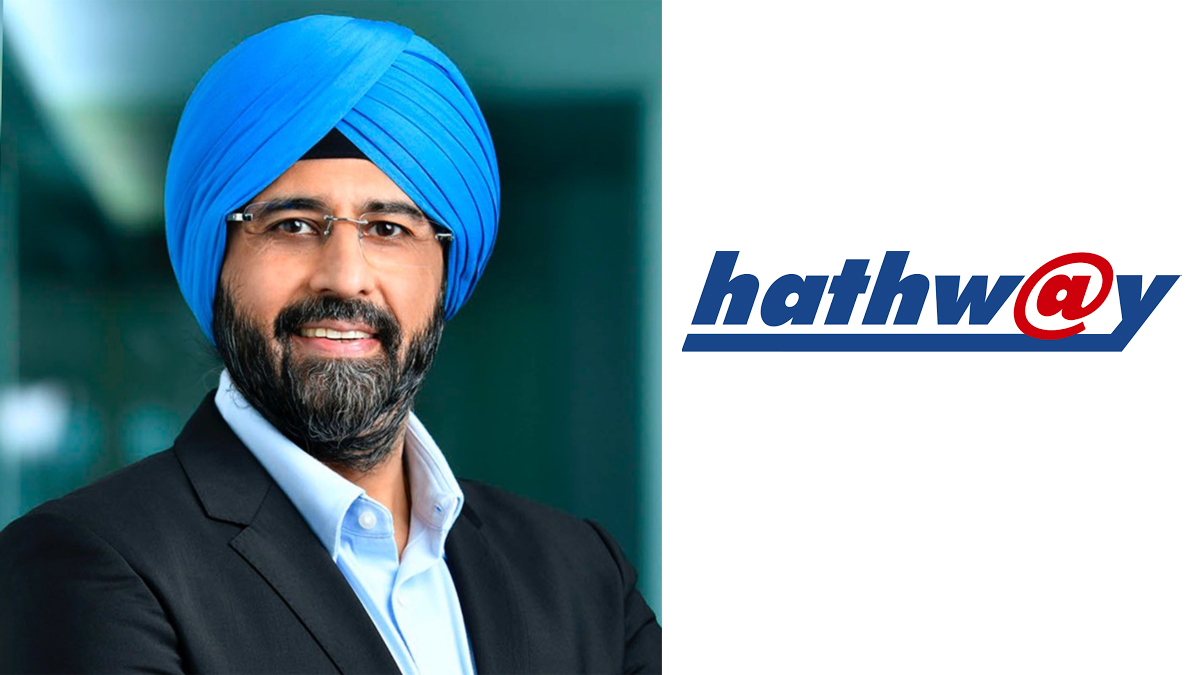
MUMBAI: Hathway Cable and Datacom has tapped industry veteran Gurjeev Singh Kapoor as chief executive officer, marking a leadership pivot at a time when India’s cable television business is under mounting strain.
Kapoor will take over from Tavinderjit Singh Panesar, who is set to retire in August after a long innings with the company. Panesar, chief executive since 2023, has held multiple leadership roles at Hathway, including his latest stint beginning in 2022.
Kapoor brings more than three decades of experience in media and entertainment. He most recently led distribution at The Walt Disney Company’s Star India business, now part of JioStar. His career spans television distribution and affiliate partnerships, with stints at Sony Pictures Networks India, Discovery Communications and Zee Entertainment.
Panesar, with over three decades in the industry, has worked across strategic planning, distribution and business development in media, broadcasting and manufacturing. His past associations include ESPN Star Sports, Star India, Apollo Tyres and JK Industries.
The transition lands as the cable sector grapples with structural disruption. Traditional operators are losing ground to streaming platforms, while telecom and broadband players tighten the squeeze with bundled offerings.
An EY report estimates India’s pay-TV base could shrink by a further 30 to 40 million households by 2030, taking the total down to 71 to 81 million. The slide follows a loss of nearly 40 million homes between 2018 and 2024, a contraction that has already wiped out more than 37,000 jobs in the local cable operator ecosystem.
Hathway’s numbers reflect the strain. The company reported a consolidated net profit of Rs 93 crore for FY25, down from Rs 99 crore a year earlier. Revenue inched up to Rs 2,040 crore from Rs 1,981 crore. As of December 2025, it had about 4.7 million cable TV subscribers and roughly 1.02 million broadband users.
Kapoor steps in with a familiar brief but a shrinking playbook. In a market where viewers are cutting cords faster than companies can reinvent them, the new chief executive inherits a business fighting to stay plugged in.







