News Broadcasting
British PM Tony Blair on MTV’s global forum

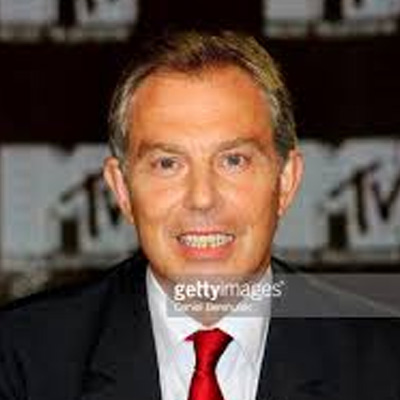
LONDON: MTV’s global forum has chosen British prime minister Tony Blair to field questions from 40 young people hailing from Europe, the Middle East and the United States during the hour-long programme.
MTV Networks Europe will produce the special titled “An MTV Forum with Tony Blair: Is war the answer?” It is scheduled to begin airing on MTV channels in Australia, Asia, Latin America, the Middle East and the United States starting 7 March 2003. The forum will be hosted by Trevor Nelson of MTV Base.
The forum will likely follow the same format and tone as last year’s “Be heard: an MTV global discussion with Colin Powell,” in which young people from around the world spoke with the US secretary of state Powell about the threat of terrorism and the United States’ military action in Afghanistan.

A digitalsky report adds that Viacom, MTVNE’s parent company, says that the audience will reflect a “balanced cross-section” of MTV’s 16-24 target demographic.
MTV Networks Europe president and CEO Brent Hansen says: “MTV Europe’s philosophy is to offer young people from all over Europe the opportunity for open dialogue on a number of issues, regardless of race, religion or political standpoint. This forum will not be a vehicle for any political message; instead, we wish to offer an open and unscripted dialogue between Prime Minister Tony Blair and young people in Europe. MTV’s European audience are particularly attuned to the issue of war and an MTV forum will offer a lively debate with a truly pan-European perspective.”
Tony Blair: a profile
At the age of 43 , Tony Blair became the youngest Prime Minister since Lord Liverpool in 1812. The son of a barrister and lecturer, Blair was born in Edinburgh, but spent most of his childhood in Durham. At the age of 14 he returned to Edinburgh to finish his education at Fettes School. He studied law at Oxford, and went on to become a barrister himself.
After standing unsuccessfully for the Labour Party in a by-election, Blair went on to win the seat of Sedgefield in the 1983 General Election, aged 30.
Blair made a speedy rise through the ranks, being promoted first to the shadow Treasury front bench in 1985. He subsequently served as a trade and industry spokesman, before being elected to the shadow cabinet in 1988 where he was made shadow secretary of state for Energy. In 1989 he moved to the employment brief.
After the 1992 election Labour’s new leader, John Smith, promoted Blair to shadow home secretary. It was in this post that Blair made famous his pledge that Labour would be tough on crime, tough on the causes of crime.
Blair immediately launched his campaign for the modernisation of the Labour Party, determined to complete the shift further towards the political centre which he saw as essential for victory. The debate over Clause 4 of the party’s constitution was considered the crucial test of whether its members would commit to Blair’s project. He removed the commitment to public ownership, and at this time coined the term New Labour.
The Labour Party won the 1997 General Election by a landslide, after 18 years in Opposition.
The government began to implement a far-reaching programme of constitutional change, putting the question of devolution to referendums in Scotland and Wales.
An elected post of Mayor of London was established at the head of a new capital-wide authority, and all but 92 hereditary peers were removed from the House of Lords in the first stage of its reform. The government has also implemented an investment programme of ?42 billion in its priority areas of health and education.
Blair was re-elected with another landslide majority in the 2001 General Election.
Blair is married to the barrister Cherie Booth QC, and they have four children. Their youngest, Leo, was the first child born to a serving prime minister in over 150 years.
One hopes that the Indian audiences will also get a chance to view the proceedings of the MTV Global Forum live from 10 Downing Street.





News Broadcasting
News18 India launches Command Centre war explainer with Arya
New show shifts from debates to decoding global conflicts and impacts
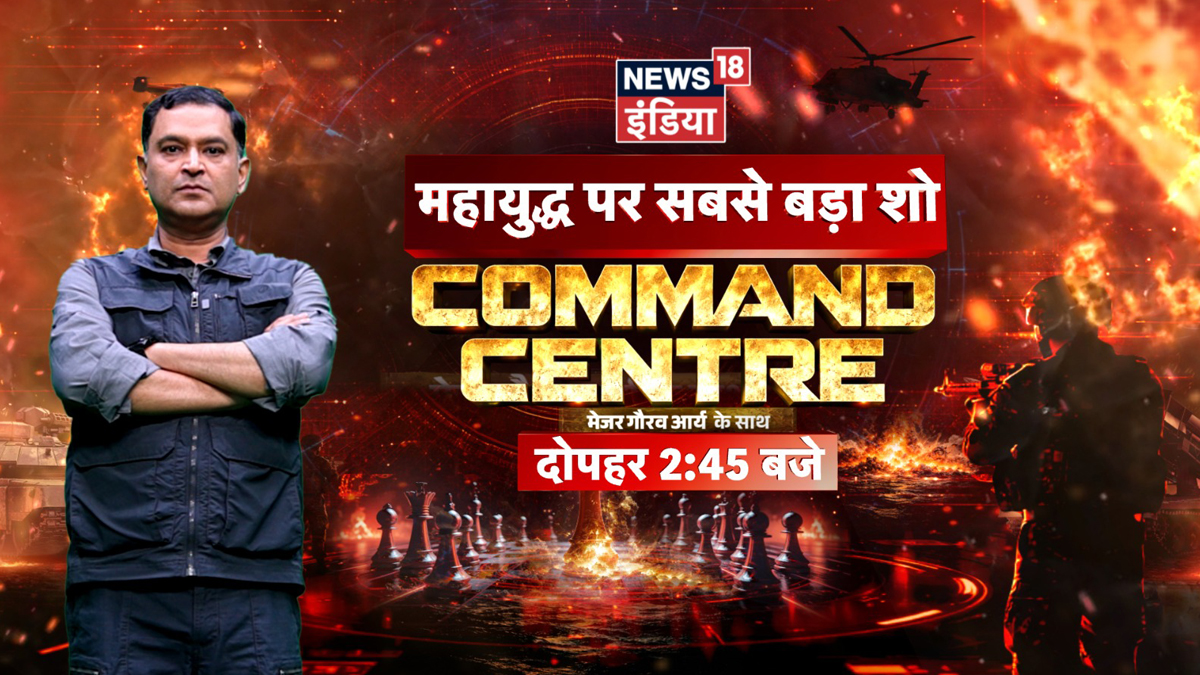
MUMBAI: News18 India has rolled out a new war-focused programme, Command Centre, featuring Gaurav Arya, as it looks to offer viewers a sharper, more grounded take on global conflicts amid rising tensions in West Asia.
Positioned as an “insider war room”, the show moves away from conventional panel debates and instead focuses on explaining military developments, decoding strategy and connecting global events to their everyday impact, from fuel prices to economic shifts.
The format leans heavily on visuals and data. The studio has been designed like a command hub, complete with large LED war maps, real-time graphics and an alert system to track developments as they unfold.
At the centre of it all is Arya, who brings his military background to simplify complex war strategies for viewers. His signature line, “Seedhi baat samjhiye”, anchors the show’s promise of clarity over noise.
News18 India managing editor Jyoti Kamal said, “Command Centre, featuring Major Gaurav Arya is designed to deliver accurate insights and a clear perspective on how evolving conflicts impact everyday life, from household budgets to national security. With expert voices analysing every development in real time, the show goes beyond headlines to decode what’s happening now, what it means, and what could come next.”
Echoing the intent, Gaurav Arya added, “In times of war, confusion is the biggest threat. With News18 India’s Command Centre, we are bringing viewers inside the war room, decoding strategies, tracking every escalation, and explaining, in the simplest terms, what it means for India and for every household. Seedhi baat samjhiye, this is where you understand not just what is happening, but what happens next.”
The weekday show will air in the afternoon slot and will also feature Gaurav Shukla, adding to its editorial depth.
With its mix of analysis, visuals and a clear focus on impact, the show reflects a broader shift in news consumption. Viewers are no longer just watching events unfold, they are looking to understand what those events mean for them.







