News Headline
Bollywood slammed for barring women make-up artists despite order

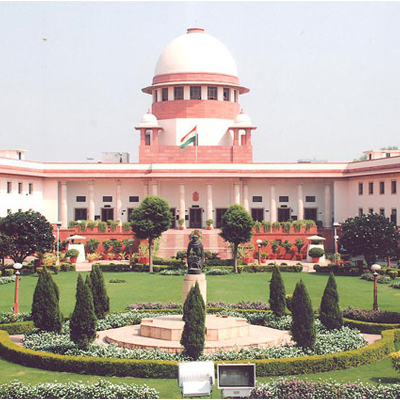
NEW DELHI: Slamming gender discrimination against women in Bollywood, the Supreme Court demanded to know why its directive of 10 November, 2014 quashing a bylaw of the Costume and Make-Up Artists and Hair Dresser Association had not been followed.
However, the Court was assured that Association had accepted the application of Charu Khurana and would issue her a membership card in due course, making her the first member of the male-dominated make-up fraternity.

Until now, women were only allowed to work as hairstylists and the work of make-up was left to men.
“Such shocking discrimination on the basis of gender is violative of constitutional values. Earlier, the fee (for association membership) was only Rs 5,000 and now you are asking for Rs 1 lakh. These are clearly ways to keep women away even after our order quashing your discriminatory clause,” an angry Justice Dipak Misra told the association’s lawyer.
“The societal mindset must change. The male community in several spheres devises ways to keep women away from particular areas of employment,” Misra added.
The court was hearing a plea filed by a group of women make-up artists headed by Khurana, after they were refused admission by the make-up artists’ associations in Maharashtra, Karnataka, Andhra Pradesh and Kerala.
Thirty-two-year-old Khurana, who lives in New Delhi, said women artists had to either abandon the profession or work illegally, often giving credit for their work to male colleagues so that the union of makeup artists would not find out.
After being fined Rs 25,000 for working on a Tamil movie, Khurana had sought legal recourse. The apex Court vindicated her stand by instructing the Maharashtra chapter of the Cine Costume Make-up Artists and Hair Dressers Association to allow women to take membership as makeup artists and without the need to hold a domicile certificate of Maharashtra, another prerequisite that prevented those from outside the state from working in Bollywood.
“The Supreme Court had directed the union to remove the clause pertaining to women and domicile within 10 days,” said Jotika Kalra, the lawyer who represented Khurana in the case.
For Khurana, the verdict was a vindication of her fight against the misogyny that she and other women artists have faced in the film industry, both in Bollywood and in southern India.
“We have to do makeup in vans, or in hotel rooms, because the union could raid the sets anytime and fine us. Our names never appear in the credits and there is always a male makeup artist on set, even though he may not be working,” Khurana said in an interview in November.
In the early years, Bollywood did not have too many women working behind the scenes. Men handled costumes and makeup and even played the role of women up until the 1950s because working in films was not considered an honourable profession.
Even after women started working in films, the union rules only allowed them to register as hairdressers, never as makeup artists, thus depriving them of rightful wages and the chance to expand their skills.
A makeup artist can earn anywhere between Rs 5,000 to Rs 25,000 a day, Khurana said, adding several qualified female artists had to turn away from the film industry and settle for weddings or other events because of the archaic rule.
In its arguments last year, the union boasted of 1,780 makeup artists in Maharashtra alone but said men had always been makeup artists and women always the hairdressers. “That’s just the way things were. We were not against women as such,” said Maharashtra chapter President Sharad Shelar had then said.







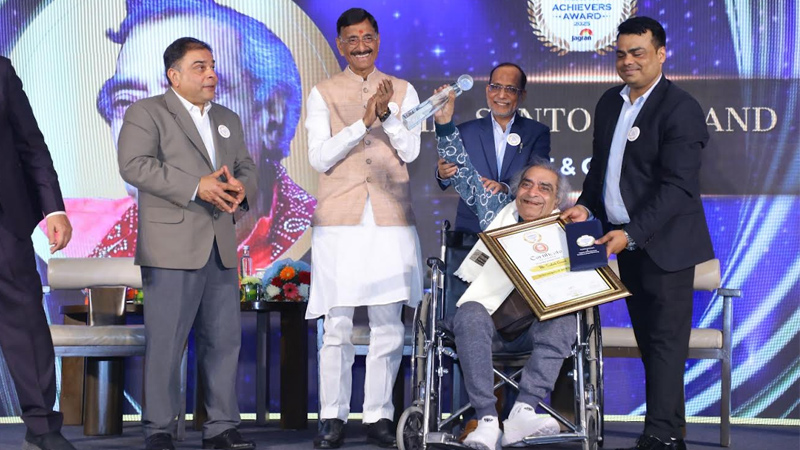
NEW DELHI: Hamdard Laboratories gathered a cross-section of India’s achievers in New Delhi on Friday, handing out the Hakeem Abdul Hameed Excellence Awards to figures who have left their mark across healthcare, education, sport, public service and the arts.
The ceremony, attended by minister of state for defence Sanjay Seth and senior officials from the ministry of Ayush, celebrated individuals whose work blends professional success with a sense of public purpose. It was as much a roll call of achievement as it was a reminder that influence is not measured only in profits or podiums, but in people reached and lives improved.
Among the headline awardees was Alakh Pandey, founder and chief executive of PhysicsWallah, recognised for turning affordable digital learning into a mass movement. On the sporting front, Arjuna Awardee and kabaddi player Sakshi Puniya was honoured for her contribution to the game and for pushing women’s participation onto bigger stages.
The cultural spotlight fell on veteran lyricist and poet Santosh Anand, whose songs have echoed across generations of Hindi cinema. At 97, Anand accepted the honour with characteristic humility, reflecting on a life shaped by perseverance and hope.
Healthcare honours spanned both modern and traditional systems. Manoj N. Nesari was recognised for strengthening Ayurveda’s place in national and global health frameworks. Padma shri Mohammed Abdul Waheed was honoured for his research-backed work in Unani medicine, while padma shri Mohsin Wali received recognition for his long-standing contribution to patient-centred care.
Education and social development also featured prominently. Padma shri Zahir Ishaq Kazi was honoured for decades of work in education, while former Meghalaya superintendent of Police T. C. Chacko was recognised for public service. Goonj founder Anshu Gupta received an award for his dignity-centred rural development initiatives, and the Hunar Shakti Foundation was honoured for empowering women and young girls through skill development.
The Lifetime Achievement Award went to former IAS officer Shailaja Chandra for her long career in public healthcare and governance, particularly in the traditional systems under Ayush.
Speaking at the event, Hamdard chairman Abdul Majeed said the awards were a tribute to those who combine excellence with empathy. “These awardees reflect Hakeem Sahib’s belief that healthcare, education and public service must ultimately serve humanity,” he said.
Minister Seth struck a forward-looking note, saying India’s young population gives the country a unique opportunity to become a global destination for learning, health and wellness by 2047.
The ceremony also featured the trailer launch of Unani Ki Kahaani, an upcoming documentary starring actor Jim Sarbh, set to premiere on Discovery on 11 February.
Instituted in memory of Unani scholar and educationist Hakeem Abdul Hameed, the awards have grown into a national platform that celebrates those building a more inclusive and resilient India. For one evening at least, the spotlight was not just on success, but on service with substance.







