News Broadcasting
Blockbuster, Coca-Cola announce global marketing alliance

Video-rental chain Blockbuster and Coca-Cola have announced a multi-million dollar, five-year global marketing and product alliance.
The global alliance builds on a distribution agreement the two companies have had since 1995, an official release states. Financial terms were not disclosed.
Blockbuster will continue distributing Coca-Cola products in up to 8,000 Blockbuster stores worldwide. Under the expanded agreement, Coca-Cola will purchase media assets and incentives from the home entertainment provider. The agreement also includes provisions for promotions in America.

From spring 2002, Coca-Cola will purchase space in the video company’s marketing resources, including the in-store television network and direct mail, point-of-sale coupon system.
The first national campaign, the “Steal the Scene” promotion, launches this week, the release states. It features an instant-win game on more than 90 million specially- marked packages of Diet Coke. Additionally, the promotion will extend to customers purchasing Coca-Cola at concession stands at more than 1,400 US movie theaters.
The grand prize is a star-treatment trip to Los Angeles with a walk-on movie role. Other prizes include Club Med vacations, DVD players and a year of free DVD rentals at Blockbuster, digital cameras and free diet Coke product the release states.
A new Diet Coke television ad entitled “Casting Call” has been developed to support the promotion. The ad is a continuation of the successful Diet Coke “Poetry” campaign that debuted in February. There is both a 30-second television spot and a special 60-second version for in-cinema use.
The promotion will also be supported by print and electronic media, including the Blockbuster Entertainment Network and direct mailers, as well as special packaging and point-of-sale materials.
Blockbuster is a publicly traded subsidiary of Viacom. It claims to currently have long-term partnerships with brands including Coca-Cola Company, AOL Time Warner, Daimler Chrysler, H&R Block, MCI and Panasonic.




News Broadcasting
CNN-News18 to host Fury in the Gulf conclave on West Asia crisis
Three-hour summit to unpack geopolitical fallout and impact on India
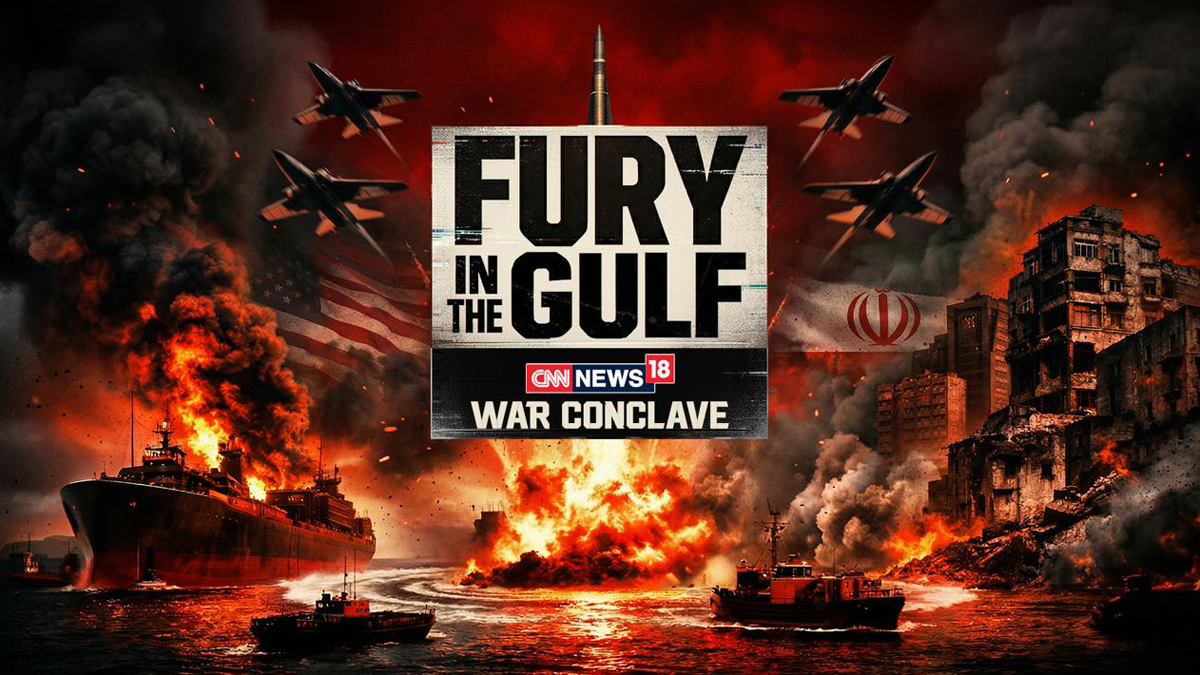
MUMBAI: CNN-News18 is set to host a special three-hour broadcast, Fury in the Gulf – War Conclave, on April 7, aiming to decode the escalating West Asia crisis and its far-reaching implications for India.
Scheduled from 4:00 PM to 7:00 PM, the conclave comes at a time when tensions between Iran and the United States are reshaping global geopolitics and triggering economic uncertainty. With India’s deep energy ties, trade links and large diaspora in the Gulf, the developments carry significant domestic relevance.
Built around the theme ‘Conflict, Consequences, and The Future,’ the programme will feature six curated sessions combining one-on-one interviews and panel discussions. The focus is to cut through the clutter and offer viewers a clearer understanding of the fast-evolving situation.
Key sessions include ‘Diplomacy in Times of War’ featuring Shashi Tharoor, and ‘World After the Iran Conflict’ with voices such as Ram Madhav, Reuven Azar, representatives from the European Union and the Iranian Deputy Envoy. Another session titled ‘Another Dunkirk?’ will bring together K. J. S. Dhillon and Jitin Prasada among others.
CNN-News18 editorial affairs director Rahul Shivshankar said, “In times of war, clarity becomes the most powerful tool. Fury in the Gulf – War Conclave brings together credible voices to address the questions and confusion that arise amid an overwhelming influx of information.”
He added that the initiative is aimed at delivering “facts, perspective, and insight” at a time when misinformation can easily cloud public understanding.
Echoing the sentiment, CNN-News18 CEO– English and business news Smriti Mehra said the conflict marks a defining global moment, with consequences that extend well beyond the region. She noted that the conclave seeks to present the crisis with “depth, nuance and responsibility” so audiences can better grasp its real-world impact.
As geopolitical tensions continue to dominate headlines, the conclave positions itself as an attempt to bring order to the noise, offering viewers a structured, insight-led look at a complex and rapidly shifting global situation.






