iWorld
Billions still offline despite mobile internet surge: GSMA

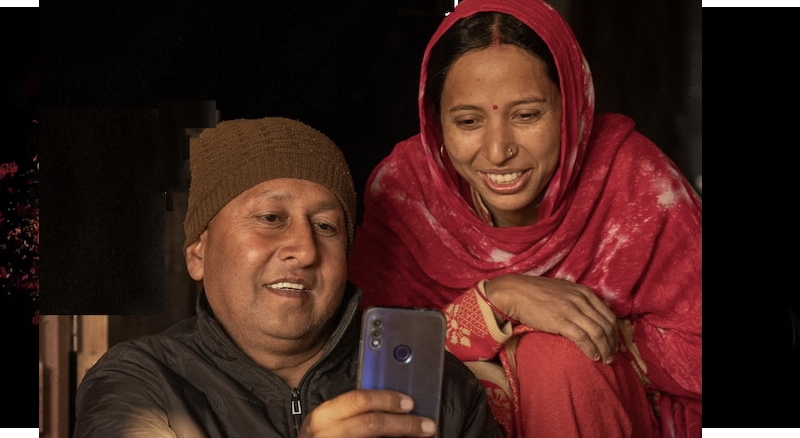
LONDON: The world is more connected than ever, yet the digital divide stubbornly persists. According to the GSMA’s State of Mobile Internet Connectivity 2025 report, some 4.7 billion people – 58 per cent of the global population – now use mobile internet on their own device, with another 710 million (9 per cent) getting online via shared phones. The leap in 2024, when 200 million joined the ranks of mobile internet users, was the fastest growth since 2021.
Still, that leaves 3.4 bIllion people offline. Just 4 per cent of the global population, around 300 million individuals, live in areas with no mobile coverage – the “coverage gap”. Far more troubling is the “usage gap”: 3.1 billion people, or 38 per cent of humanity, live under a signal but remain disconnected. The problem is not technology but barriers like high handset costs, poor digital literacy, low awareness of the internet’s uses, and patchy electricity supply.
The divide is starkest in low- and middle-income countries (LMICs), which account for 93 per cent of the unconnected. In these regions, adults in rural areas are 25 per cent less likely to be online than their urban counterparts, while women are 14 per cent less likely than men to use mobile internet. Sub-Saharan Africa lags furthest behind, with only one in four people online and a coverage gap of 10 per cent.

Affordability remains the single biggest brake. Entry-level internet-enabled handsets cost 16 per cent of monthly income in LMICs and nearly half the earnings of the poorest quintile. , GSMA director general Vivek Badrinath argues that a $30 handset could transform access for up to 1.6 billion people. To that end, the GSMA last year launched a Handset Affordability Coalition with backing from operators, device-makers, multilateral lenders and development agencies.
Connectivity infrastructure, meanwhile, has reached maturity in many markets. 4G networks now cover 93 per cent of the world’s population and 5G more than half, though 4G rollout is slowing as investment shifts to 5G. The real obstacle is adoption: most of the offline live within coverage zones but either lack a device or the ability to use it effectively. Two-thirds of the usage gap stems from people without a handset at all.
Even among those connected, “meaningful use” remains elusive. Many people restrict their mobile internet activity to a narrow band of services such as messaging or social media, barely scratching the surface of what digital access can offer in healthcare, education, commerce or banking.
The economic stakes are high. Closing the usage gap, the GSMA estimates, could unlock $3.5trn in additional global GDP by 2030. But that will require not only affordable handsets and cheaper data, but also policy action to address gender disparities, build digital skills, improve electricity access, and generate locally relevant content.
“Although the digital divide has been on the agenda for over a decade, the time has come for meaningful progress,” Badrinath said. “Infrastructure is no longer the main barrier. The challenge now is ensuring billions more can actually use it.”




iWorld
JioHotstar enters micro-drama space with 100 shows under Tadka banner
Short-form push targets 300M users as content meets commerce in new format
MUMBAI: JioStar has made a bold play in India’s fast-growing micro-drama space, rolling out over 100 short-form shows under its new Tadka banner on JioHotstar, timed with the massive viewership surge of the Indian Premier League 2026.
The scale of the launch signals clear intent. Rather than testing the waters, the company has dived in headfirst, releasing a wide slate of content on day one. Each show is designed for quick consumption, with episodes running 60 to 90 seconds in a vertical format tailored for mobile-first audiences.
The move comes as India’s micro-drama market, currently valued at around $300 million, is projected to grow tenfold to over $3 billion by 2030. Globally, the format has already proven its mettle, with China’s micro-drama sector recording explosive growth in recent years.
What sets this rollout apart is its built-in monetisation strategy. The shows are free to watch and ad-supported, with brand integrations woven directly into storylines from the outset. It reflects a broader shift where content and commerce are increasingly intertwined, rather than operating in silos.
The timing is equally strategic. With more than 300 million users already tuning in for IPL action, JioHotstar is effectively turning cricket’s biggest stage into a discovery engine for its new format.
The company is not entering an empty arena. Early movers like Kuku TV, MX Player and platforms backed by Zee Entertainment Enterprises have already laid the groundwork, building audiences and validating demand for snackable storytelling.
Now, with scale, distribution and advertiser interest aligning, the big players are stepping in. For JioStar, Tadka may well serve as a proving ground for the next evolution of digital entertainment, where every minute counts and every second sells.
If the bet pays off, India’s next big content wave might just arrive in under 90 seconds.






