News Broadcasting
Bill to replace sports telecast ordinance introduced

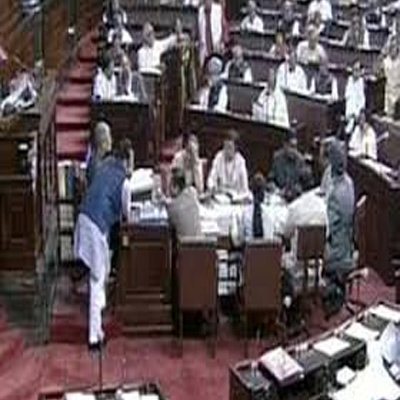
NEW DELHI: Introducing a Bill making it mandatory for private broadcasters to share the feed of live telecast of sports events with Prasar Bharati, Information and Broadcasting Minister Priyaranjan Dasmunsi told the Lok Sabha the legislation was aimed at replacing an ordinance promulgated last month in the interest of millions of viewers who had the facility of only terrestrial or free-to-air channels to enjoy live sports events of national and international importance.
The Sports Broadcasting Signals (Mandatory Sharing with Prasar Bharati) Bill 2007 will have retrospective effect from November 2005 when the Uplinking and Downlinking Guidelines had been issued.
The Bill is expected to come up for consideration and passing towards the end of next week, after the Lok Sabha finishes discussion on the Motion of Thanks to the President to the Joint Sitting of both Houses on the opening day of the Budget session.

The ordinance was promulgated after Nimbus Communications refused to share live feed of the India-West Indies one-day series with Doordarshan after the Delhi High Court passed an order for a seven-minute deferred telecast signal to the public broadcaster and live broadcast on All India Radio.
Dasmunsi, in a statement giving reasons for promulgation of the Ordinance, said the government was only reiterating an earlier order making sharing of live feed of sports events with Doordarshan mandatory.
The statement of objects and reasons appended to the Bill said the public broadcaster Doordarshan covered 98 per cent of the population and was the only network having terrestrial rights of broadcasting.
Distribution of broadcasting signals of sporting events of public interest in India is characterised by a few dominant exclusive rights holders or broadcasters and distribution platforms. “The end result is that a large number of listeners and viewers in India, especially those who do not have access to satellite and cable TV and most of which are in rural areas are denied access to these events,” the Bill states.
Under the Bill, television channels that fail to comply would have to pay a penalty up to Rs 10 million and also face possible revocation or suspension of license. It has also been stipulated that no action of the government would be challenged in any court of law.
The Guidelines for downlinking of TV channels had been issued on 11 November, 2005 and the Uplinking Guidelines had been issued on 12 December, 2005.
These Guidelines are already the subject matter of the petition in the Delhi High Court by Nimbus Communications on the Indo-West Indies series telecast.
Nimbus, which owns Neo Sports channel, had expressed apprehensions that the government may resort to coercive methods for sharing their exclusive feed.
The Bill provides for a revenue sharing formula between private and public broadcasters. Advertisement sharing between private and the public broadcasters would be in the ratio of 75:25 in case of TV coverage in favour of the rights holder and 50:50 in case of radio coverage.






News Broadcasting
News18 India launches Command Centre war explainer with Arya
New show shifts from debates to decoding global conflicts and impacts
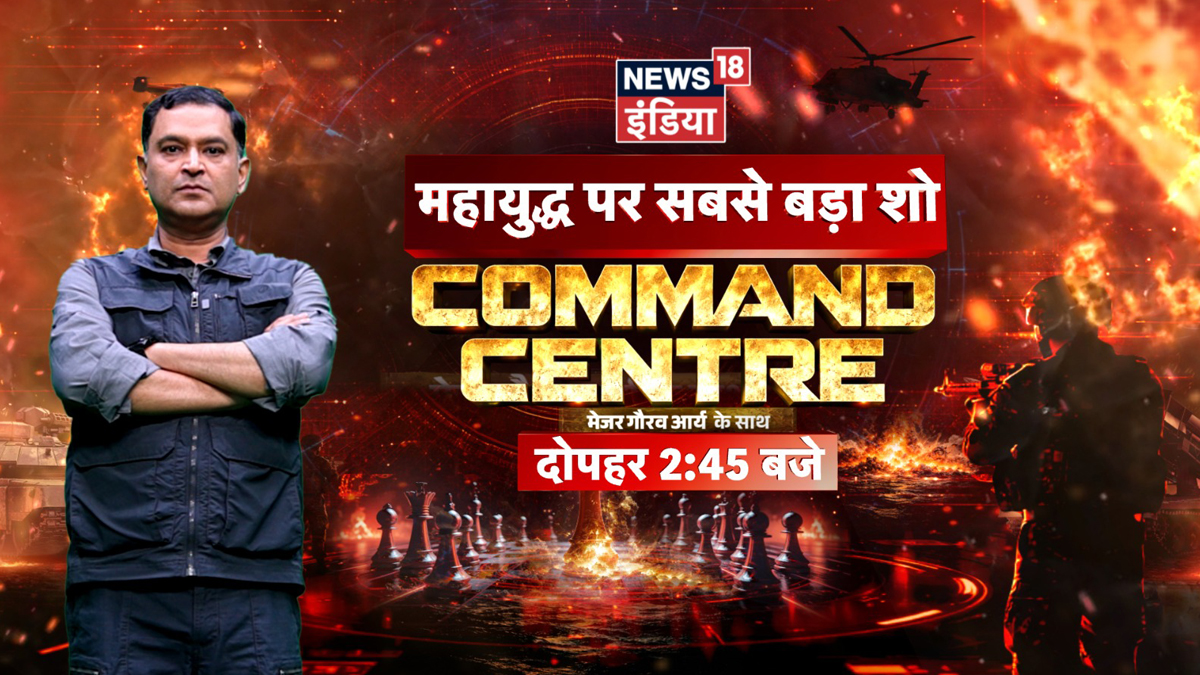
MUMBAI: News18 India has rolled out a new war-focused programme, Command Centre, featuring Gaurav Arya, as it looks to offer viewers a sharper, more grounded take on global conflicts amid rising tensions in West Asia.
Positioned as an “insider war room”, the show moves away from conventional panel debates and instead focuses on explaining military developments, decoding strategy and connecting global events to their everyday impact, from fuel prices to economic shifts.
The format leans heavily on visuals and data. The studio has been designed like a command hub, complete with large LED war maps, real-time graphics and an alert system to track developments as they unfold.
At the centre of it all is Arya, who brings his military background to simplify complex war strategies for viewers. His signature line, “Seedhi baat samjhiye”, anchors the show’s promise of clarity over noise.
News18 India managing editor Jyoti Kamal said, “Command Centre, featuring Major Gaurav Arya is designed to deliver accurate insights and a clear perspective on how evolving conflicts impact everyday life, from household budgets to national security. With expert voices analysing every development in real time, the show goes beyond headlines to decode what’s happening now, what it means, and what could come next.”
Echoing the intent, Gaurav Arya added, “In times of war, confusion is the biggest threat. With News18 India’s Command Centre, we are bringing viewers inside the war room, decoding strategies, tracking every escalation, and explaining, in the simplest terms, what it means for India and for every household. Seedhi baat samjhiye, this is where you understand not just what is happening, but what happens next.”
The weekday show will air in the afternoon slot and will also feature Gaurav Shukla, adding to its editorial depth.
With its mix of analysis, visuals and a clear focus on impact, the show reflects a broader shift in news consumption. Viewers are no longer just watching events unfold, they are looking to understand what those events mean for them.






