Cable TV
BBC’s new show looks at the emotive world of the fertility industry


MUMBAI: UK pubcaster BBC’s channel BBC One will kick off a new show The Family Man. Set in the world of the fertility industry, the show takes viewers on a moving journey through the highs and lows, joys and sorrows of trying to have a baby through IVF.
The story centres on the charismatic Dr Patrick Stowe and the private fertility clinic that he runs. It also follows the stories of four couples who, each for their own uniquely personal reasons, turn to him for help in making their dreams come true.
The show’s producer Sarah Brown says, “More and more couples are using IVF to try and have babies, science is developing apace and what is considered morally acceptable is changing all the time. By exploring the very emotional stories of four couples as they navigate their way through the world of IVF, The Family Man takes a human and accessible look at some of the key questions facing the industry and our society – where do the rights and wrongs lie? Should boundaries be crossed if that is right for the individual patient? And where should the pursuit of the perfect baby end?”

It’s a question that writer Tony Marchant confronts in the character of Stowe, the successful and dedicated fertility expert. Stowe’s sometimes unorthodox methods enable Marchant to turn the microscope on the complex ethics at play in the fertility business.
Stowe is passionate and principled. Over the years he has helped hundreds of couples to have babies of their own, even though his own parenting skills leave a lot to be desired. More at home in the clinic, Patrick is ploughing his way through a sea of constantly evolving technologies and shifts in ethical opinion, but whole-heartedly believes that each couple’s case deserves the right to be judged individually and that blanket rules should not apply.
It’s a belief that increasingly puts him at odds with many of his colleagues but could ultimately put his own health and happiness in danger. Merchant explains, “Patrick is a man having to deal with not only the emotional demands of his patients, the commercial pressures of running a clinic and his own scientific ambitions, but also the fact that science and technology are moving at such a pace that it’s undermining previous moral and ethical codes,” explains Marchant.
“What was right is now considered old hat, and what was wrong is now allowable. In that sense it becomes harder to get a proper footing morally because it’s moving at such a bewildering pace. He’s very good at making children, but he’s not very good at either bringing them up or knowing how families work, or how the children he makes become members of a family. That’s one of his problems.”







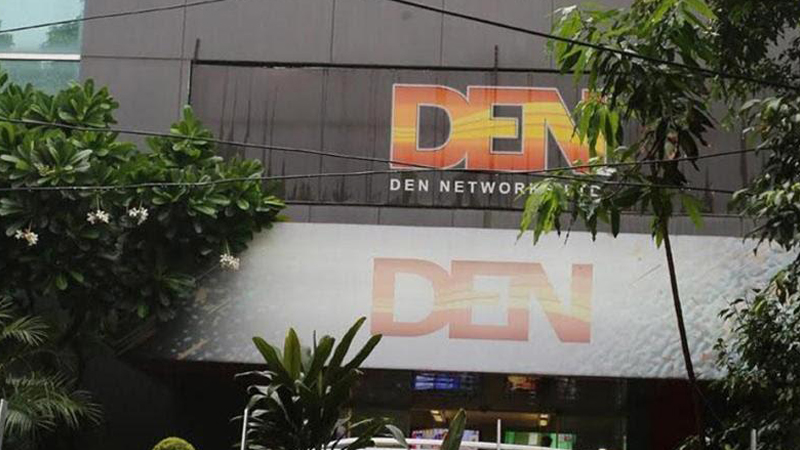
MUMBAI: When margins wobble, liquidity talks and in Q3 FY25-26, cash did most of the talking. Den Networks Limited closed the December quarter with consolidated revenue of Rs.251 crore, marginally higher than the previous quarter but down 4 per cent year-on-year, even as profitability stayed resilient on the back of strong cash reserves and disciplined cost control.
Subscription income softened to Rs.98 crore, slipping 3 per cent sequentially and 14 per cent from last year, while placement and marketing income offered some cheer, rising 15 per cent quarter-on-quarter to Rs.148 crore. Total costs climbed faster than revenue, up 7 per cent QoQ to Rs.238 crore, driven largely by higher content costs and operating expenses. As a result, EBITDA dropped sharply to Rs.13 crore from Rs.19 crore in Q2 and Rs.28 crore a year ago, pulling margins down to 5 per cent.
Yet, the bottom line refused to blink. Profit after tax stood at Rs.40 crore, up 15 per cent sequentially and only marginally lower than last year’s Rs.42 crore. A healthy Rs.57 crore in other income helped cushion operating pressure, keeping profit before tax at Rs.48 crore, broadly stable quarter-on-quarter despite the tougher cost environment.
The real headline-grabber, however, sits on the balance sheet. The company remains debt-free, with cash and cash equivalents swelling to Rs.3,279 crore as of December 31, 2025. Net worth rose to Rs.3,748 crore, while online collections accounted for 97 per cent of total receipts, underscoring strong cash discipline across operations, including subsidiaries.
In short, while Q3 showed signs of operating strain, the financial backbone remains solid. With zero gross debt, steady profits and a formidable cash war chest, the company enters the next quarter with flexibility firmly on its side proving that in uncertain markets, balance sheet strength can be the best growth strategy.







